
「BTC Life Insurance」 + 「Tax-Free Mortgage」, Understanding Meanwhile's $40 Million Series A Financing




On April 10, according to Fortune magazine, cryptocurrency insurance company Meanwhile completed a $40 million Series A funding round. The round was led by Framework Ventures and Fulgur Ventures, with participation from Xapo cryptocurrency bank founder Wences Casares. The company was valued at $1.9 billion and aims to combat inflation while enhancing long-term returns. The new funds will be used for global expansion and regulatory compliance. In 2022, the company previously received a $20.5 million investment from Sam Altman and others.
What makes Meanwhile so special that many industry leaders are eager to join? At this stage, capital is starting to pay more attention to the "do users pay" product-market fit signal. While Meanwhile's valuation may not be cheap, its product architecture and narrative resonate with BTC long-term holders' pain points. The underlying design logic is worth exploring.
Life Insurance × BTC: Meanwhile's Track Choice and Innovation
Meanwhile is a cryptocurrency insurance company that focuses on "Bitcoin life insurance." In simple terms, the premium you pay is in BTC, not in a traditional bank account or by check. If one day you suddenly disappear from this world, Meanwhile will directly send a BTC claim payout to the wallet address you have set, providing an explanation to your family.
There are not many companies in this track, but the potential is significant. After all, as Bitcoin becomes more and more like "digital gold," more and more people hold with the belief of HODL (hold on for dear life), holding positions for several years and even planning to pass them down to their grandchildren. Meanwhile aims to provide on-chain life insurance, clearly arranging BTC assets.
Compared to other DeFi risk protection insurance protocols, such as Nexus Mutual covering smart contract bugs, and Etherisc covering flight delays, Meanwhile is more like finding a super-niche point between "traditional life insurance + crypto-native."
Who is Building Meanwhile?
Meanwhile's CEO Zac Townsend co-founded the banking API infrastructure company Standard Treasury in his early years, which was eventually acquired by a Silicon Valley bank. He also received a buyout offer from Coinbase and received his first Bitcoin from Coinbase founder Brian Armstrong.
Zac didn't work alone; he brought on technical partner Max Gasner, the CTO responsible for Meanwhile's end-to-end insurance processes. Leveraging AI to optimize claims and actuarial processes, the most challenging aspects of the traditional insurance industry. Additionally, Danny Baer, a former wealth management expert at HQ Digital who once managed a whopping $4 billion in assets, is also part of the team.
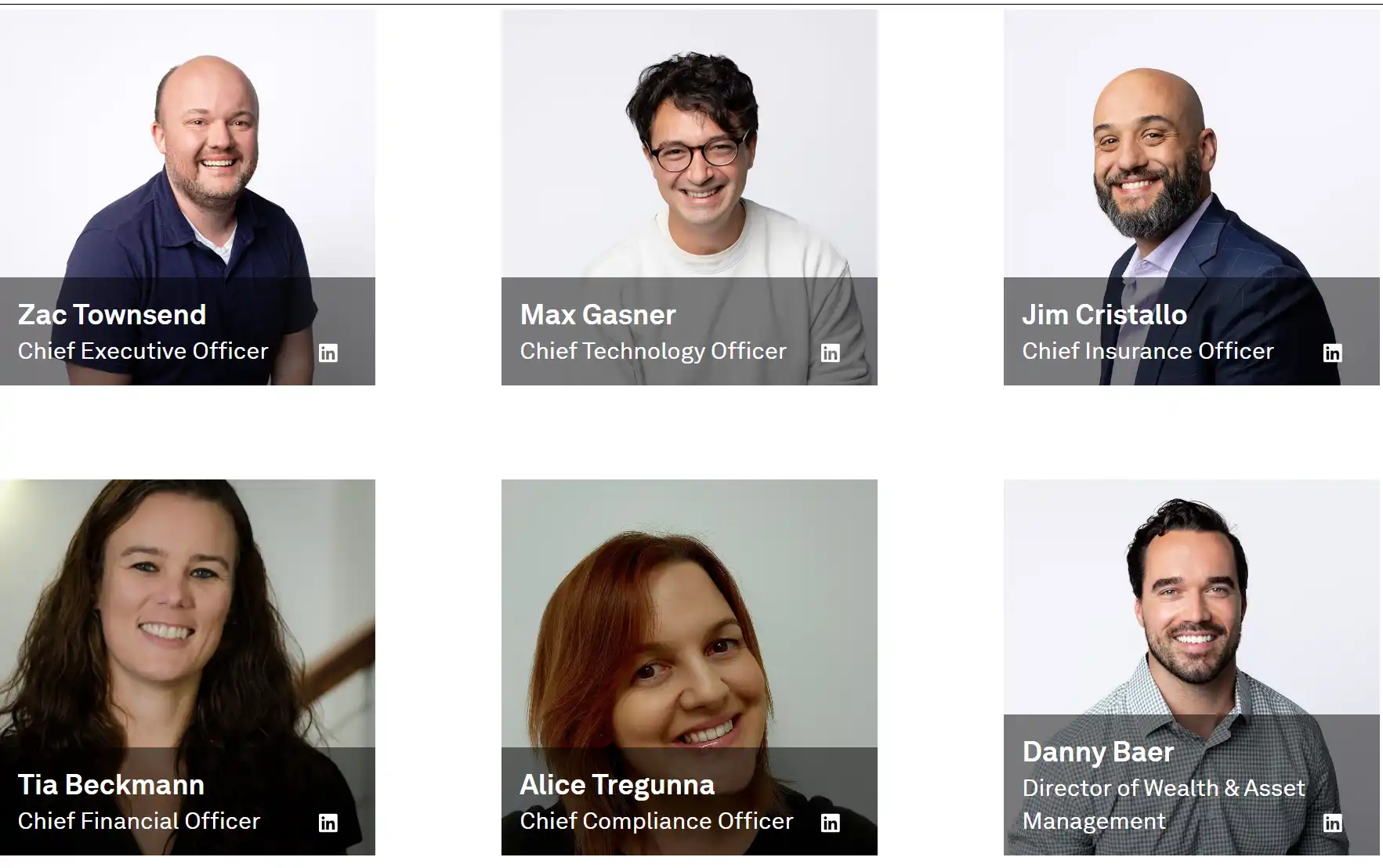
In addition, Meanwhile's board is also not simple, with support from traditional financial giants such as Santander Bank, MS&AD Insurance Group, and others. They have based the company in Bermuda, where 70% of its GDP comes from the insurance and reinsurance industry, earning it the nickname "Global Insurance Capital."
The story of Meanwhile started brewing in 2022, when the product direction and business model were established. By 2023, after a whole year of product development, they tackled the three major issues of compliance, risk control, and regulation. Finally, in early 2024, they obtained a commercial operating license and officially launched their policies in the market.
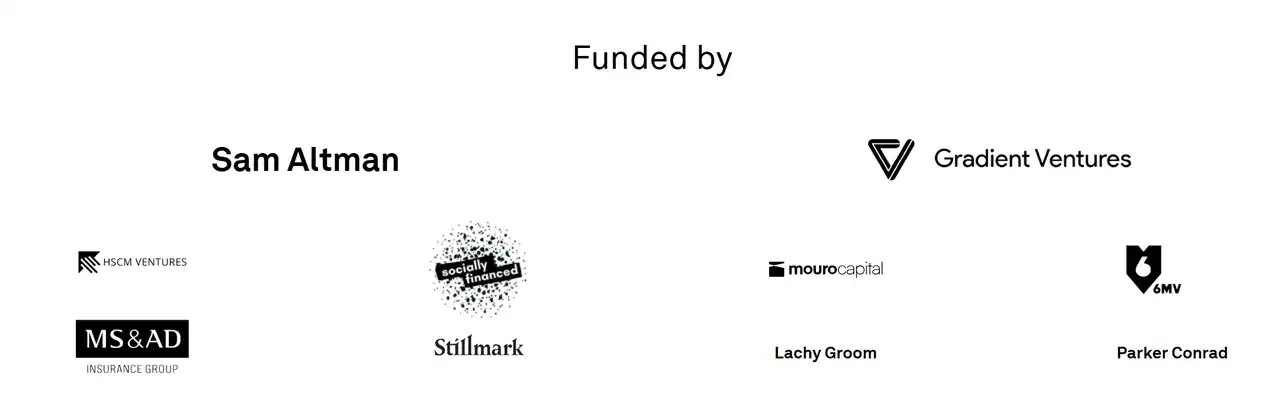
Meanwhile has already completed its seed funding, with the first round led by Sam Altman and former Stripe Issuing head Lachy Groom. The second round was led by Gradient Ventures (Google's AI fund, which has invested in the largest U.S. life insurance company, Northwestern Mutual).
In April 2025, they completed a $40 million Series A funding round, led by Framework Ventures and Fulgur Ventures, with individual investors such as Wences Casares participating, valuing the company at $190 million. Framework Ventures has a strong presence in DeFi and Web3 infrastructure, having previously invested in projects like Chainlink and Aave, while Fulgur Ventures focuses more on the Bitcoin ecosystem and has invested in Lightning Network related technologies.
Bitcoin Players' "Ultimate Belief Card"
This life insurance policy, priced in BTC, offers lifelong coverage with one-time or installment payments. Even if you only pay for one installment, the policy remains effective, and subsequent premiums are directly deducted from the claim amount, making the process more user-friendly than Alipay's. The entire process is carried out within the BTC ecosystem, requiring only a Bitcoin wallet, such as Ledger or Trezor, accessible through the Meanwhile website or app.
No bank account is needed, and the cumbersome process of credit cards is bypassed. Payments are made through the Lightning Network or Taproot, offering speed, cost-efficiency, and gas savings, unlike on-chain transactions that can get stuck for half an hour and cost tens of dollars.
One of the most attractive features is that you can access liquidity without selling BTC. If you live long enough, you can collateralize your policy to borrow BTC after 2 years, up to 90% of the value, at an annual interest rate of only 3%, with no need for repayments—deducted automatically during claims settlement, saving you even the trouble of remembering repayment dates. Compared to the prevalent 14% interest rate on BTC loans in the market, this is perhaps a real benefit.
This operation does not count as selling coins and triggering capital gains tax, allowing you to continue enjoying the appreciation of Bitcoin. The compensation amount is also based on BTC valuation, so you don't have to worry about USD inflation shrinking your claim payout to a few packs of instant noodles years down the line.
Meanwhile, there is a trust-building mechanism in place. If the returns do not meet the promise, users can redeem their investment. The platform offers one-on-one communication service to make you feel valued, and the entire system is transparent, traceable on-chain.

The product has already launched, and users can directly register on the Meanwhile platform, submit health data, have actuaries assess and determine the premium amount. You only need a Bitcoin wallet to make the payment, and upon the demise of the insured, the beneficiary provides identity information to receive the BTC payout directly into a designated wallet.
Is It Truly Sweet or a False Proposition?
Meanwhile's Bitcoin life insurance product fills a gap in the crypto market, especially in wealth inheritance and tax optimization. As Bitcoin's institutional adoption (such as ETFs, pension fund allocations) continues to progress, the demand for financial services tailored to high-net-worth crypto holders will rapidly grow. If Meanwhile can continue to excel in user experience, compliance, and market promotion, it has the potential to become a leader in the crypto insurance space.
Although Meanwhile currently has strong backers, with the change in tariff policies under the Trump administration, the project needs to pay attention to some potential risks. For example, is the current customer structure unclear, with a focus on institutions, or is the retail customer share larger? If Bitcoin experiences a significant drop and returns are lower than expected, how will they handle large-scale redemptions? Faced with these challenges, Meanwhile needs to devise flexible strategies and closely monitor market trends and policy changes to ensure the project's long-term sustainability.
You may also like

Bitcoin ETF Outflows Hit a Record $4.4 Billion: What Are Traders Doing With Their Cash?

WEEX App Just Got Smarter – New Tabs for Faster Trades & Easy Asset Management

Blockchain Capital Partner: The Core Secret of Arbitrage

WEEX All-New Search Features: Find, Trade & Earn Faster Than Ever

Will MicroStrategy fall into a death spiral? What will the macro trend be in the second half of the year?

Morning Report | Illinois signs the strictest digital asset tax law in the U.S.; RWA tokenization market size surpasses $43 billion, institutions accelerate the migration of on-chain assets

Full version of the debut Q&A! Federal Reserve Chairman Waller: Sticking to the 2% inflation target, establishing five special working groups, individual did not submit the dot plot

From Disruptor to Shadow Market: The Crypto Market is Becoming a Colony of Traditional Finance
Dalio's important long article: How to position in the current market environment?

OKX Star analyzes Binance's competitive advantages: when regulation levels the playing field, competition has just begun

New gameplay for participating in initial offerings on cryptocurrency exchanges
Why Is Bitcoin Down Today? What the Hawkish FOMC Means for SpaceX, Gold and Nasdaq

DeepSeek Financing Story

Morning Report | DeepSeek completes over $7 billion in financing, with a valuation exceeding $50 billion; Musk's personal wealth has surpassed the total market value of Bitcoin

Cursor, why did you get on Musk's spaceship?
In the name of charity, for the benefit of the family: How the Trump family turned charity into profit?

Will Gold Break $4,500 After Tonight's Fed Decision? What XAUT and PAXG Traders Need to Know

SharpLink CEO: How to understand that Ethereum developers have just surpassed 1 million?
Bitcoin ETF Outflows Hit a Record $4.4 Billion: What Are Traders Doing With Their Cash?
WEEX App Just Got Smarter – New Tabs for Faster Trades & Easy Asset Management
Blockchain Capital Partner: The Core Secret of Arbitrage
WEEX All-New Search Features: Find, Trade & Earn Faster Than Ever
Will MicroStrategy fall into a death spiral? What will the macro trend be in the second half of the year?
Morning Report | Illinois signs the strictest digital asset tax law in the U.S.; RWA tokenization market size surpasses $43 billion, institutions accelerate the migration of on-chain assets


