
Data Analysis: How has the Monad Testnet performed since its launch?



Original Title: Monad: Public Testnet
Original Author: Hess
Original Translation: Deep Tide TechFlow
The Monad testnet was officially launched on February 19th!
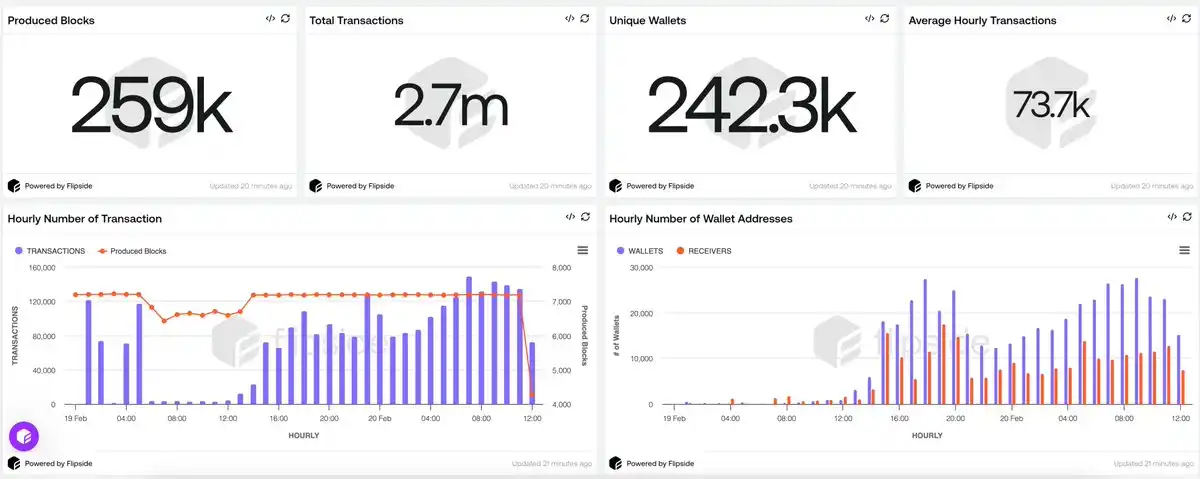
So far, the network has successfully processed nearly 2.7 million transactions, covering 242,300 unique addresses, with a transaction success rate of 98%, and a block generation time of just 0.5 seconds.
In the initial hours after launch, Monad ran smoothly and achieved peak performance of 3000 transactions per second (TPS).
Let's delve deeper into this project!

Before we proceed, you can check out detailed information through this link.
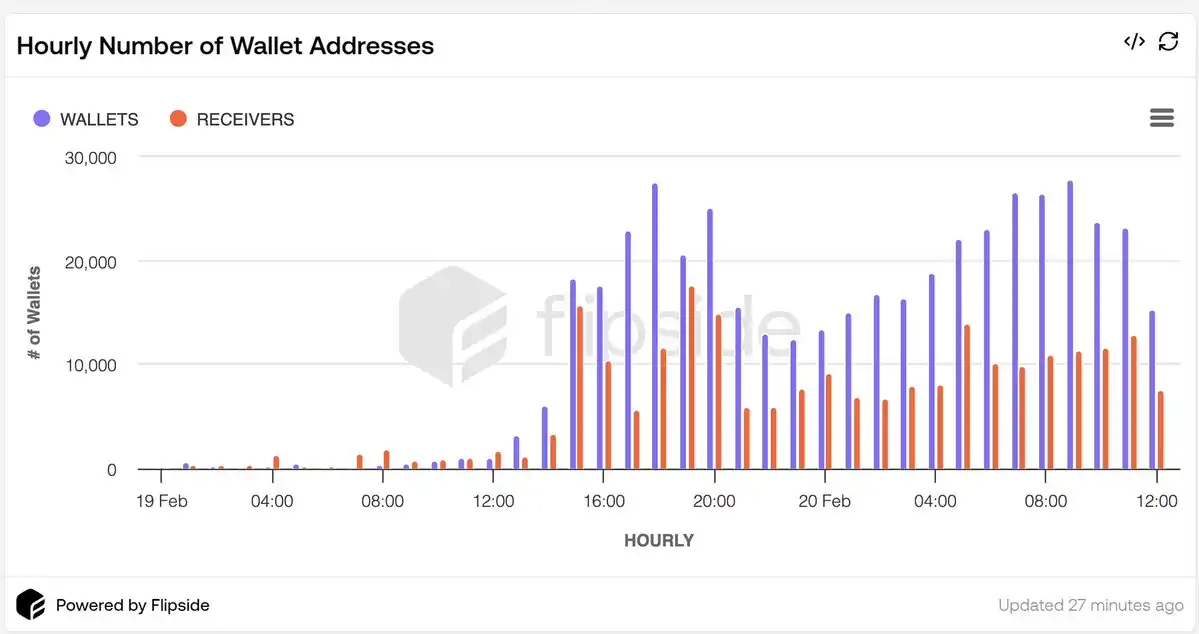
According to Monad's official data, they distributed testnet tokens to around 8.8 million active Ethereum addresses to attract more users to participate in testing and validate network performance.
In less than 24 hours, 3% of these addresses have completed their first transaction on the Monad network.
This ratio is rapidly increasing and is expected to reach 10% in a short time.
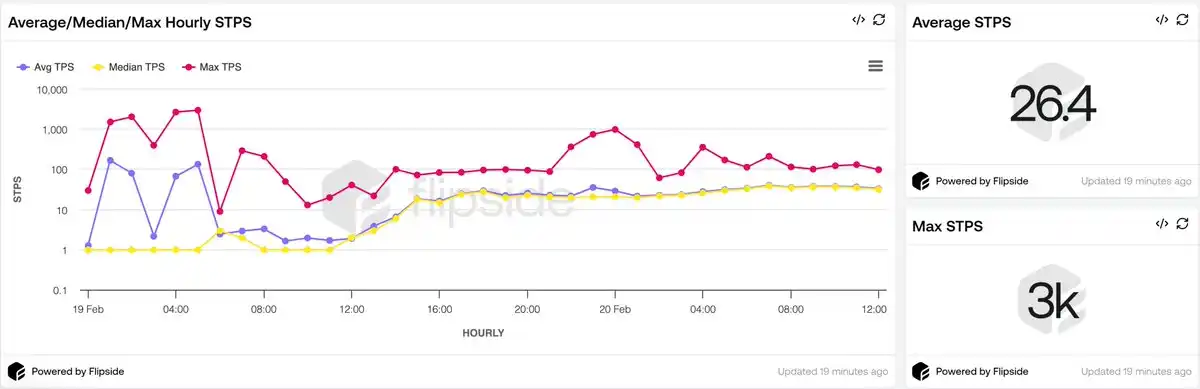
The large-scale distribution of testnet tokens has directly driven a significant increase in TPS.
Within just two hours of launch, Monad's average transactions per second (ATPS) reached a peak of 3000.
Currently, Monad's average ATPS is 26, a data point that better reflects the network's performance in daily operation.
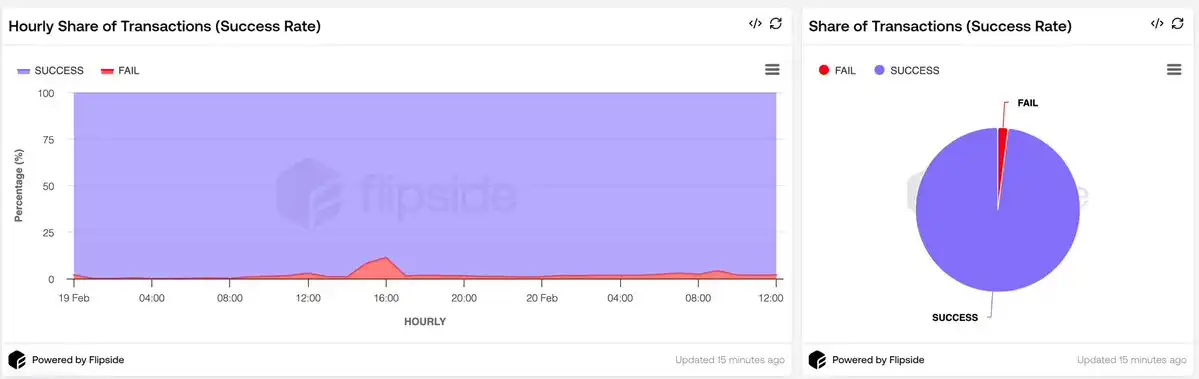
Monad's success rate has placed it among the top players in the blockchain field.
According to testnet data, Monad's transaction success rate is as high as 98%, an impressive performance.
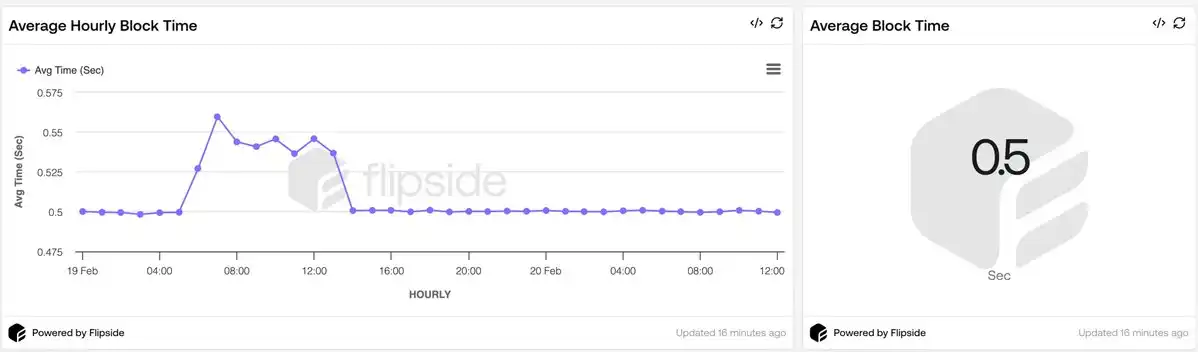
Block time has always been one of Monad's key optimization areas prior to launch.
Test data shows that Monad has an average block time of only 0.5 seconds, making it one of the fastest blockchains currently available, ideal for high-frequency trading and real-time applications.
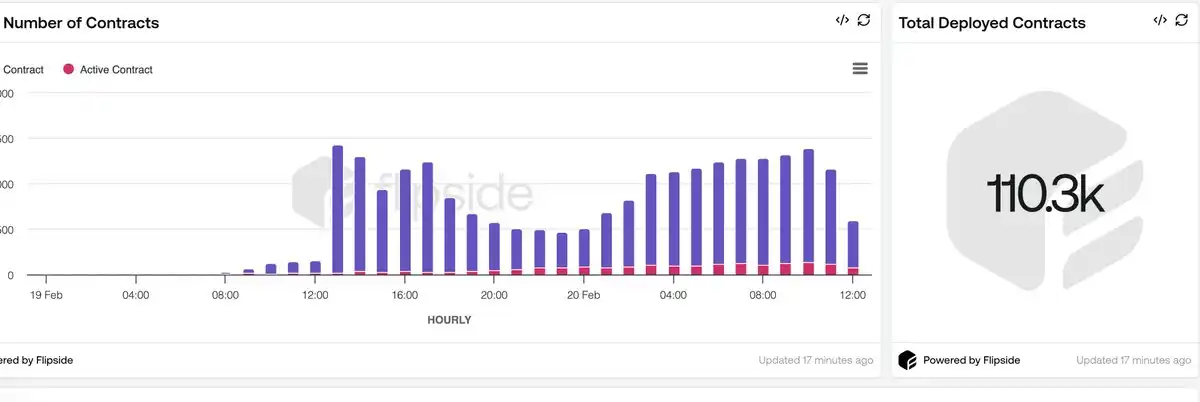
Since the launch of the testnet, Monad has deployed nearly 110,300 smart contracts.
An average of 5,000-6,000 contracts are added per hour, with the current number of active contracts at 500, demonstrating the network's robust activity.
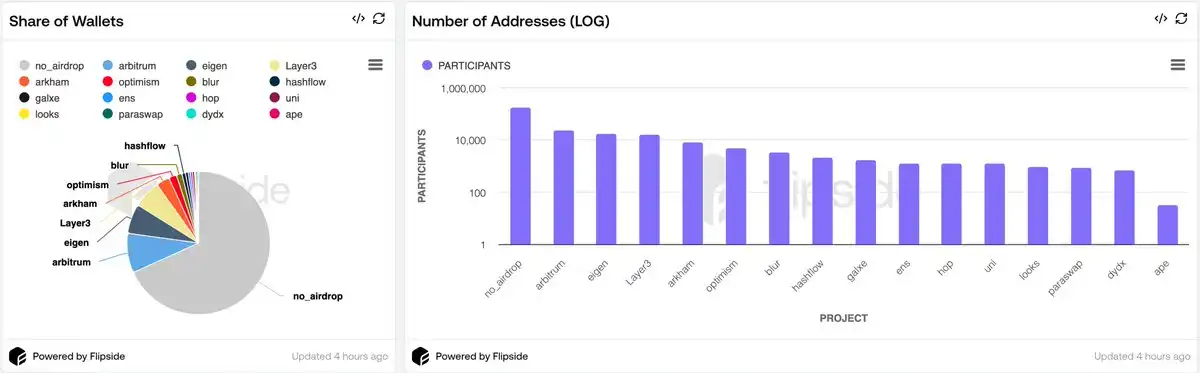
Notably, in addresses that conducted their first transaction on Monad, approximately 77% did not receive airdrops from other popular blockchains or platforms.
Among them, addresses for Airdrops from Arbitrum, Eigen, and Layer3 accounted for the largest proportion.
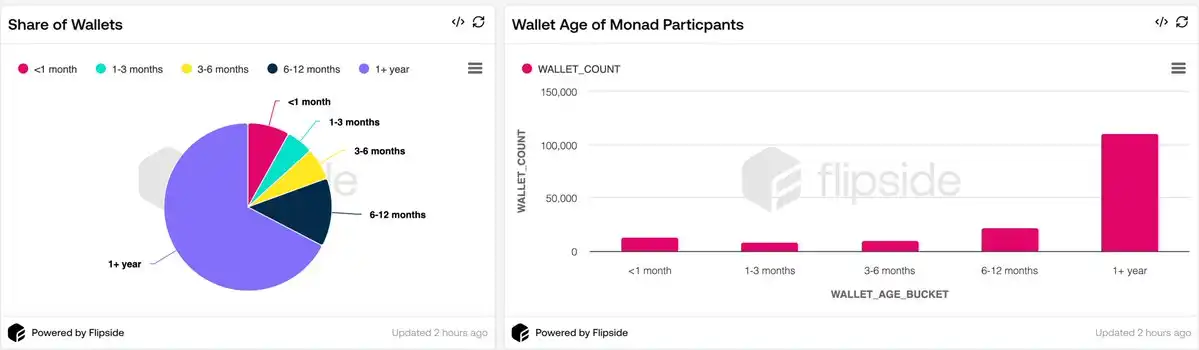
Based on first transaction data analysis of EVM on-chain addresses, 67% of addresses have been active for over a year, while 8% of addresses have been active for less than a month.
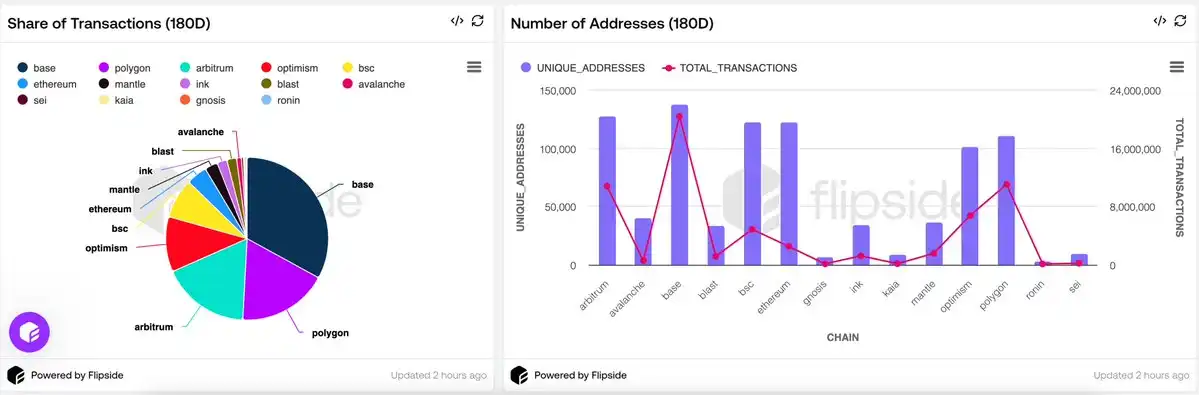
On which blockchains are Monad participants most active?
The data shows that over the past 6 months, Base, Polygon, and Arbitrum have become the top three blockchains where Monad participants are most active. These three chains have attracted a large number of users' attention and usage due to their high performance, low transaction costs, and rapidly growing ecosystems.
You may also like

SharpLink CEO: How to understand that Ethereum developers have just surpassed 1 million?

Morning Report | MiCA grace period expires on July 1; Kalshi's trading volume in the first week of the World Cup breaks $5.1 billion, setting a record

What is the connection between Huang Zheng of Pinduoduo and blockchain?

Morning Report | Prediction market platforms like Kalshi and Polymarket jointly sue Kentucky over 14.25% trading tax; Bridgewater founder discusses decision-making in the AI era: principled thinking should run parallel to AI, human insight remains irre...

If the AI bubble has already burst, who will truly remain?
Paul Graham: How to Make a Billion Dollars

After 18 years, blockchain has finally started to head towards the main channel

Claude enforces "facial recognition for household registration," starting in July, no ID card means no access?

On the day of SpaceX's IPO, the first real test of the three perpetual mechanisms

Value Distribution of Stablecoins
Galaxy Deep Dive: Is the Bitcoin Four-Year Cycle Still Valid?

SpaceX IPO, Nvidia, and Bitcoin: Why Traders Are Watching More Than Just Crypto in 2026

The other side of Musk's trillion-dollar fortune: 85% cannot be sold

The U.S. government prohibits foreigners from using Fable 5, Anthropic issues a rebuttal

Citibank releases "2030 Asset Tokenization Market Outlook": 6 major trends may create a $8.2 trillion market
The trillion-dollar valuation test: Are the three major super IPOs a celebration for tech stocks or a nightmare for the crypto market?
Morning Report | Digital Asset completes $355 million financing led by a16z Crypto; Meta completes operational separation from Manus
a16z Crypto Partner: Cash flow is the moat
SharpLink CEO: How to understand that Ethereum developers have just surpassed 1 million?
Morning Report | MiCA grace period expires on July 1; Kalshi's trading volume in the first week of the World Cup breaks $5.1 billion, setting a record
What is the connection between Huang Zheng of Pinduoduo and blockchain?
Morning Report | Prediction market platforms like Kalshi and Polymarket jointly sue Kentucky over 14.25% trading tax; Bridgewater founder discusses decision-making in the AI era: principled thinking should run parallel to AI, human insight remains irre...
If the AI bubble has already burst, who will truly remain?
Paul Graham: How to Make a Billion Dollars


