
Ethereum Migration: Discovering the New Frontier of Airdrops



Original Article Title: "Migrating from Ethereum: Exploring the New Airdrop Continent"
Original Source: Biteye
Once, the ETH mainnet was the golden vein of airdrops, but by 2025, the main route had quietly shifted—Base, BNB, Sui, Berachain have become synonymous with the new continent.
We dissected the logic behind this trend and tried to answer a question: Where should airdrop participants go?
Article Content Overview:
· ETH Airdrop Recession, the Myth of Wool Sweeping Comes to an End
· Base/Sui/Bera Take Over, Becoming the New Main Battlefield
· Emerging Chain Projects: Strong Funding, Familiar Gameplay
· Selected Project Recommendations + Low-Threshold Gameplay
· Airdrop ≠ Diligence, But Rather Direction
Understand the logic behind the migration and see where the next breakout point is.
“The Higher the Gas, the More Expensive the Fish!”
Jason is a newcomer who entered the scene in 2022 and once interacted with Opensea at a cost of over a thousand GAS. A simple set of Approve and Send operations cost him $120, equivalent to half a week's salary. "Opensea has a high valuation, ample funding, and a strong investment background. It's definitely a big catch! The GAS burned now won't even be worth mentioning when the airdrop comes in the future."
However, by 2025, Jason has been out of the crypto circle for almost a year. "I didn't earn any money at all. Zksync and LayerZero accounts were all flagged as suspicious, I spent money on fingerprint browsers, standalone IPs, but in the end, I didn't know where things went wrong. I could only sneakily go back to work."
In February 2025, Opensea suddenly announced, "We're issuing our own coin." After Jason finished work and returned home, he casually opened the official website, only to see the familiar routine: points, blind boxes, and experience points (XP).

How Long Has It Been Since You Heard About an Airdrop from an Ethereum Ecosystem Project?
Not to mention that those "get rich quick" myths relying on wool sweeping have vanished from the X platform, even the once high-profile wool-sweeping KOLs have all transformed.
In 2025, renowned airdrop blogger Ice Frog @Ice_Frog666666 even successfully enforced the rights of multiple projects such as Kiloex and Corn, opening up a new "rights enforcement" persona. Taking the example of airdrop projects during the favorable market conditions in January 2025, out of the 14 projects launched, the proportion belonging to native ETH ecosystem projects is almost zero.
Most public chain projects choose to launch the mainnet directly and airdrop tokens, while other projects have opted to join emerging chains such as @base or @BNBCHAIN, which offer lower gas costs and greater exchange support.
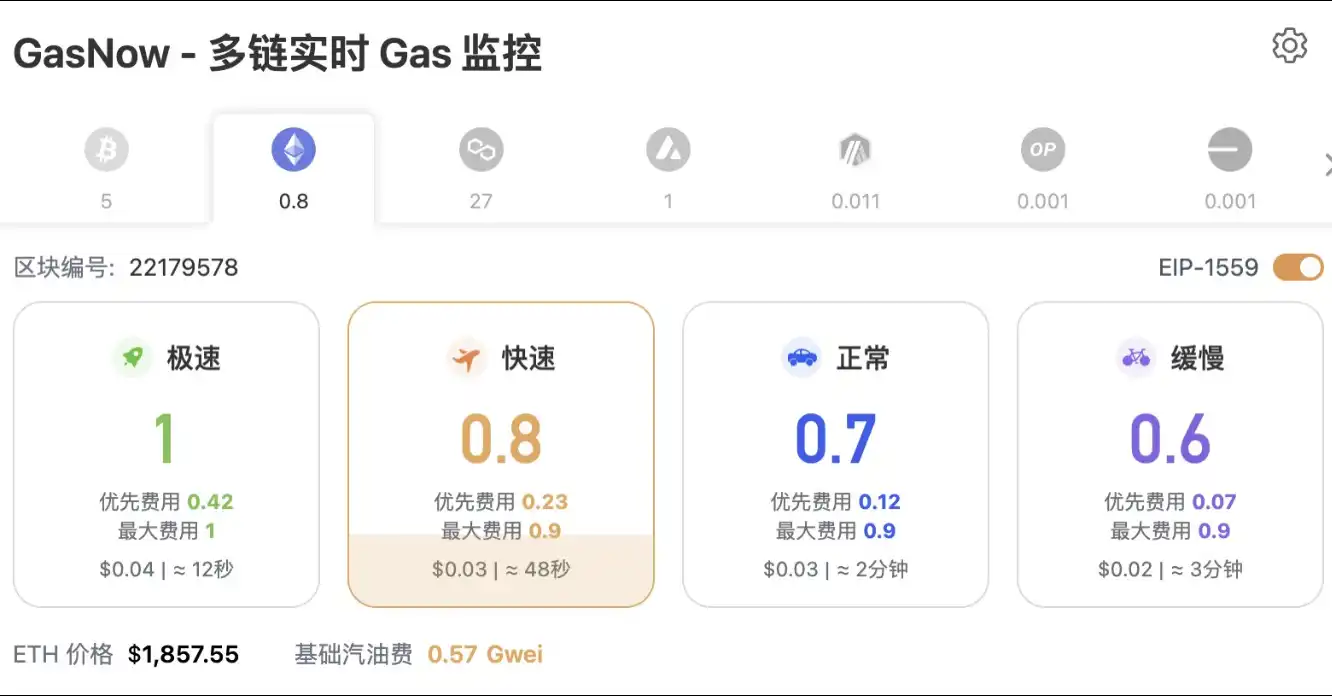
Comparing the heyday of ETH in 2021 to the present day, the ETH ecosystem is now a far cry from what it used to be. As ETH gas fees have gradually dropped from tens of dollars to a few dollars, and even below $1, the number of projects announcing their launch on the ETH mainnet has not increased but instead decreased.
The reasons may include @solana becoming a haven for new players or BNB Chain becoming the go-to platform for projects to list on Binance. However, the most important reason lies in the decline of the innovation and development activity that was once the pride of the Ethereum ecosystem. The community's growing discontent with the Ethereum Foundation is also becoming increasingly evident.
True "big hair" never asks for the source; they just want to give you money.
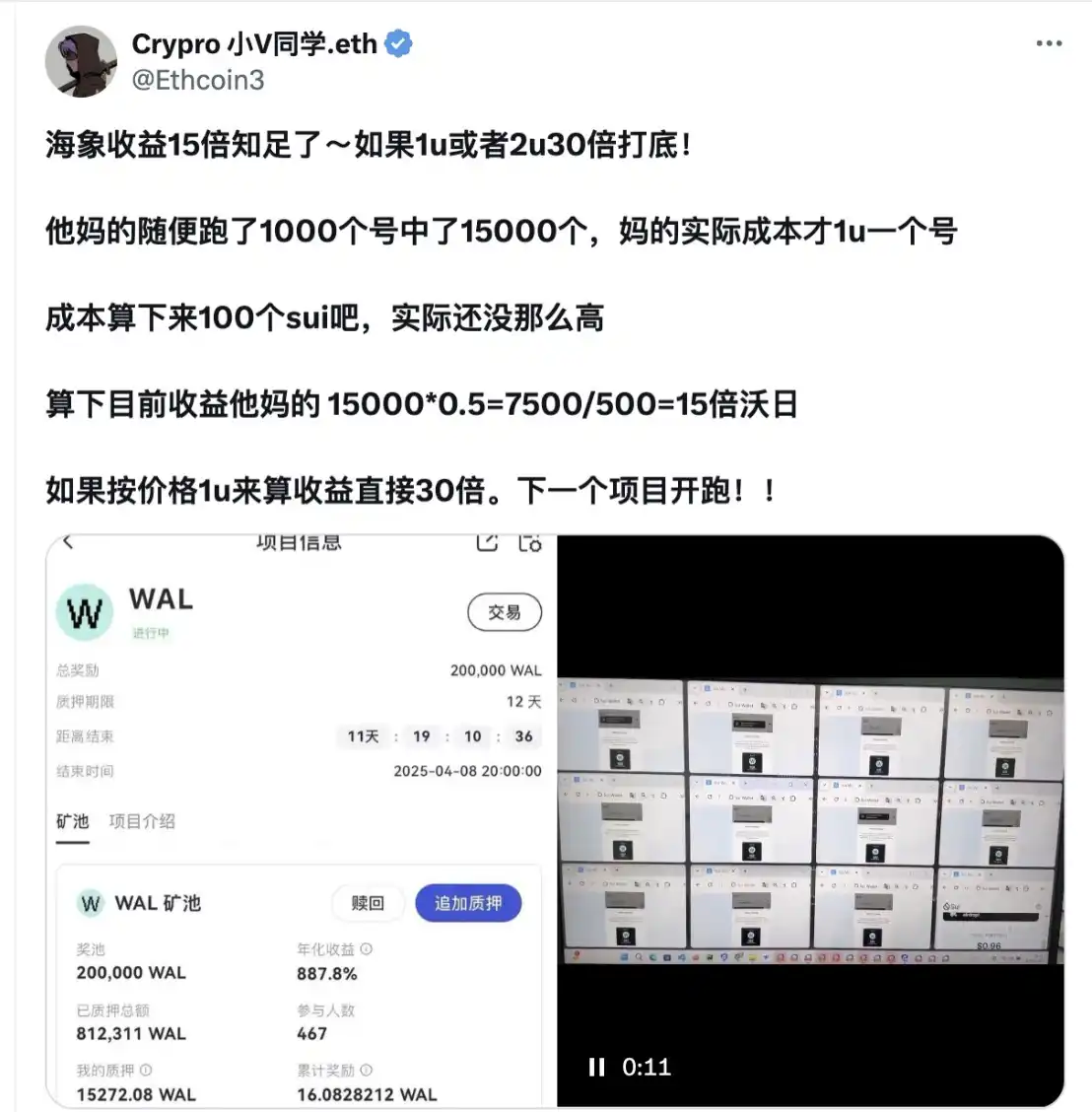
@WalrusProtocol is the officially confirmed airdrop project of the Sui Network. After Binance announced the contract listing on March 28, it undoubtedly became the most dazzling airdrop star of the first quarter. Walrus's airdrop criteria are very simple, even for the most basic "low-quality numbers," requiring only a minimum deposit of 0.1 Sui to receive about 15 times the return.
At first glance, Walrus is indeed extraordinary: with a fundraising scale of up to $140 million and a valuation of $20 billion, its investors include top institutions such as Standard Crypto, a16z Crypto Fund, Electric Capital, and Franklin Templeton's Digital Asset Department.
In the past, such backgrounds were usually only seen in the Ethereum ecosystem. However, today, more and more star projects with similar backgrounds are starting to take root in emerging public chains like Sui and Berachain.
These projects have several obvious commonalities: a hardworking team, a steadily rising token price, and attempts to break past all-time highs.
Migrating from Ethereum to the new continent of airdrops.
In the business world, the blue ocean represents a market full of opportunities with low competition saturation, while the red ocean symbolizes a market where competition is fierce, even cutthroat. In the past, Ethereum has always been the "noble chain" of the airdrop circle, with new players flocking to Ethereum L2 for opportunities, and seasoned players calmly enjoying generous airdrops on the ETH mainnet.
But as one era ends, another begins, and the market trends are gradually cooling off. The airdrop track has also been fully cannibalized, and now Ethereum has truly become a red sea. To continue receiving decent airdrop rewards, one must board the new generation's "Mayflower" and venture to foreign lands to explore new territories.
Where is the new continent for airdrop players?
Currently, it seems that @SuiNetwork and @berachain have provided an answer. By closely observing the ecosystems of these two emerging public chains, it is easy to see that they share the following common features:
1. High project valuation, large funding scale;
2. The native tokens of the public chain have landed on mainstream exchanges;
3. The public chain itself provides ecosystem incentives, with strong financial support;
4. Projects within the ecosystem have generally completed quality fundraising;
5. Following the traditional airdrop strategy of "low entry barriers, high returns," focusing on airdrops, testnets, and simple staking activities.
Taking a page from their book, we can pay attention to the following popular projects on these chains:
• Core Protocols in the Berachain Ecosystem:
@KodiakFi, @InfraredFinance, @beraborrow, @GummiFi, etc.;
• High-Profile Protocols on Sui:
@HaedalProtocol, @AftermathFi, etc.
Choice is greater than effort; be a friend of the cycle.
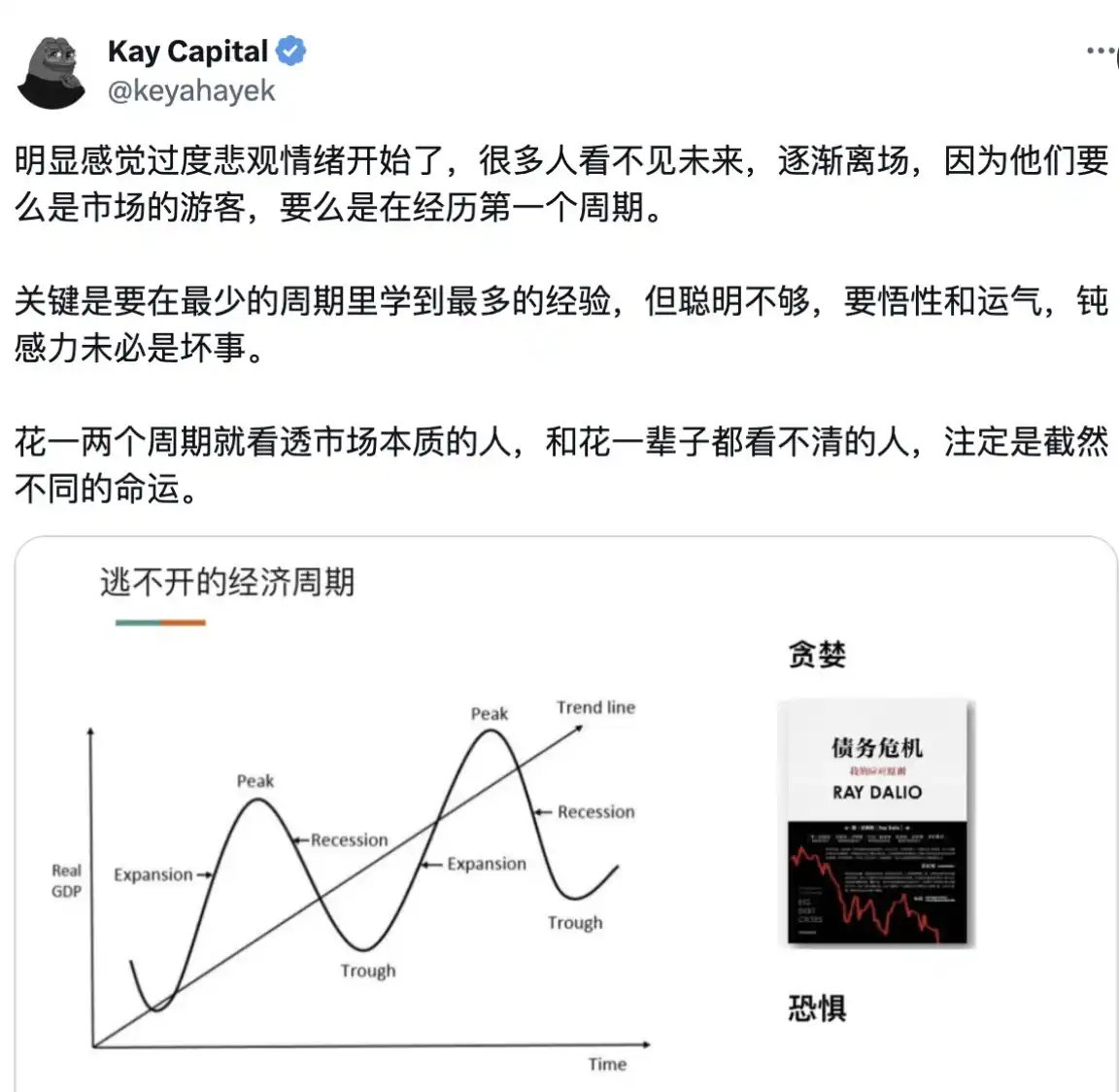
Acknowledged crypto blogger @keyahayek assesses the power of cycles like this: "People who can see through the market's essence in one or two cycles will have vastly different fates from those who can't see the market clearly in a lifetime."
In the rhythmic cycles of the crypto market, both project teams and players experience the ebb and flow. They hope to gain wealth during the bullish cycles but often misstep in the rapidly changing market rhythm. However, projects that truly transcend cycles can often perform a perfect "deep V" in token price and provide supporters with stable rewards in ecosystem development.
As an airdrop player, the one thing that needs to be done from start to finish is actually the same:
Be patient, and enjoy the game.
This article is contributed and does not represent the views of BlockBeats.
You may also like

The AI gamble of mining companies: Valuations enter a phase of differentiation, and it's hard to turn the tide

A letter from Alliance to entrepreneurs: Written on the occasion of Cursor selling for 60 billion dollars

Will MicroStrategy fall into a death spiral? What will the macro trend be in the second half of the year?

Blockchain Capital Partner: The Core Secret of Arbitrage

STRC unanchored by 11%, can the perpetual motion machine of Strategy still operate?

Bitcoin Market Analysis 2026: Can BTC Reach $150K by Year-End?

Bitcoin ETF Outflows Hit a Record $4.4 Billion: What Are Traders Doing With Their Cash?

WEEX App Just Got Smarter – New Tabs for Faster Trades & Easy Asset Management

WEEX All-New Search Features: Find, Trade & Earn Faster Than Ever

Morning Report | Illinois signs the strictest digital asset tax law in the U.S.; RWA tokenization market size surpasses $43 billion, institutions accelerate the migration of on-chain assets

Full version of the debut Q&A! Federal Reserve Chairman Waller: Sticking to the 2% inflation target, establishing five special working groups, individual did not submit the dot plot

From Disruptor to Shadow Market: The Crypto Market is Becoming a Colony of Traditional Finance
Dalio's important long article: How to position in the current market environment?
OKX Star analyzes Binance's competitive advantages: when regulation levels the playing field, competition has just begun

New gameplay for participating in initial offerings on cryptocurrency exchanges
Why Is Bitcoin Down Today? What the Hawkish FOMC Means for SpaceX, Gold and Nasdaq

DeepSeek Financing Story

Morning Report | DeepSeek completes over $7 billion in financing, with a valuation exceeding $50 billion; Musk's personal wealth has surpassed the total market value of Bitcoin
The AI gamble of mining companies: Valuations enter a phase of differentiation, and it's hard to turn the tide
A letter from Alliance to entrepreneurs: Written on the occasion of Cursor selling for 60 billion dollars
Will MicroStrategy fall into a death spiral? What will the macro trend be in the second half of the year?
Blockchain Capital Partner: The Core Secret of Arbitrage
STRC unanchored by 11%, can the perpetual motion machine of Strategy still operate?
Bitcoin Market Analysis 2026: Can BTC Reach $150K by Year-End?


