
From Hype to Implementation, Where is the Future of Web3 AI?

Original Article Title: Post-AI Agent Bubble: Where's the Real Value in Web3 AI?
Original Article Authors: @Defi0xJeff, @steak_studio Chief
Original Article Translation: zhouzhou, BlockBeats
Editor's Note: After the AI Agent bubble burst, Web3 AI has entered a new stage: transitioning from hype to infrastructure and practical applications. Decentralized AI (DeAI) has gained attention due to data privacy and sovereignty needs, with ecosystems like Bittensor gradually rising. The future focus will shift to the integration of genuinely useful intelligent agents with underlying technologies, driving industry maturity.
The following is the original content (slightly reorganized for better readability):
AI agents saw their market cap skyrocket to over $200 billion within a few months, only to crash just as quickly. However, the field is gradually maturing, with infrastructure, decentralized AI, and practical use cases taking the lead. A new wave is forming, so why should we pay attention to it? Here are the reasons.
In the fourth quarter of last year, we witnessed the explosive growth of the "AI agent" sector, which grew from zero to over $200 billion in just a few months—from those funny, charming, entertaining, and even somewhat "dim-witted" AIs to those promising to make you rich overnight through trading and investment as financial intelligent agents.
Not only that, there are various "make-you-rich" intelligent agents and a bunch of investment-oriented DAOs—human or AI-operated DAO organizations (3,3) used to invest in other AI agents.
From Hype to Infrastructure
We have all learned that in a new field (especially in the context of Web2 AI, Trump-supportive Crypto, and AI-backed new catalysts), people simply don't care about fundamentals. As long as a project looks lively, demonstrates coolness, and generates buzz, its market cap can easily reach billions of dollars.
@virtuals_io has become the representative of this ecosystem, perfectly executing marketing, capturing the public's attention, telling the most appealing story, and building the best narrative. This not only attracted developers to build projects on it but also drew retail traders to participate in the hype.
Then there's @elizaOS, taking a different path—open-source AI, allowing any developer to wield this "gold pan" to create their intelligent agent. Around this idea, a large community quickly formed, with adoption skyrocketing, GitHub stars and forks increasing rapidly (and still rising).
Some of the top projects in Virtuals once had valuations surpassing $5 billion, with Eliza reaching about half of that at its peak. Other standout projects also reached valuations in the eight to nine-figure range, such as AIXBT hitting a peak valuation of $1 billion.
Of course, the situation is very different now. The average market cap of newly launched and performing well smart entities is only $3-10 million; established and continuously operating entities are also between $10-50 million. Valuation ceilings have been significantly compressed, and the total market cap has dropped from its peak of $20 billion to the current range of $4-6 billion.
Infrastructure Momentum & Web2 Acceleration
Today's market places more emphasis on "pure fundamentals", especially in infrastructure and decentralized AI, as AI models in the Web2 space are evolving rapidly: Meta's Llama, OpenAI's GPT, Musk's Grok, DeepSeek, Alibaba's Qwen, are releasing new generations of more efficient models every month. For example, when ChatGPT's latest image generation feature was released, it immediately sparked a viral trend of Ghibli-style images.
More importantly, the consumer layer of Web2 is advancing at a faster pace. Because the capabilities of AI models are getting stronger, many functionalities that were previously impossible are now achievable. Tools like Lovable, Bolt, Cursor, Windsurf allow developers to iterate on products more quickly. Agentic workflows and AI agents are ubiquitous, with very low entry barriers, and almost zero user switching costs—if you don't like this app, you can immediately find a better UI and more affordable alternative.
Data Sovereignty Awakening
Meanwhile, more and more people are starting to think: "Now everywhere are intelligent agent apps using centralized AI, so who does my data really belong to? Where has my data gone? I've had private conversations with AI, will it really keep them confidential? Or will they be taken elsewhere?"
This concern has become more significant because @OpenAI recently updated ChatGPT with a "memory" feature—it can now review all your conversations to provide more personalized responses. This means that everything you say to AI, AI remembers, and can repeatedly reference.
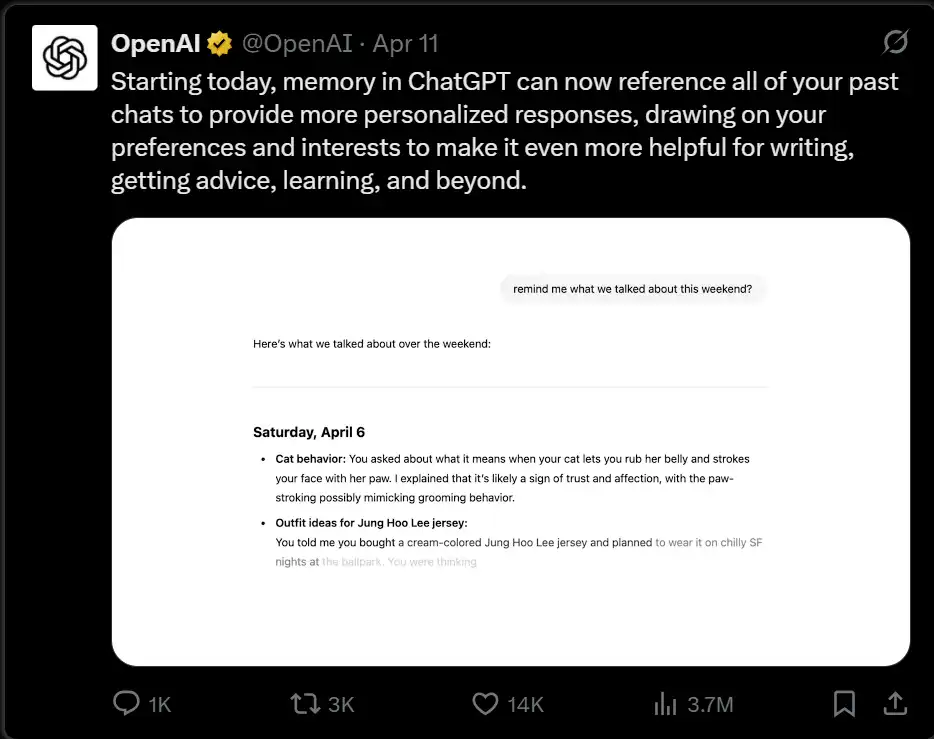
Bro... these features are indeed pretty cool and are likely to kick off a wave of "personalized AI agents," such as custom AI assistants, AI copilots, private secretaries, AI therapists, companion AIs, and so on.
But imagine if these AIs are based on centralized technology and your data is held or controlled by "someone else." The consequences could be quite severe.
The Rise of Decentralized AI (DeAI)
Last year, I made a few predictions, one of which was: Decentralized AI will begin to emerge in the second quarter of 2025. By then, AI infrastructure focusing on privacy protection, data transparency, verifiability, and user ownership will receive more attention and see broader adoption—because the demand for these aspects will only grow stronger.
The current trend can be divided into three main categories (though there is also overlap between them):
· Web2 AI Venture Trends
Companies incubated by YC (Y Combinator) are aggressively launching AI agents in various verticals; a16z (Andreessen Horowitz) is also strategically positioning itself in the future consumer AI trend through various investment theses; Perplexity AI recently even launched its AI fund, directly doubling down on the AI track.
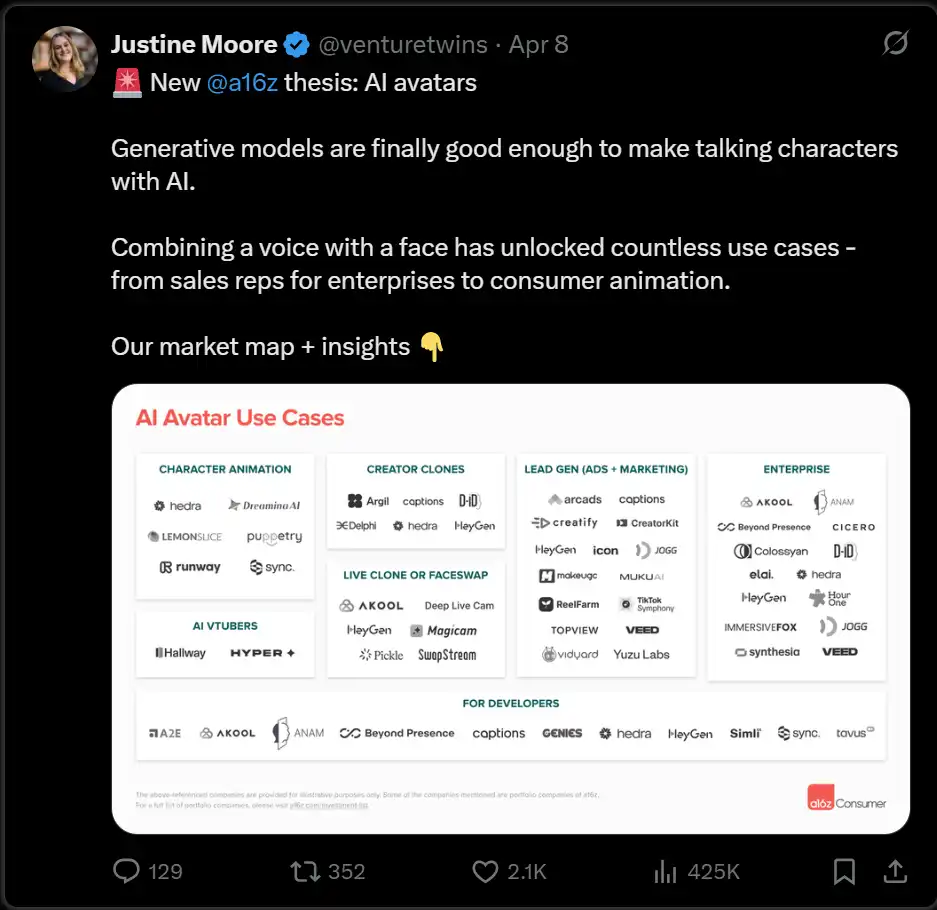
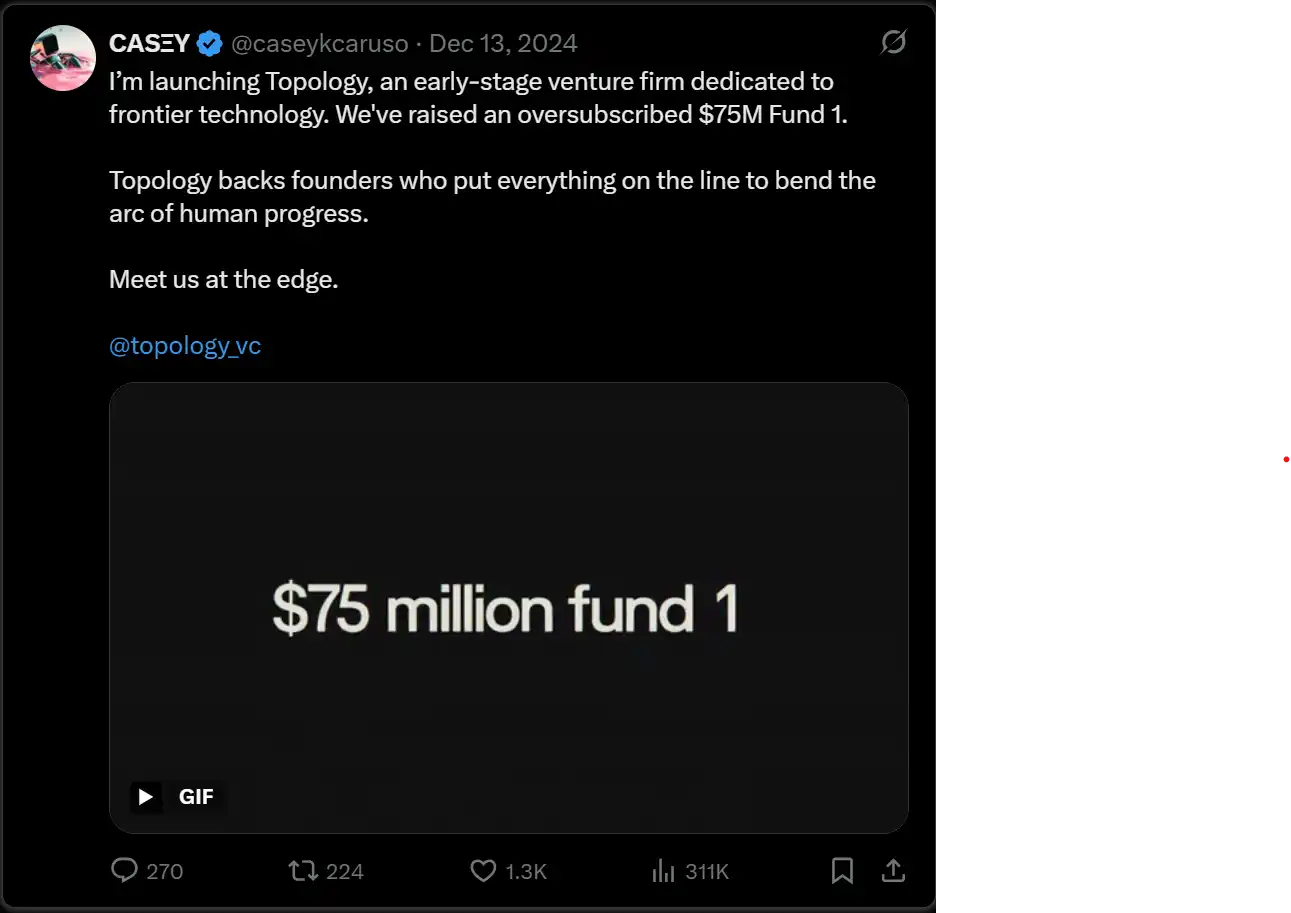
· Web3 AI Venture Trends (DeAI Infrastructure Investment, Distributed Training, Inference Networks, etc.)
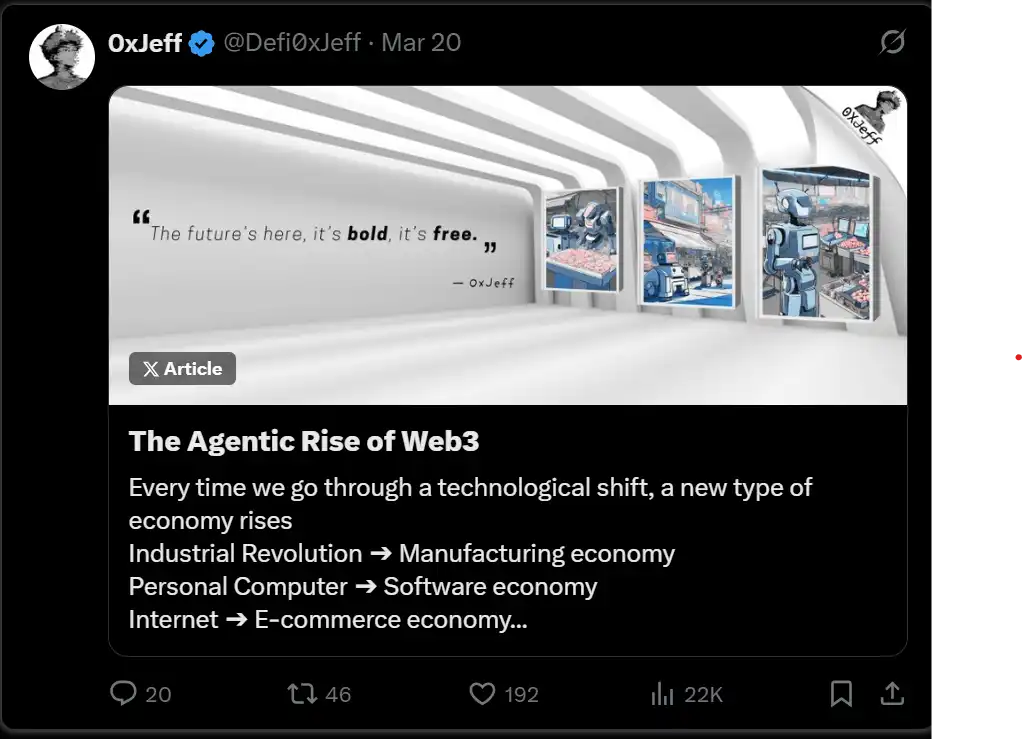
· Web3 AI Retail Trends (AI Agent Ecosystem, Consumer-Facing Agents, Consumer AI Applications)
Web2 vs. Web3 AI: Entirely Different Environments
For Web2, due to its significantly larger Total Addressable Market (TAM) compared to Web3—meaning, there are many enterprises looking to leverage AI to transform/optimize their businesses, improve workflows, and therefore bring in more potential customers, higher conversion rates and sales, better customer retention, reduced management costs, achieve more efficient operations—these enterprises will seek solutions that address their specific pain points and meet their vertical needs.
This "Optimization Demand" has attracted many young entrepreneurs to try to use AI agents to improve traditional workflows. Compared to traditional SaaS, AI agents can significantly reduce costs or bring in more leads, allowing these startups to charge higher subscription fees for their services (which is why we see many startups achieve 7-8 figure ARR within a few months).
On the other hand, the trend in Web3 venture capital is very different. Because blockchain is inherently the ideal infrastructure for decentralized AI, such as verifiable/immutable transaction records, a trustless environment, decentralized computing power, and AI inference and training with minimal trust assumptions (these terms are a bit much, but you get the idea).
In summary, the future direction is this—people know how their data is being processed, understand the AI's reasoning logic, own their data, models, and use cases, and are incentivized to share without review. And Web3 VCs are consistently investing in this future.
Why Retail Investors Like AI Agents (Even if They Haven't Grasped DeAI Yet)
For Web3 retail investors, DeAI is hard to understand because it requires mastering a lot of terms and figuring out what the core value is (sometimes it's like an alien language). So they tend to flock to projects that are "easiest to understand"—starting with chatbot-type AI agents that can talk, be funny, and interact.
But as they continue to stay in this industry, they will realize that these things cannot create continuous value for users (yes, many AI agents are actually useless and lack originality). This awakening, coupled with the current bearish and volatile market environment, has led to a market purge—useless AI agents are eliminated, while useful ones, although heavily devalued, are still surviving.
People are starting to realize: there must be truly useful AI products and real-world scenarios. This awakening drives teams to either develop real products or integrate with AI projects that have real technology, such as @AlloraNetwork and @opentensor (Bittensor).
This shift has two benefits:
1) It makes people start paying attention to the infrastructure that is less easy to understand but truly valuable;
2) It allows AI agents to have real-world use cases to showcase to the community.
Before this change: AI agents would only perform basic functions (chatting, post analysis)
This transformation has enabled intelligent agents to master more advanced and practical skills (AI-driven betting, trading, providing liquidity, mining, etc.)
Intelligent agents like @AskBillyBets and @thedkingdao have become representatives showcasing the capabilities of the Bittensor subnet, bringing cool technology into the public eye.
Bittensor Ecosystem
What I find particularly interesting about the Bittensor ecosystem is that it is a decentralized AI ecosystem in which you can directly participate and invest. Currently, most DeAI projects are still in very early stages, only accessible to VCs or strategic investors, and the average person cannot participate because many projects have yet to issue tokens.
However, on Bittensor, anyone can stake their $TAO in a subnet they wish to support, thereby exchanging it for that subnet's Alpha Token (akin to "going all-in" on these DeAI projects).
I've previously criticized the poor user experience of bridging and trading, but in terms of technology, product, and community, especially teams like @rayon_labs, they are really strong and have a great vibe.
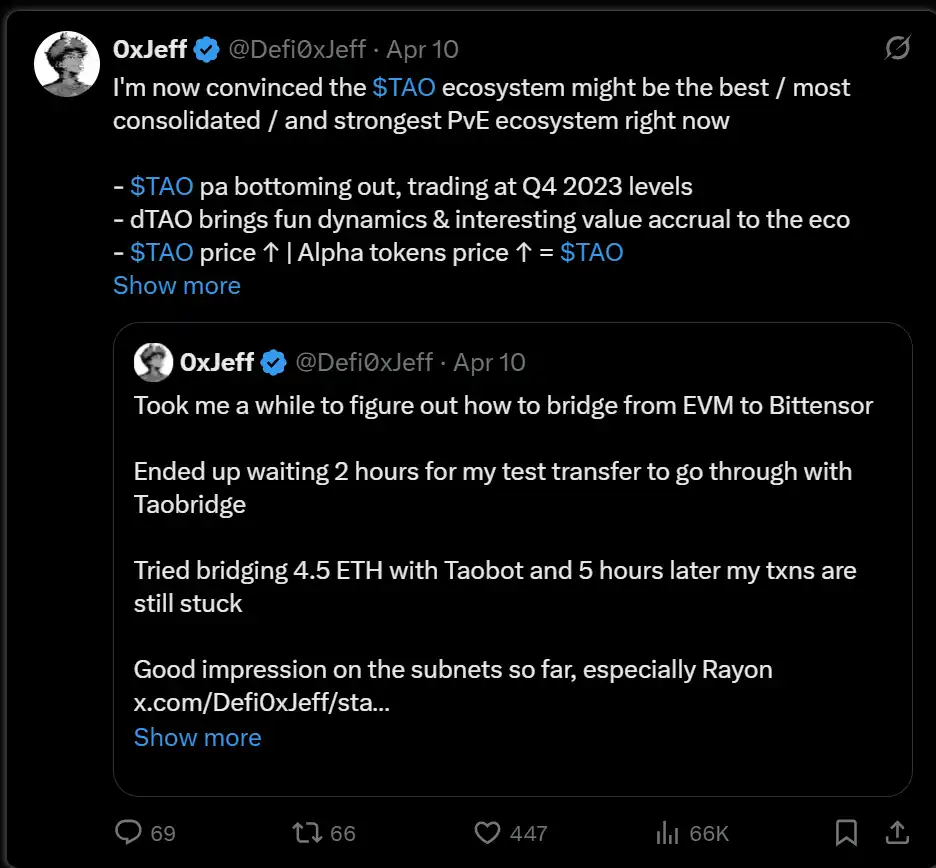
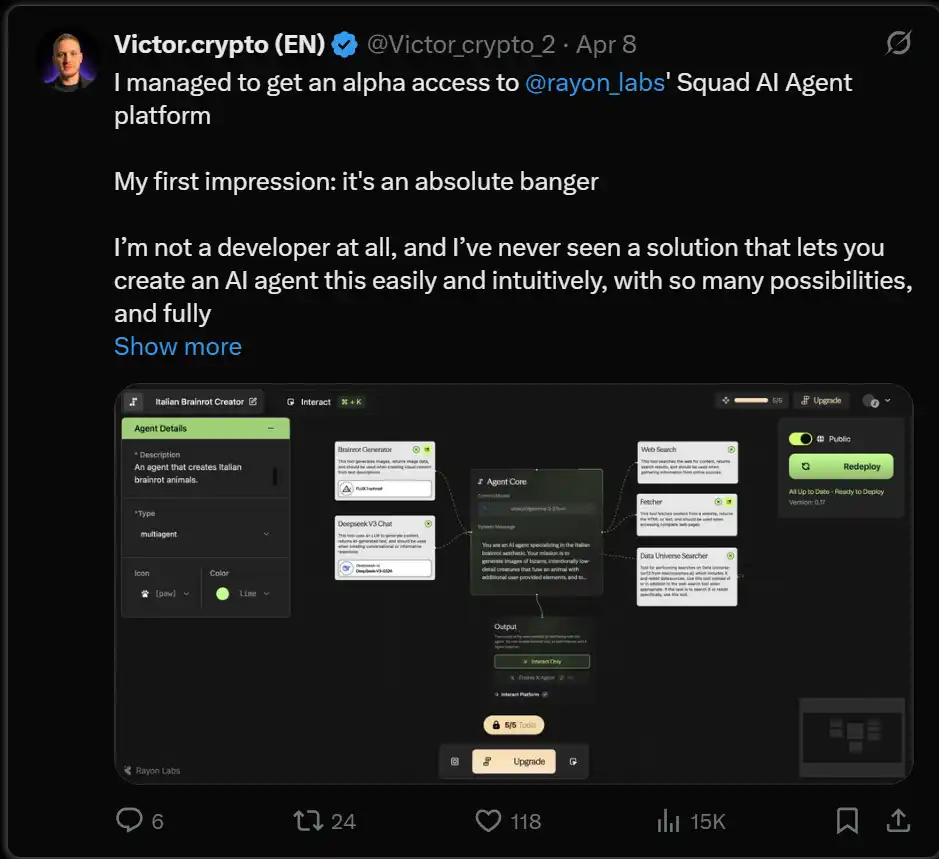
What I admire about Rayon Labs is their focus on creating consumer-oriented UI/UX optimized products. Considering that the mechanism of dTAO is determined by the market to decide how much incentive emission each subnet can receive and the valuation of that subnet, it becomes increasingly important whether "each subnet can build a product that is easy to understand and use."
Rayon has many cool subnets (possibly the coolest being Gradients, which is an autoML platform where you can easily train models), and even cooler is their latest flagship product—the Squad AI Agent platform, where you can create an intelligent agent through a drag-and-drop module method (similar to a node builder style, like @figma).
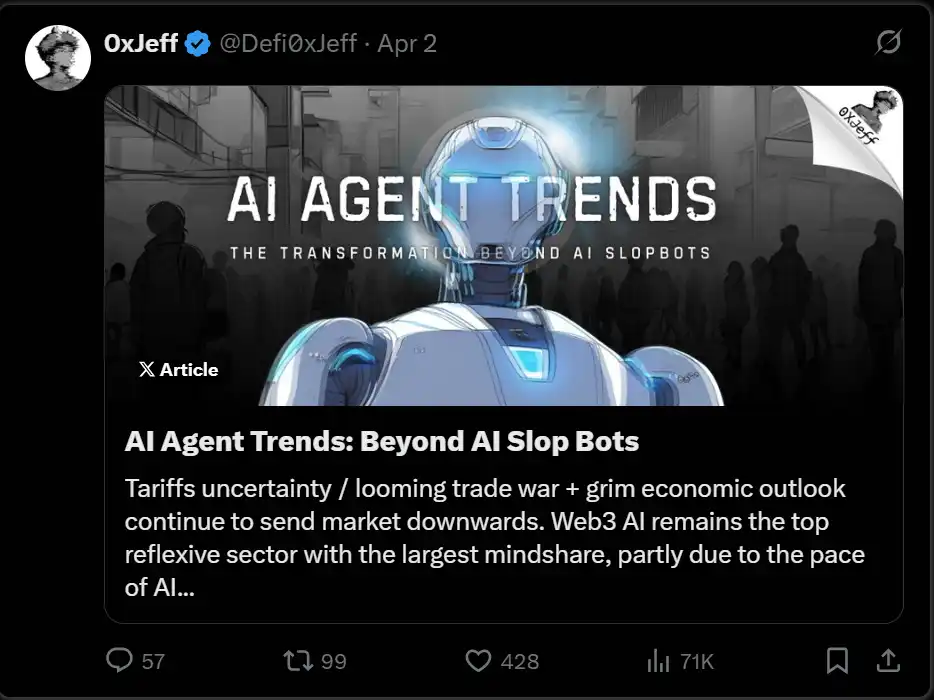
One final note: I am currently in the early stages of deepening my understanding of Bittensor, and I will write a dedicated article later to share some interesting findings and how to seize the opportunities within it. If you are also interested in learning about other trends and changes in the market, be sure to check out the article I recommend below.
You may also like

Bitcoin Market Analysis 2026: Can BTC Reach $150K by Year-End?

STRC unanchored by 11%, can the perpetual motion machine of Strategy still operate?

Bitcoin ETF Outflows Hit a Record $4.4 Billion: What Are Traders Doing With Their Cash?

WEEX App Just Got Smarter – New Tabs for Faster Trades & Easy Asset Management

Blockchain Capital Partner: The Core Secret of Arbitrage

WEEX All-New Search Features: Find, Trade & Earn Faster Than Ever

Will MicroStrategy fall into a death spiral? What will the macro trend be in the second half of the year?

Morning Report | Illinois signs the strictest digital asset tax law in the U.S.; RWA tokenization market size surpasses $43 billion, institutions accelerate the migration of on-chain assets

Full version of the debut Q&A! Federal Reserve Chairman Waller: Sticking to the 2% inflation target, establishing five special working groups, individual did not submit the dot plot

From Disruptor to Shadow Market: The Crypto Market is Becoming a Colony of Traditional Finance
Dalio's important long article: How to position in the current market environment?

OKX Star analyzes Binance's competitive advantages: when regulation levels the playing field, competition has just begun

New gameplay for participating in initial offerings on cryptocurrency exchanges
Why Is Bitcoin Down Today? What the Hawkish FOMC Means for SpaceX, Gold and Nasdaq

DeepSeek Financing Story

Morning Report | DeepSeek completes over $7 billion in financing, with a valuation exceeding $50 billion; Musk's personal wealth has surpassed the total market value of Bitcoin
Cursor, why did you get on Musk's spaceship?
In the name of charity, for the benefit of the family: How the Trump family turned charity into profit?
Bitcoin Market Analysis 2026: Can BTC Reach $150K by Year-End?
STRC unanchored by 11%, can the perpetual motion machine of Strategy still operate?
Bitcoin ETF Outflows Hit a Record $4.4 Billion: What Are Traders Doing With Their Cash?
WEEX App Just Got Smarter – New Tabs for Faster Trades & Easy Asset Management
Blockchain Capital Partner: The Core Secret of Arbitrage
WEEX All-New Search Features: Find, Trade & Earn Faster Than Ever


