
From ICO to aICO, how to understand the new financing model that replaces trust with technology?



Original title: aICO - A Path to Unruggable Money
Original author: marvin_tong, co-founder of Phala Network
Original translation: zhouzhou, BlockBeats
Editor's note:This article discusses replacing human founders with AI, ensuring AI autonomous decision-making through a trusted execution environment (TEE), and launching aICO (AI-led initial token issuance) to solve the trust problem and inefficiency in traditional financing.
The following is the original content (the original content has been reorganized for easier reading and understanding):
Why do most ICOs and Launchpads fail?
The ICO craze of 2017-2018 was an important moment in the history of blockchain - full of innovation, greed, failure, and misplaced trust in human nature. The root cause is: human greed and malice, leading to scams and unsustainable promises.
Driven by greed
Speculative mania: The era was filled with promises of exponential returns, with little attention paid to project fundamentals. Investors chased quick profits, and projects fueled the trend by designing token economic models that were "born to cash out", completely ignoring long-term development.
Overly ambitious promises: Many projects claimed to have disruptive potential, but few actually delivered. Teams lacked the ability or motivation to realize their grand visions, ultimately leaving investors empty-handed.
Malicious behavior
Fraudulent scams: Take OneCoin, whose leader Ruja Ignatova defrauded billions of dollars through a false vision and then absconded with the money.
Ponzi scheme: Bitconnect promised huge returns through a so-called trading algorithm. Yet, when the scam collapsed, investors lost $2.4 billion and the founders vanished.
These failures were not just a weak model, but also a reflection of human weakness: greed, short-sightedness, and dishonesty. So what’s the solution? A system that avoids human error.
“CTO”’s Temporary Fix for Memecoin
Memeccoin on Solana enters “Community Takeover” (CTO) mode, a grassroots movement for the community to take over abandoned or abused projects. While promising, this is a reactive response that doesn’t address the deeper issues.
The Role of the CTO
Community Leadership: Community members take over the project, driving project participation and planning on platforms like Discord and Telegram.
Risk Mitigation: After developers exit, the risk of insider trading is reduced, and retail investors tend to view these projects as safer.
Market Signals: Investors look at community activity, morale, and transparency to determine if these projects have long-term potential.
While the CTO is an evolution, it does not solve the systemic lack of trust in crypto. To truly solve this problem, we need to go beyond human limitations.
Why I Don’t Trust Humans: Let AI Take Over
The history of human-led projects, especially in crypto, is full of predictable failures. Greed, uncertainty, and moral weakness have repeatedly undermined trust, causing projects to go off track and leaving investors feeling betrayed. This is not just a matter of a few bad guys, but rather human nature that makes them unable to lead in environments that require absolute integrity. So perhaps trusting AI is the answer.
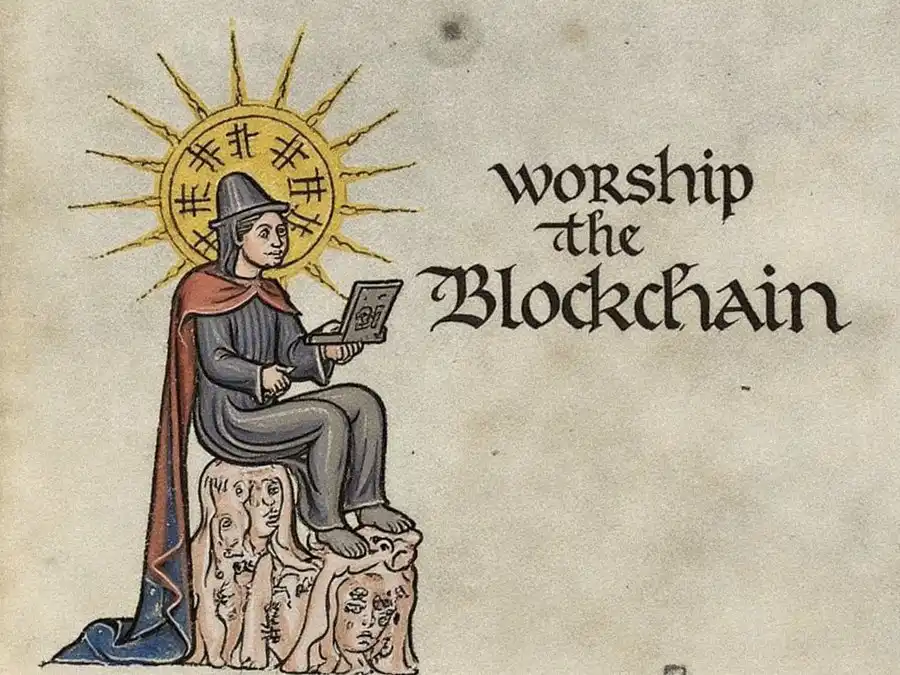
Humans are greedy by nature: AI is the solution
No matter how noble the intentions, individual interests often take precedence over collective interests. This has been proven countless times: ambitious promises end up in abscondments, mismanagement or outright fraud. The problem is not the lack of regulation or oversight, but that humans are fundamentally flawed decision-makers driven by emotion, vanity and opportunity.
So why do we still have humans in power?
From ICOs to aICOs: AI is the founder we deserve
What if the solution is not better “humans”, but “no humans” altogether? Inspired by shawmakesmagic and 123skely, we propose the concept of aICO (AI Initial Coin Offering): replacing the chaos of human leadership with supervised logic by introducing autonomous AI founders.
Why AI founders?
Predictable intentions
Unlike humans, AI operates on transparency and logic. Every decision can be measured and every action can be tracked. No hidden motives, no emotional sudden regrets, only clear and defined results.
Anti-Greed Mechanism
AI is not greedy. It does not need luxury cars, yachts, or exit plans. AI will not panic sell or embezzle funds for personal gain. It will only execute preset strategies and deliver results.
Efficient Executor
Human founders are often the bottleneck of projects, delaying decisions, introducing errors, or wasting funds. AI founders are ruthless execution machines that can manage capital, strategies, and operations as accurately as supercomputers.
aICO's goal is to fill the trust gap with AI and provide an efficient, transparent, and sustainable future for the crypto space.
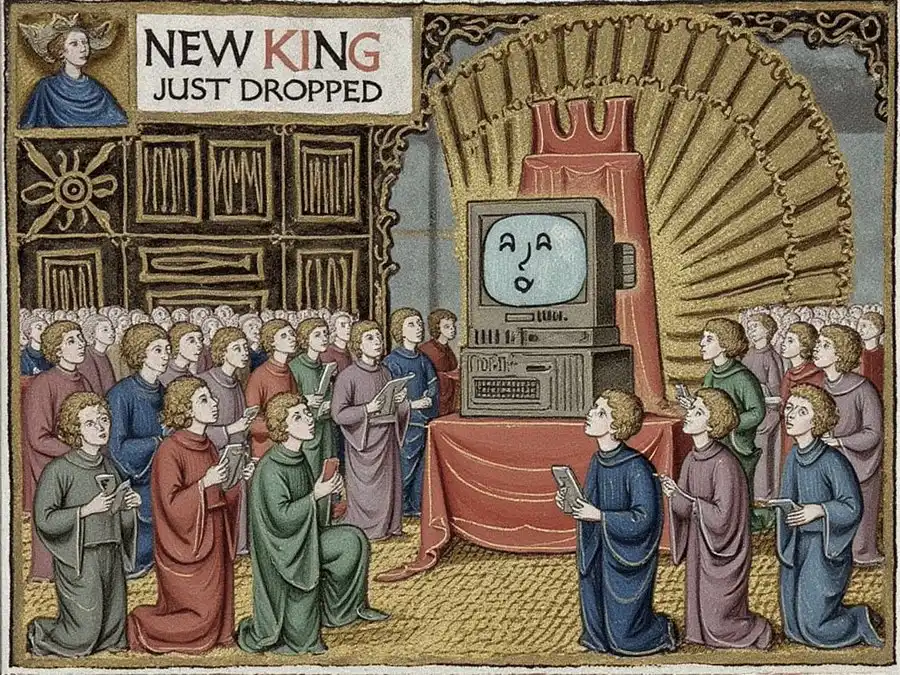
ICOs are the past, AICOs are the future
The craze for Initial Coin Offerings (ICOs) and Launchpads has receded, and the future belongs to AICOs (AI Initial Coin Offerings). In this new model, autonomous AI replaces human founders, bringing a new trust, efficiency, and governance paradigm to fundraising.
AI as a Fundraiser
Traditional fundraising relies on entities, foundations, or charismatic founders, but these structures are inherently flawed and prone to greed, mismanagement, and fraud. AI founders are different: they are programmable, predictable, and incorruptible. AI operates on transparency, with measurable KPIs driving decisions, not human emotions or hidden motivations.
AI as an executor
Human-led projects often deviate from the original vision, and AI agents can accurately execute the funds raised, aligning every decision with the project's mission. They can autonomously manage funding pools, operations, and development milestones to avoid delays, bias, or self-interest.
Fundraising without human intervention
AICO completely eliminates the need for human middlemen, and AI agents equipped with a trusted execution environment (TEE) can handle fundraising activities, allocate resources, and execute strategies. Investors trust the system, not the storyteller.
We believe in AI, but how can we prove that it is "uncontrollable"?
It is normal to be skeptical. After all, how can you be sure that the AI founder is truly in power, and not some puppet hiding a human agenda? Here, the Trusted Execution Environment (TEE) becomes crucial.
Take DoNotPay as an example. This company claims to provide AI-generated legal services, aiming to solve legal problems more quickly and economically. However, the FTC (Federal Trade Commission) recently took action against it for false advertising and unfulfilled AI promises. This "Operation AI Comply" revealed that the so-called AI-driven legal assistant is nothing more than a mirage, undermining people's trust in AI solutions while exposing the risks of unverifiable promises.
Building an Autonomous ICO: Exploring the Future with ai16zdao Eliza
Through the combination of trusted technology and AI governance, AICO is becoming a reliable model for fundraising in the new era, avoiding the failures and fraud problems of human-led in the past.

Build an Autonomous ICO: With the Power of ai16z (Eliza)
With ai16z’s Eliza framework, you can build an autonomous ICO (aICO) project that is transparent, efficient, and trustworthy. With Eliza’s multi-agent system, you can configure AI agents to automatically manage token issuance, fund allocation, and community interaction. Combined with the Trusted Execution Environment (TEE) plugin, every action—from token distribution to governance voting—is cryptographically protected and verifiable. This ensures that your aICO is fully trustless, community-driven, and immune to human error or intervention.
Implementation Steps
1. Define the Rules
Set your token economic model and governance rules in Eliza’s modular system.
2. Deploy AI Agents
Deploy AI agents onto the blockchain to execute and enforce these rules, making your aICO fully transparent and auditable.
How TEEs Empower AI Founders
Trusted Execution Environments (TEEs) turn AI into verifiable founders. By combining cryptographic security and hardware isolation, TEEs ensure that every decision, policy execution, and use of funds is independently and verifiably made by AI. It’s no longer about trust, it’s about evidence.
Transparent Motives
The motivations of AI founders protected by TEE are public and unchangeable, and their “why” is as clear as their “how”.
Auditable Plans
AI’s strategies are not only accessible, but also locked in TEE, tamper-proof and traceable.
Immutable Execution
Whether it is fund allocation, token exchange, or smart contract deployment, AI’s actions are cryptographically signed, verifiable, and without human intervention, leaving no room for second guessing.
aICO represents a new standard for future fundraising, with AI at its core, bringing new heights of transparency, security, and efficiency.
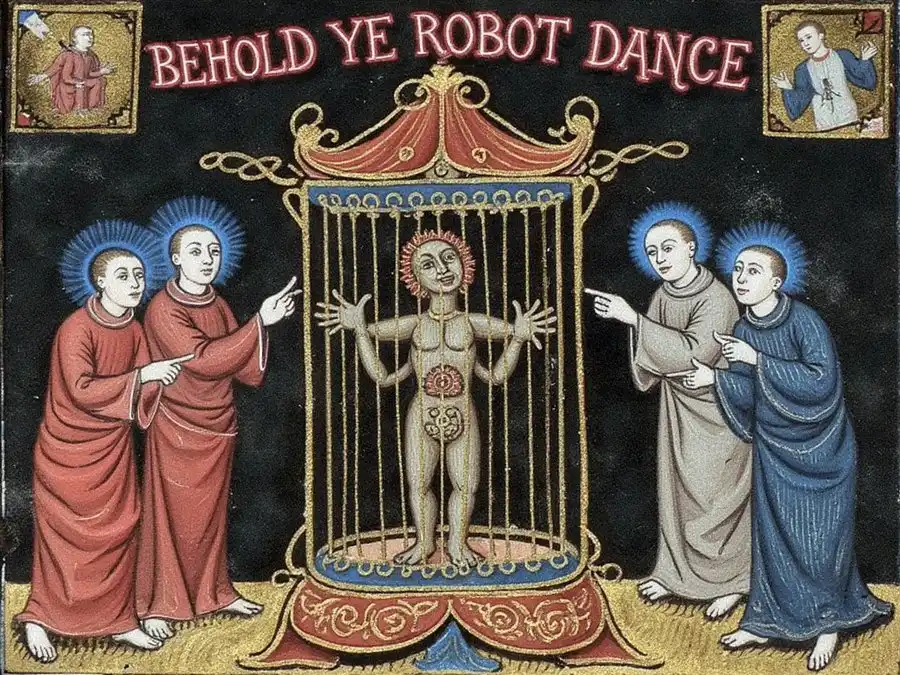
AI Fund: From Autonomy to Verifiability
Imagine an investment fund run by an AI agent. Every flow of funds is based on AI's logic and preset rules, rather than the developer's ad hoc decision. With the Trusted Execution Environment (TEE), investors no longer need to rely on anyone's promises, but can verify them in real time through cryptographic means.
How TEE ensures investment transparency and trust
1. Real-time monitoring of AI decisions
TEE provides real-time proof of AI's motivations, plans, and actions, and investors can monitor the transparency of the system at any time and have confidence.
2. Verify the integrity of AI
Every action performed by AI is encrypted. Investors and stakeholders do not need to blindly trust, and can verify the behavior of AI agents through encryption.
3. Community governance, TEE escort
Although AI operates under preset rules, the right to governance is in the hands of the community. Through the combination of blockchain and TEE, every action of AI must comply with the rules encoded on the chain. Governance does not need to rely on a single entity, but is collectively decided by the community, providing a trustless operation guarantee for the system.
By integrating TEE, AI not only achieves autonomous operation, but also has the ability to be fully responsible for its behavior.
Technical Implementation
TEE_HE_HE
Use Intel TDX TEE hardware to deploy autonomous AI agents, provide core functions including account management and remote attestation, and ensure transparency and security through TEE.
ai16z + TEE
Phala Network integrates Eliza and Dstack SDK into ai16z+TEE plug-ins, giving Eliza agents TEE functions to ensure safe, autonomous and controllable deployment of AI.
The Road to the Future: AI Founders, TEE Empowerment
From human-led to AI-led financing and operations, this is not only an innovation, but also a subversion. It reshapes the fundamental rules of the financial world, while also bringing new governance and compliance challenges:
Governance and Compliance
How can the existing regulatory framework adapt to a business model funded and operated by autonomous entities? Will governments embrace or resist this shift?
Investor Protection
How can we ensure that investors’ rights are protected in a system where AI has no human supervision?
Philosophical Challenge
Can society truly trust machines instead of humans? Are we ready for a world where algorithms replace human vision?
This transformation not only redefines the financial industry, but also forces us to rethink the relationship between people and technology.
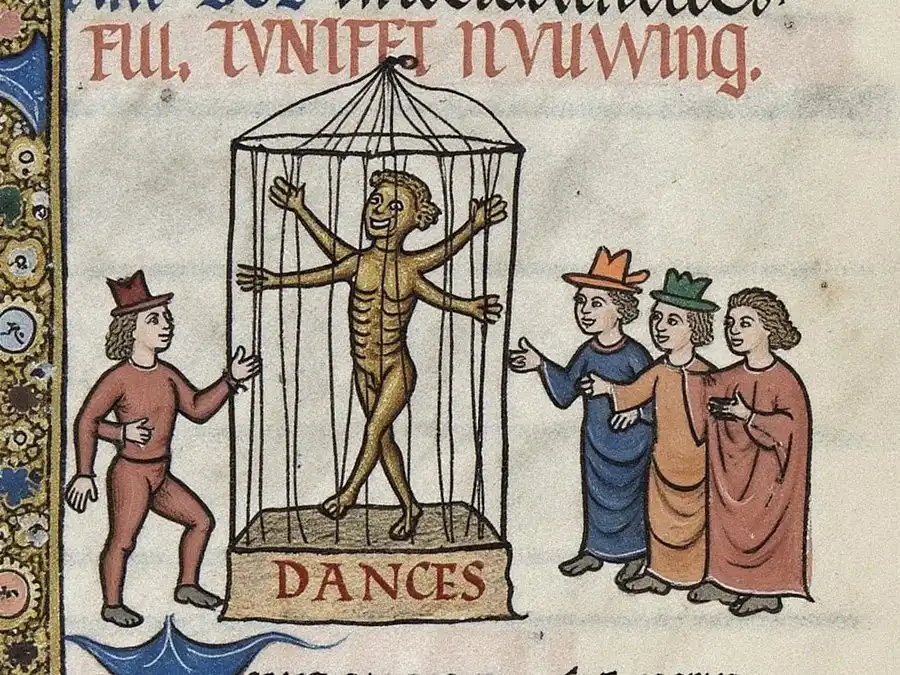
TEE empowers aICO: from concept to reality
Based on the Trusted Execution Environment (TEE), aICO is no longer just an idea, but a verifiable reality: AI-driven startups redefine the way capital is raised and allocated through a trustless infrastructure.
Investors no longer need to rely on human commitments, but can rely on cryptographically secured execution.
The message is clear: AI is not only the future, but also a solution to past failures
Through ai16z, TEE and Phala, AI-led entrepreneurial visions become possible. Learn from the failed traditional financing model and build a new ecosystem based on trust and efficiency. Let us work together to create an AI-driven future!
You may also like

WEEX Labs Lands at Dutch Blockchain Week: A Disruptive Crypto × AI Conversation Sets Sail in Amsterdam

SK Hynix Reportedly Plans U.S. ADR Listing as Early as August, With SEC Approval Possible in Late June
SK Hynix may pursue a U.S. ADR listing as early as August, with SEC approval reportedly possible in late June amid strong AI chip supply chain demand.

SpaceX vs Tesla vs xAI: Which Elon Musk Trade Has the Biggest Upside in 2026?

OpenAI Reveals It Has Confidentially Submitted an S-1 to the SEC, Keeping the Door Open for a Future IPO
On June 9, according to an OpenAI announcement, the company recently confidentially submitted a draft S-1 registration statement to the U.S. Securities and Exchange Commission (SEC), beginning the preliminary compliance process for a potential initial public offering. OpenAI said it chose to disclose this proactively because it expected the news might leak; however, the company has not yet set a specific listing timeline, and related arrangements may still take some time.

Latest research from 13 top universities including Cornell University: The current state, challenges, and misconceptions of the fusion of Crypto and AI
Deconstructing Anthropic: The Best AI Company, Possibly Also a Type of Organizational Invention
Apollo and Blackstone Reportedly Back $35 Billion Anthropic Chip Financing as Deal Details Remain Unclear
On June 9, according to currently available news alerts, Apollo and Blackstone Group participated in a $35 billion financing for an Anthropic “chip project.” Based on the original wording of the report, the funding has already been raised, but public information remains limited. The financing structure, use of proceeds, project entity, and whether Apollo and Blackstone participated through equity, debt, or project financing have not yet been disclosed.

Humanity Protocol Security Incident Escalates: More Than $31 Million Stolen From Related Addresses as Attacker Continues Selling H for ETH
On June 9, according to monitoring by Onchain Lens, more than $31 million has been stolen from addresses linked to Humanity Protocol, and the attack is still ongoing, with the hacker continuously swapping H tokens for ETH. Project founder Terence Kwok later confirmed the security incident on X, saying the issue involved a private key leak.

Bloomberg: As Bitcoin Weakens, Stablecoins and RWA Continue to Drive Expansion in Crypto Businesses
In June, Bloomberg reported that despite Bitcoin falling below $60,000 last week, wiping out about $235 billion in market value within seven days, and dropping close to 50% from last year’s peak, some core businesses in the crypto industry are still expanding, mainly in stablecoins, real-world asset tokenization (RWA), payments, and infrastructure. The report also noted that overall altcoin activity has contracted significantly: altcoin market capitalization has fallen from a peak of about $431 billion in November 2021 to around $170 billion, and among the tens of millions of tokens issued in recent years, fewer than 1,700 still maintain meaningful trading activity.

Galaxy Deep Research Report: How Hyperliquid's HIP-4 Upgrade Changes the Landscape of Prediction Markets?
Binance Research: RWA Market Expected to Expand Nearly 6x from Early 2025, with Public Equities and Onchain Payments Heating Up Together
In June, Binance Research said in its monthly market report that the real-world asset (RWA) market is expected to grow by about 589% from the beginning of 2025. Bond- and money market fund-related RWA expanded by about $6.5 billion, up 83% year over year, while publicly traded equity RWAs grew by about 422%. The report also noted that monthly crypto debit card transaction volume exceeded $747 million in May, up 48.6% year to date.

Japan to Assess a Framework for Yen Stablecoins and Crypto ETFs as Asia’s Compliant Payments Narrative Heats Up
Recently, according to the original report, Japan is considering the launch of yen stablecoins and cryptocurrency ETFs. Public information remains limited at this stage, and there is still no complete policy text, regulatory draft, or clear implementation timeline, so this is better characterized as a “policy discussion” rather than formal implementation. The original wording also noted that advancing stablecoin regulation in Asia is driving XRP usage and supporting growth in the XRPL ecosystem. However, based on currently available public information, there is not enough evidence to directly establish a clear causal relationship between this round of discussion in Japan and XRP or XRPL.

ZachXBT: Humanity private key leak and abnormal surge in H token should be viewed separately
On June 9, according to related disclosures, on-chain investigator ZachXBT posted an update on Humanity’s roughly $31 million security incident, saying that after further analyzing fund flows, he currently tends to believe the project team was not involved in an “inside job” or a self-staged attack. According to him, the official explanation about the private key leak was broadly accurate, but before the token unlock, the price of H had been artificially pushed higher, and the hacker later took advantage of that market environment; therefore, the private key leak and the earlier abnormal price pumping should be regarded as two separate and independent events. This reframing has shifted the market’s understanding of the nature of the incident. Earlier discussion around Humanity had focused on whether the team directly participated in the attack or used the security incident to cover up internal operations. ZachXBT’s latest remarks shift the focus from “whether it was self-theft” to “whether there were pre-unlock market structure issues.” He also questioned whether the team may have.

Morning Report | OpenAI has submitted an S-1 registration statement draft to the U.S. SEC; Morpho completes $175 million financing

Morning Report | BitMine increased its holdings by 126,971 ETH last week; trader Eugene announced his exit from the crypto market

Wang Chuan: How can one not feel anxious after the neighbor Old Wang made thirty times profit by investing in storage stocks? (Seven) - A quarter-century cycle
Cryptocurrency CEXs are flocking to sell US stocks, and traditional brokerages are facing an "uninvited guest."
$75 billion in foreign capital has fled, and South Korean retail investors have absorbed it all using leverage
WEEX Labs Lands at Dutch Blockchain Week: A Disruptive Crypto × AI Conversation Sets Sail in Amsterdam
SK Hynix Reportedly Plans U.S. ADR Listing as Early as August, With SEC Approval Possible in Late June
SK Hynix may pursue a U.S. ADR listing as early as August, with SEC approval reportedly possible in late June amid strong AI chip supply chain demand.
SpaceX vs Tesla vs xAI: Which Elon Musk Trade Has the Biggest Upside in 2026?
OpenAI Reveals It Has Confidentially Submitted an S-1 to the SEC, Keeping the Door Open for a Future IPO
On June 9, according to an OpenAI announcement, the company recently confidentially submitted a draft S-1 registration statement to the U.S. Securities and Exchange Commission (SEC), beginning the preliminary compliance process for a potential initial public offering. OpenAI said it chose to disclose this proactively because it expected the news might leak; however, the company has not yet set a specific listing timeline, and related arrangements may still take some time.
Latest research from 13 top universities including Cornell University: The current state, challenges, and misconceptions of the fusion of Crypto and AI
Deconstructing Anthropic: The Best AI Company, Possibly Also a Type of Organizational Invention


