
Gate.io Makes Appearance at 2025 Davos Forum - Laura K. Inamedinova Leads Core Discussion on Web3 and Crypto Investment


Source: Gate.io
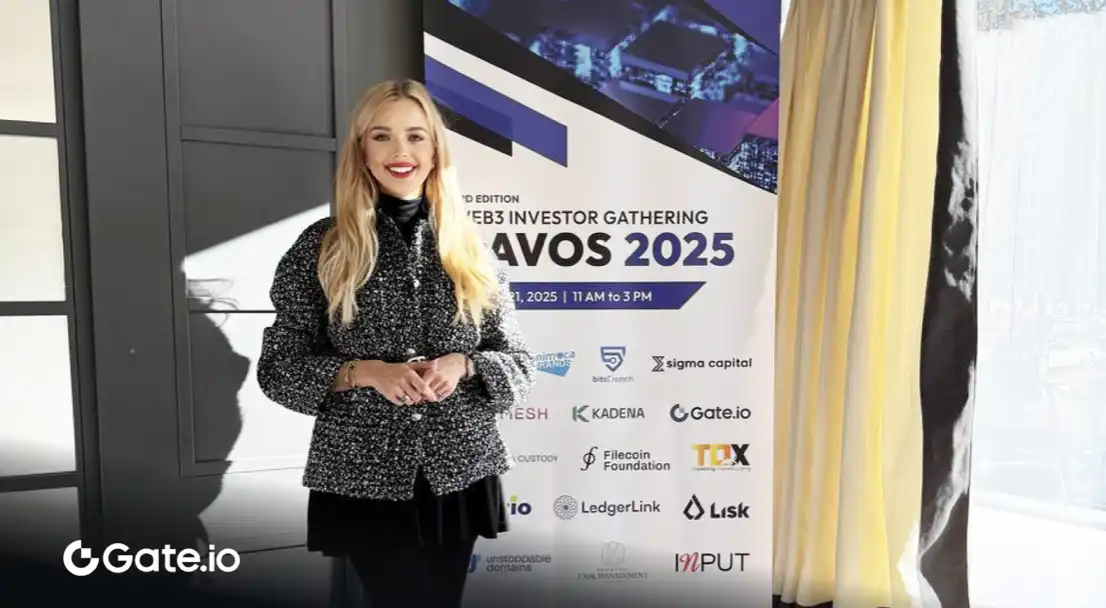
Gate.io led key discussions at the 2025 Davos Forum, with Gate.io's CGEO Laura K. Inamedinova representing the company in a high-level discussion on the future of Web3, finance, and regulation. As a keynote speaker, she engaged in deep conversations with global leaders, investors, and policymakers, showcasing Gate.io's commitment to shaping the digital asset landscape and driving industry innovation.
Gate.io was proud to sponsor the 2025 Davos Web3 Investor Summit, a premier event bringing together top crypto experts, institutional investors, and regulators. Laura participated in a roundtable discussion on the theme "Building the Future of Finance," delving into how payment innovation, market dynamics, and data-driven strategies are reshaping the financial industry. The discussion focused on the growing role of blockchain in institutional finance, the evolution of decentralized technologies, and the need to strike a balance between regulation and innovation. As a key sponsor of the summit, Gate.io played a crucial role in facilitating in-depth discussions, contributing significantly to advancing the adoption of Web3 and shaping the future of investments.
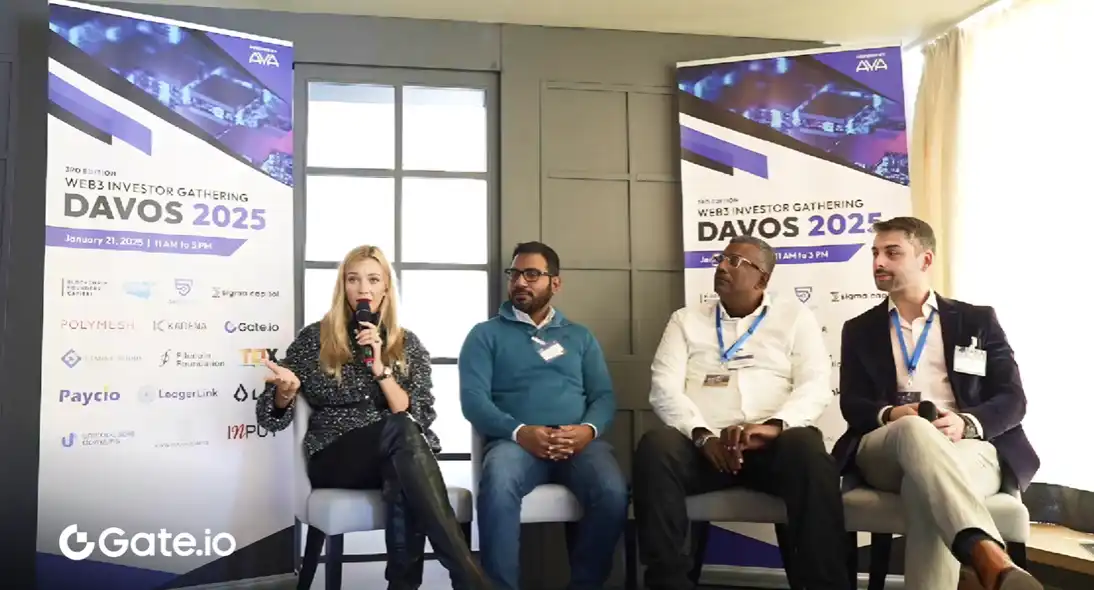
On the same day, Laura attended the EMTECH Invest 2025 Forum, which focuses on emerging technologies and investment strategies. As a guest on the panel "Universities of the Future and the Next Generation of E-learning," she explored how blockchain, tokenization, and AI-driven platforms are reshaping the education landscape. The discussion centered on how Web3 technology is redefining academic credentialing, decentralized learning, and adaptive educational models to empower the next generation in a rapidly evolving digital economy, ushering in a new chapter in education.
On January 23, Laura moderated the "Post-MiCA Crypto Investment Landscape" roundtable, delving into the impact of the EU's Markets in Crypto-Assets regulation (MiCA) framework, continuing her active role and influence in key industry events. The discussion covered whether MiCA's regulatory approach would stifle innovation and how compliance challenges are driving more projects towards decentralized finance (DeFi). The group also explored regulatory blind spots, including NFTs and meme coins, and the market consolidation that strict compliance requirements could bring. As the moderator, Laura ensured the discussion was vibrant and thought-provoking, providing valuable insights for investors and industry participants on navigating the evolving European regulatory landscape.
In addition to delivering a keynote speech, Laura also attended a series of high-end social events on January 22, further solidifying Gate.io's relationships with key stakeholders in the Web3, financial, and regulatory fields. Her presence in these high-level discussions not only showcased Gate.io's position as a leader in the digital asset innovation space but also facilitated bridge-building between regulation and investment, driving crucial dialogues that will shape the future of blockchain technology.
With the successful conclusion of the 2025 Davos Forum, Laura's contributions further underscored Gate.io's commitment to industry advancement through fostering dialogue among regulators, investors, and innovators. Her strong presence in this series of key events highlighted Gate.io's continued leadership in driving conversations on key topics such as Web3 adoption, regulatory transparency, and the future of digital asset investment.
This article is contributed content and does not represent the views of BlockBeats.
You may also like

Why Is BlackRock Investing $5 Billion in the SpaceX IPO?

Cryptocurrency market makers collectively seek change as it becomes increasingly difficult to make money

a16z Crypto Partner: Cash flow is the moat

Citibank releases "2030 Asset Tokenization Market Outlook": 6 major trends may create a $8.2 trillion market

The trillion-dollar valuation test: Are the three major super IPOs a celebration for tech stocks or a nightmare for the crypto market?

Morning Report | Digital Asset completes $355 million financing led by a16z Crypto; Meta completes operational separation from Manus
Morning News | CME Group launches Nasdaq Cryptocurrency Index futures; Asset management giant Janus Henderson strategically invests in Ethena

Bitcoin Layer 2 Network Botanix: Why Did We Choose to Dissolve?

Why did Oracle deliver the strongest financial report in history, yet its stock price fell?
When the P2P illicit funds from ten years ago turned into 60,000 bitcoins

Dialogue with OmenX Founder: Why does the prediction market need an evolution from "spot" to "derivatives"?
Galaxy in-depth report: Is Solana still worth paying attention to?

Young people in South Korea make a "final effort" in the epic bull market
The pricing controversy of Trade.xyz exposes the fatal weakness of Pre-IPO perpetual contracts
How much longer can Ethereum's last big buyer hold on?

World Cup 2026 Coming – WEEX Celebrates with $1M Prize Pool & Michael Owen Live

Morning Report | OpenAI has submitted an S-1 registration statement draft to the U.S. SEC; Morpho completes $175 million financing

Galaxy Deep Research Report: How Hyperliquid's HIP-4 Upgrade Changes the Landscape of Prediction Markets?
Why Is BlackRock Investing $5 Billion in the SpaceX IPO?
Cryptocurrency market makers collectively seek change as it becomes increasingly difficult to make money
a16z Crypto Partner: Cash flow is the moat
Citibank releases "2030 Asset Tokenization Market Outlook": 6 major trends may create a $8.2 trillion market
The trillion-dollar valuation test: Are the three major super IPOs a celebration for tech stocks or a nightmare for the crypto market?
Morning Report | Digital Asset completes $355 million financing led by a16z Crypto; Meta completes operational separation from Manus


