
Global Stock Markets Face Worst 3-Day Performance in 50 Years, Can the Crypto Market Hold Up?
Just one week after U.S. President Trump signed the executive order on "reciprocal tariffs," the U.S. stock market experienced a two-day crash, with a market value loss of about $6.6 trillion. Despite Trump's "tariff" turmoil washing over the global markets, he seems unconcerned and instead went to his private club in Florida to vacation and play golf.
On his way back from Florida to Washington on April 6, aboard Air Force One, Trump gave a media interview about the global market turmoil caused by last week's stock market crash. His view on the current market plunge was, "Sometimes you have to take medicine to solve a problem." After Trump made the "take medicine" remark, Nasdaq 100 futures continued to decline, dropping over 6%. Can taking medicine really solve the problem?
Stock Market Circuit Breaker, Crypto Crash
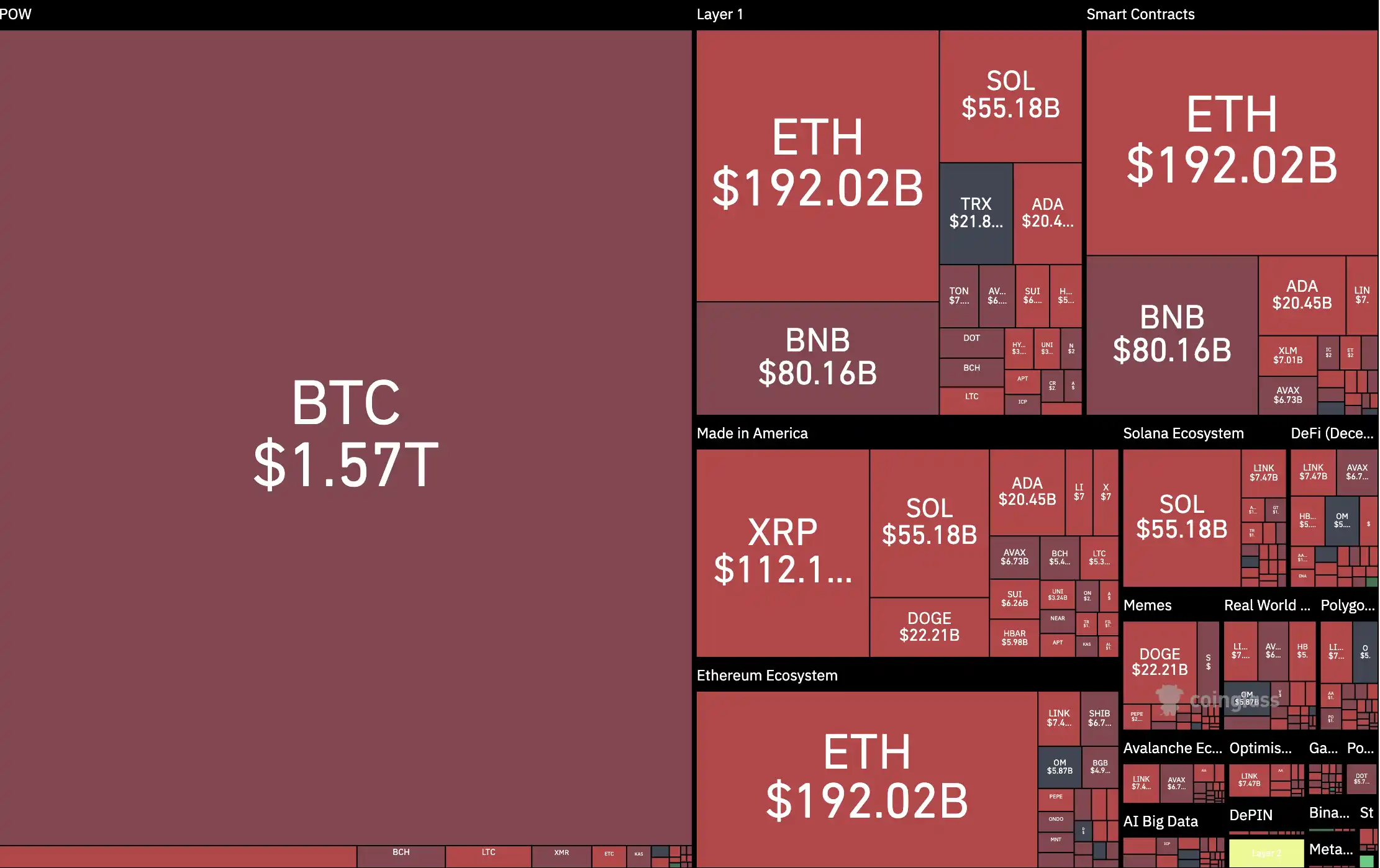
Following Trump's "take medicine" remark, global stock markets and the cryptocurrency market entered a waterfall crash mode. The cryptocurrency market took a heavy blow this morning, with Bitcoin falling below $78,000, a 6.89% drop in 24 hours. Ethereum fell below $1,600, a 13.19% drop in 24 hours. SOL dropped below $110, a 11.94% drop in 24 hours. According to Alternative data, today's crypto fear and greed index dropped to 23, compared to the weekly average and yesterday's both at 34, indicating the market sentiment is in a state of "extreme fear."
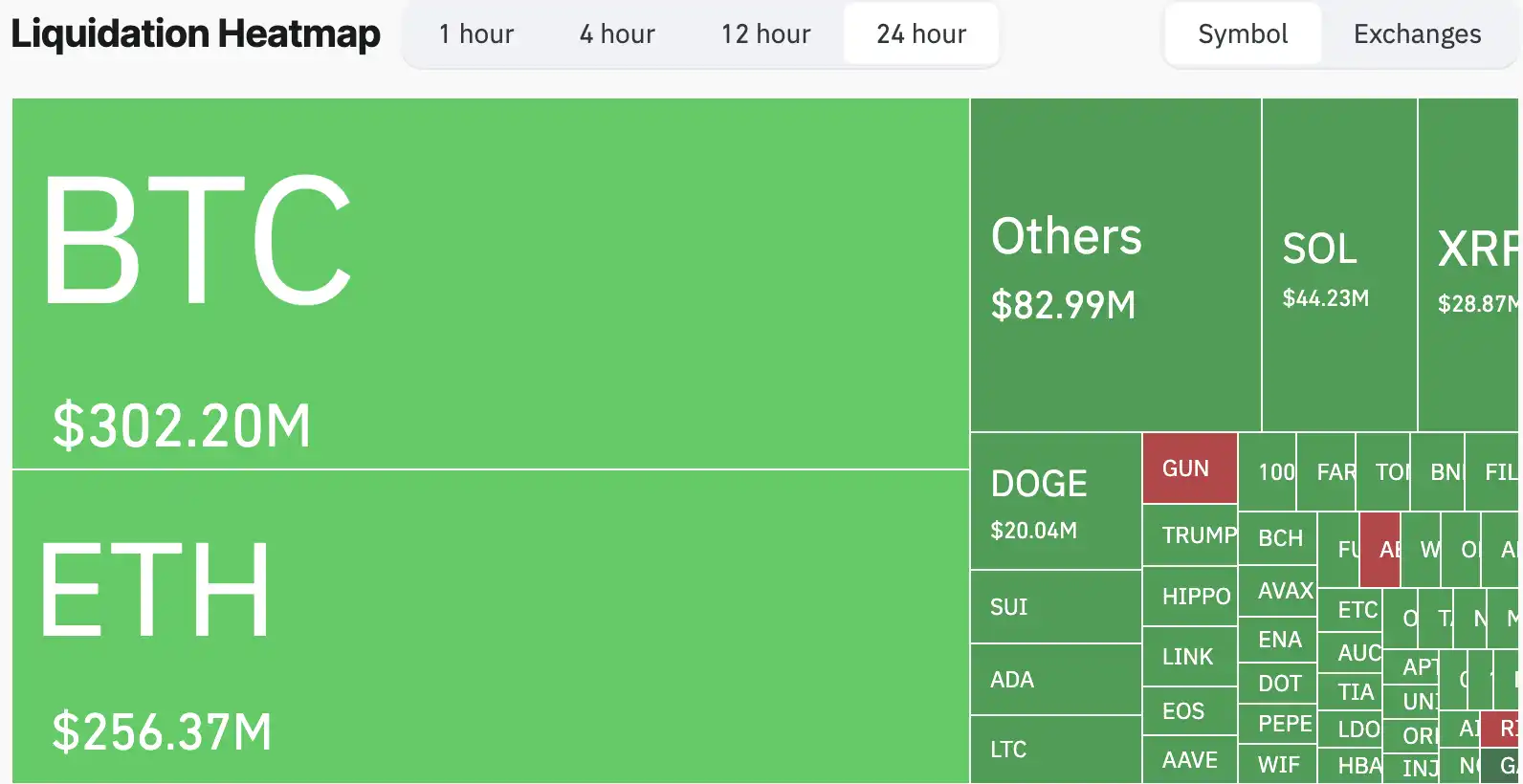
In the past 24 hours, a total of 290,000 users globally have been liquidated, with a total liquidation amount of $893 million, of which long positions account for $762 million.
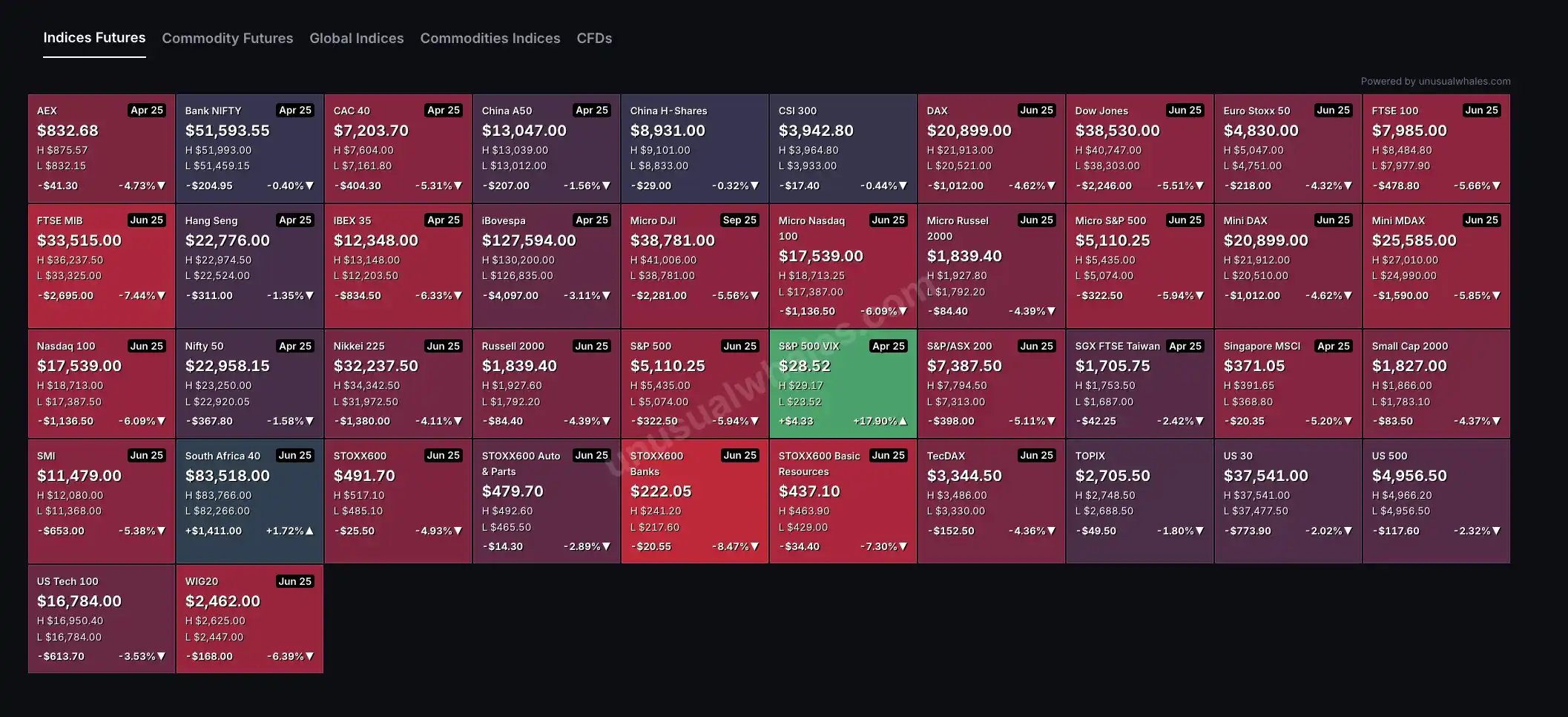
The Nikkei Futures Index opened for trading for 10 minutes, and the Nikkei average index plummeted by over 8%, dropping more than 2,500 points, breaking through the key level of 32,000 points. An announcement on the Japan Exchange Group website stated that the TOPIX futures circuit breaker was triggered at 08:45:31 Japan time and was restored at 08:55:41. This is the first time since August 5 last year that the index has fallen by more than 2,500 points, when concerns about the U.S. economy led to a single-day stock market plunge of more than 4,000 points, dubbed the "Reiwa Black Monday."
The Korea Composite Stock Price Index (KOSPI) reported 2,357.28 points at 9:02 am local time, a sharp drop of 108.14 points, representing a 4.39% decline from the previous trading day. KOSPI also activated the sidecar mechanism, suspending trading for 10 minutes. European stock index futures continued last week's declines, with EURO STOXX 50 index futures dropping by 4.3%, Germany's DAX index futures falling by 5.0%, and the UK's FTSE 100 index futures declining by 4.1%. After the Taiwan Stock Exchange opened, a circuit breaker was triggered, with TSMC and Foxconn both dropping by nearly 10%, and the Taiwan Weighted Index falling by close to 10%.
According to The Kobeissi Letter, the U.S. stock market lost $11.1 trillion in value over 44 trading days, roughly equivalent to 38% of the U.S. GDP. The S&P 500 futures extended their losses to -4.5%, with a cumulative drop of -15% over the past three days.
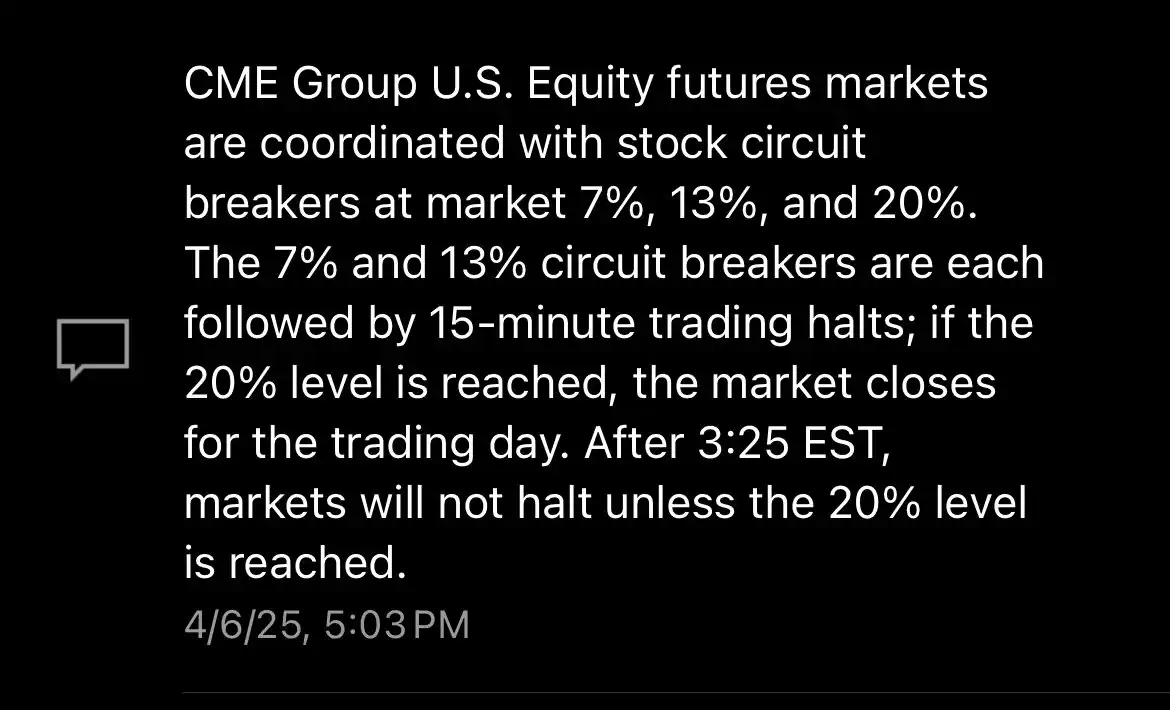
Due to the U.S. stock market futures declining by over -15% for three consecutive days, brokerages issued a circuit breaker warning yesterday. The Chicago Mercantile Exchange has circuit breakers set at 7%, 13%, and 20%. A 7% or 13% circuit breaker would trigger a 15-minute trading halt; if the level reaches 20%, the market would close for the day. According to the Daily Mail, hedge funds are facing Lehman-style margin calls due to the market collapse triggered by President Trump's tariff measures.
Note: Lehman-style margin calls refer to an extreme scenario where a market experiences a sharp decline, investors or institutions face significant losses due to high leverage, and brokerages or clearinghouses demand additional margin. However, because of illiquidity or panic, investors are unable to raise funds, ultimately leading to forced liquidation or bankruptcy. This situation could potentially trigger broader systemic risks, similar to the "domino effect" seen during the Lehman Brothers bankruptcy.
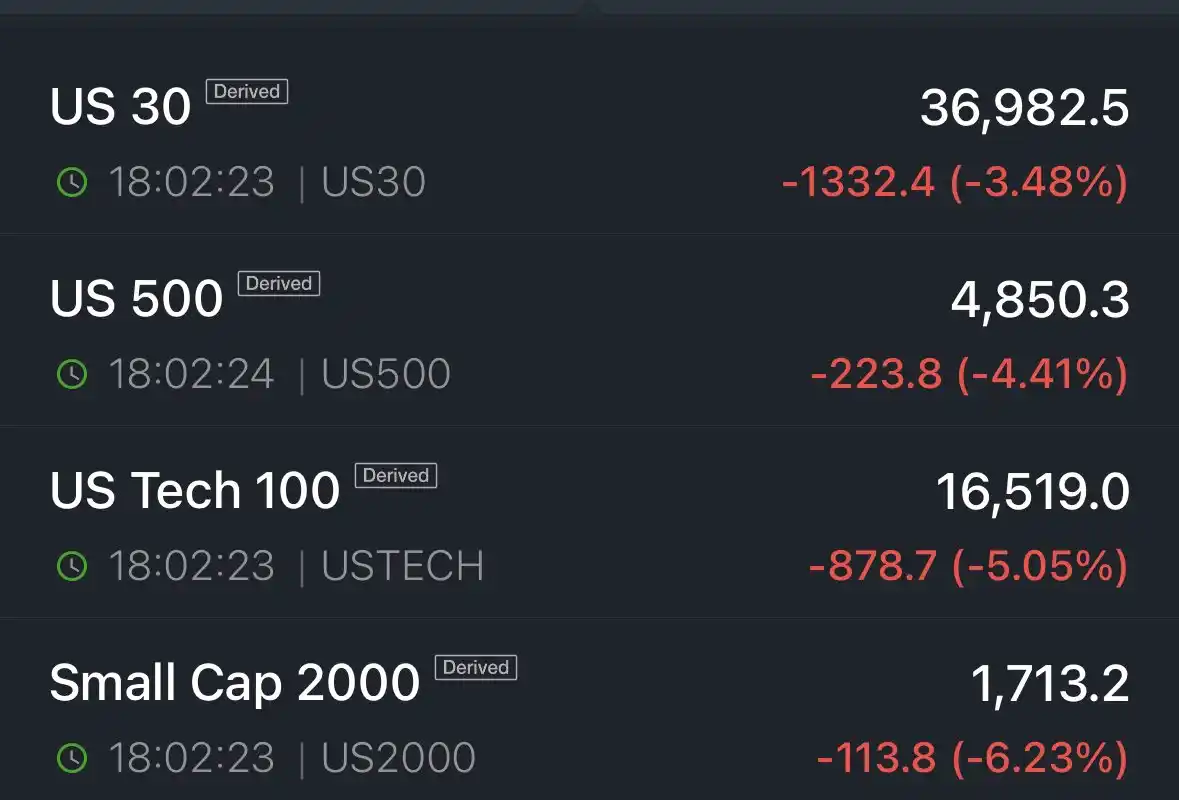
Some professionals have pointed out that Nasdaq 100 index futures are down 6.07%, and S&P 500 index futures are down 5.97%. If this situation is accurate, it will be the worst three days for the market performance since "Black Monday" in 1987, even worse than during the COVID-19 pandemic.
Beginning of a Bear Market or Bottoming Out?
Just as the week has begun, the market has delivered a shock to the world, and several key meetings this week will serve as a turning point for the market. Among them, the "reciprocal tariffs" measures may start on April 10, the Federal Reserve's March monetary policy meeting minutes will be released on April 10, March PPI inflation data and University of Michigan consumer sentiment data on April 11.
Treasury Secretary Benson stated, "My current advice to every country is not to retaliate, not to take action, observe the situation, and see how things develop. Because if you retaliate, the situation will escalate. If you don't retaliate, then the current situation is capped."
The countries depicted on the "reciprocal tariffs" sign have split into two camps over the past week: those bowing to the U.S. and adopting a wait-and-see approach, and those strongly retaliating. Currently, Vietnam, Argentina, and Israel have eliminated all tariffs on the U.S., India intends to impose nearly zero tariffs on the U.S., while Mexico, Japan, and the UK do not plan to impose U.S. tariffs.
Singapore Prime Minister Lee Hsien Loong delivered a speech on April 4, stating, "This marks a significant shift in the global order. The rules-based globalisation and free trade era has ended, and we are now entering a new age, a more dangerous phase of rising protectionism. The calm and stability of the global economy that we are familiar with will not return quickly."
On the other hand, China has become the world's first country to retaliate with "tit-for-tat tariffs," announcing a 34% retaliatory tariff against the United States. President Trump, on his social media platform "Trust Social," stated that China made the wrong decision in this matter. The European Union is also preparing to vote on April 9 on how to impose retaliatory tariffs on certain U.S. products. European Trade Commissioner Phil Hogan, after meeting with U.S. officials, stated that the EU is willing to negotiate but is also prepared to defend its own interests.

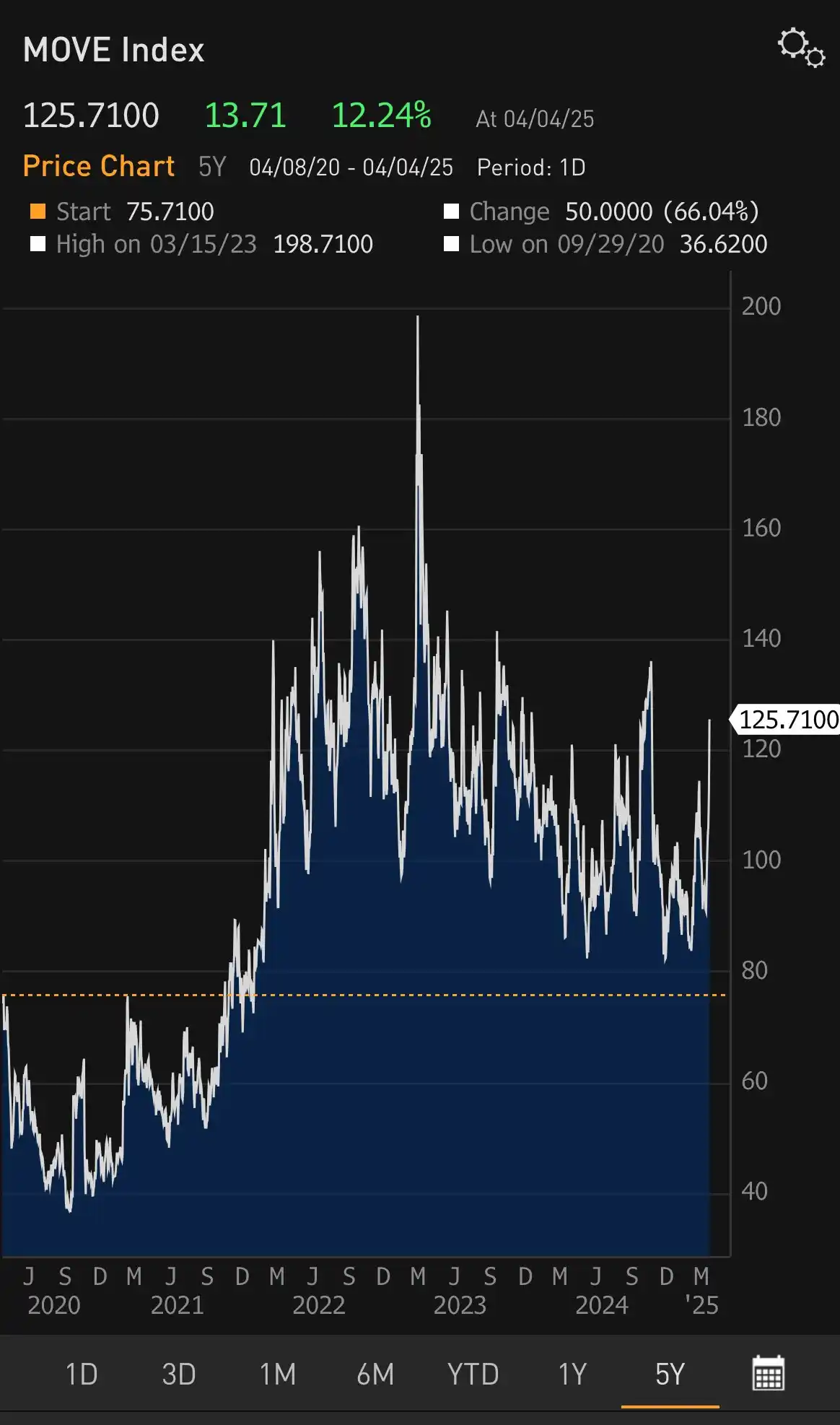
However, BitMEX's co-founder Arthur Hayes is quite optimistic about this. He believes that volatility is back and says it will be an interesting week. He also mentioned that the Bond Volatility Index, "MOVE Index," is deeply related to when the Federal Reserve will back off and start up the printing press. "The higher this index rises, the more likely institutions trading leveraged government or corporate bonds are to be forced to sell due to increased margin requirements, and these are precisely the two markets where the Fed will fight tooth and nail to support. When MOVE breaks above 140 (currently at 127), it will be an opportunity for the market to get rich after the market crash and the Fed's liquidity injection."
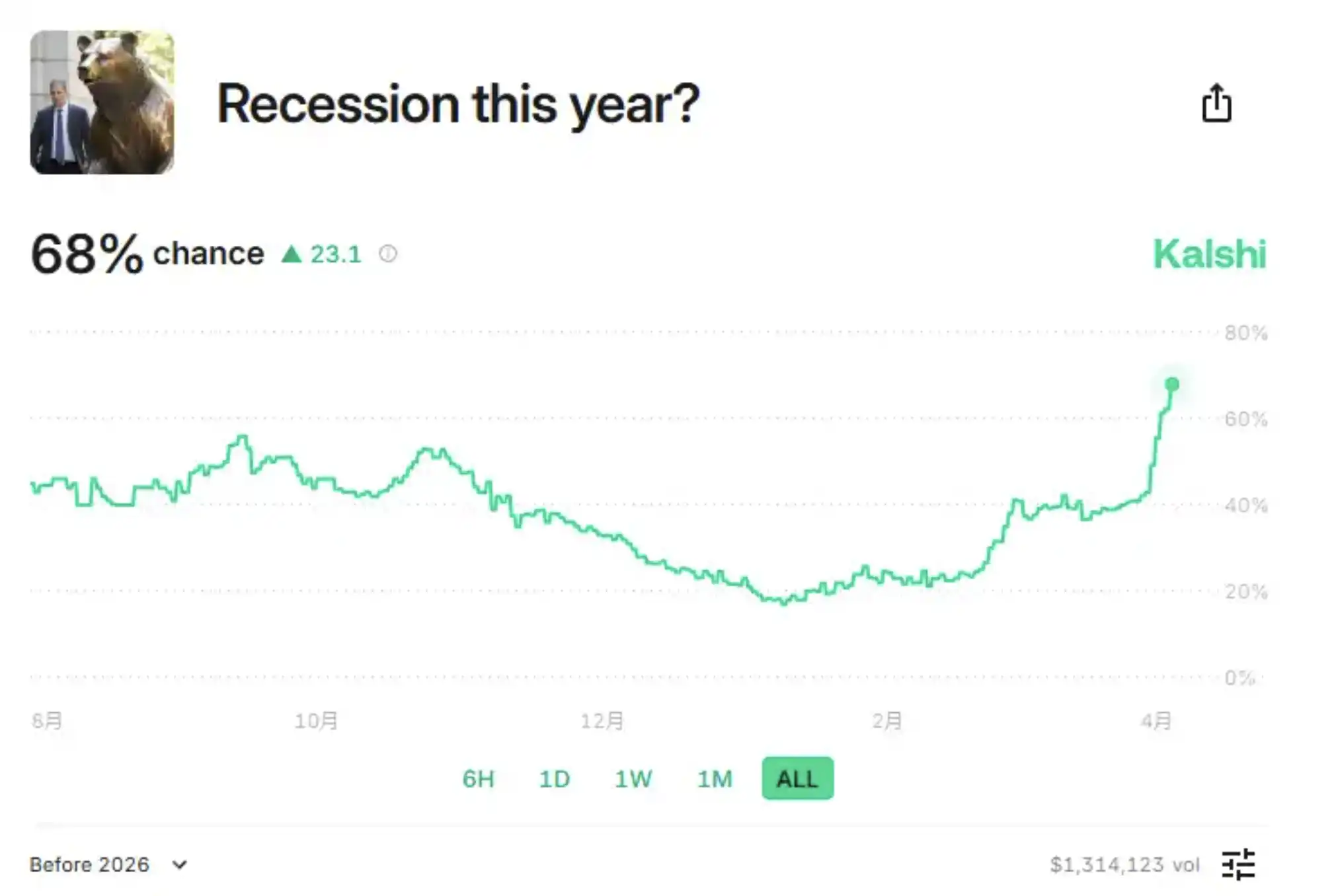
On April 7, Donald Trump Jr., serving as a strategic advisor, made a prediction through the prediction market Kalshi that the likelihood of a U.S. economic recession by 2025 has surged to 68%, reaching the highest level in months. J.P. Morgan Chase also seems to share the same concerns, according to Watcherguru's report, J.P. Morgan is calling on the Federal Reserve to cut interest rates before the next meeting.
Meanwhile, some traders believe that this crisis may also be an opportunity. Top trader Eugene Ng Ah Sio expressed in his personal channel, "This downturn is not only in the cryptocurrency market but also an unprecedented turbulence in the entire stock market. I vaguely feel that, as long as the response is appropriate, when this storm passes, perhaps it can create enough wealth to change destinies. But for now, survival is key."
Founder of Formula News, Vida, believes that "the current U.S. stock market is similar to 2022, where it overprices an expectation that is not actually as serious. This round of U.S. stock market correction is similar to 2018, 2022, occurring periodically (every 2-3 years), rather than a financial crisis like 2008, 2020 (every 10 years)." He predicts that the market's turning point will occur in Q1 2026, and during this period, he will gradually begin buying shares of his favorite U.S. tech companies. If there is another major market plunge during this period, he will accelerate his buying pace.

However, the true market trend still needs to be validated over time. Nevertheless, we have entered a phase where conservative investment is necessary. Sometimes we may have to swallow "this pill," but what every investor must learn is how to navigate the risk after swallowing the pill.
You may also like

US AI Startup Goes All In on Chinese Mega-Model | Rewire News Morning Brief

Trump Lies Again: A "Five-Day Pause" Psyop, How Wall Street, Bitcoin, and Polymarket Insiders Synced Uposciogen

When a Token Becomes Labor, People Become the Interface

Ceasefire News Leaked Ahead of Time? Large Polymarket Bets on Outcome Before Trump's Tweet

BlackRock CEO's Annual Shareholder Letter: How is Wall Street Using AI to Keep Profiting from National Pension Funds?

Sun Valley Releases 2025 Financial Report: Bitcoin Mining Revenue Reaches $670 Million, Accelerating Transformation to AI Infrastructure Platform
On March 16, 2026, in Dallas, Texas, USA, CanGu Company (New York Stock Exchange code: CANG, hereinafter referred to as "CanGu" or the "Company") today announced its unaudited financial performance for the fourth quarter and full year ended December 31, 2025. As a btc-42">bitcoin mining enterprise relying on a globally operated layout and dedicated to building an integrated energy and AI computing power platform, CanGu is actively advancing its business transformation and infrastructure development.
• Financial Performance:
Total revenue for the full year 2025 was $688.1 million, with $179.5 million in the fourth quarter.
Bitcoin mining business revenue for the full year was $675.5 million, with $172.4 million in the fourth quarter.
Full-year adjusted EBITDA was $24.5 million, while the fourth quarter was -$156.3 million.
• Mining Operations and Costs:
A total of 6,594.6 bitcoins were mined throughout the year, averaging 18.07 bitcoins per day; of which 1,718.3 bitcoins were mined in the fourth quarter, averaging 18.68 bitcoins per day.
The average mining cost for the full year (excluding miner depreciation) was $79,707 per bitcoin, and for the fourth quarter, it was $84,552;
The all-in sustaining costs were $97,272 and $106,251 per bitcoin, respectively.
As of the end of December 2025, the company has cumulatively produced 7,528.4 bitcoins since entering the bitcoin mining business.
• Strategic Progress:
The company has completed the termination of the American Depositary Receipt (ADR) program and transitioned to a direct listing on the NYSE to enhance information transparency and align with its strategic direction, with a long-term goal of expanding its investor base.
CEO Paul Yu stated: "2025 marked the company's first full year as a bitcoin mining enterprise, characterized by rapid execution and structural reshaping. We completed a comprehensive adjustment of our asset system and established a globally distributed mining network. Additionally, the company introduced a new management team, further strengthening our capabilities and competitive advantage in the digital asset and energy infrastructure space. The completion of the NYSE direct listing and USD pricing also signifies our transformation into a global AI infrastructure company."
"As we enter 2026, the company will continue to optimize its balance sheet structure and enhance operational efficiency and cost resilience through adjustments to the miner portfolio. At the same time, we are advancing our strategic transformation into an AI infrastructure provider. Leveraging EcoHash, we will utilize our capabilities in scalable computing power and energy networks to provide cost-effective AI inference solutions. The relevant site transformations and product development are progressing simultaneously, and the company is well-positioned to sustain its execution in the new phase."
The company's Chief Financial Officer, Michael Zhang, stated: "By 2025, the company is expected to achieve significant revenue growth through its scaled mining operations. Despite recording a net loss of $452.8 million from ongoing operations, mainly due to one-time transformation costs and market-driven fair value adjustments, the company, from a financial perspective, will reduce its leverage, optimize its Bitcoin reserve strategy and liquidity management, introduce new capital to strengthen its financial position, and seize investment opportunities in high-potential areas such as AI infrastructure while navigating market volatility."
The total revenue for the fourth quarter was $1.795 billion. Of this, the Bitcoin mining business contributed $1.724 billion in revenue, generating 1,718.3 Bitcoins during the quarter. Revenue from the international automobile trading business was $4.8 million.
The total operating costs and expenses for the fourth quarter amounted to $4.56 billion, primarily attributed to expenses related to the Bitcoin mining business, as well as impairment of mining machines and fair value losses on Bitcoin collateral receivables.
This includes:
· Cost of Revenue (excluding depreciation): $1.553 billion
· Cost of Revenue (depreciation): $38.1 million
· Operating Expenses: $9.9 million (including related-party expenses of $1.1 million)
· Mining Machine Impairment Loss: $81.4 million
· Fair Value Loss on Bitcoin Collateral Receivables: $171.4 million
The operating loss for the fourth quarter was $276.6 million, a significant increase from a loss of $0.7 million in the same period of 2024, primarily due to the downward trend in Bitcoin prices.
The net loss from ongoing operations was $285 million, compared to a net profit of $2.4 million in the same period last year.
The adjusted EBITDA was -$156.3 million, compared to $2.4 million in the same period last year.
The total revenue for the full year was $6.881 billion. Of this, the revenue from the Bitcoin mining business was $6.755 billion, with a total output of 6,594.6 Bitcoins for the year. Revenue from the international automobile trading business was $9.8 million.
The total annual operating costs and expenses amount to $1.1 billion.
Specifically, they include:
· Revenue Cost (excluding depreciation): $543.3 million
· Revenue Cost (depreciation): $116.6 million
· Operating Expenses: $28.9 million (including related-party expenses of $1.1 million)
· Miner Impairment Loss: $338.3 million
· Bitcoin Collateral Receivable Fair Value Change Loss: $96.5 million
The full-year operating loss is $437.1 million. The continuing operations net loss is $452.8 million, while in 2024, there was a net profit of $4.8 million.
The 2025 non-GAAP adjusted net profit is $24.5 million (compared to $5.7 million in 2024). This measure does not include share-based compensation expenses; refer to "Use of Non-GAAP Financial Measures" for details.
As of December 31, 2025, the company's key assets and liabilities are as follows:
· Cash and Cash Equivalents: $41.2 million
· Bitcoin Collateral Receivable (Non-current, related party): $663.0 million
· Miner Net Value: $248.7 million
· Long-Term Debt (related party): $557.6 million
In February 2026, the company sold 4,451 bitcoins and repaid a portion of related-party long-term debt to reduce financial leverage and optimize the asset-liability structure.
As per the stock repurchase plan disclosed on March 13, 2025, as of December 31, 2025, the company had repurchased a total of 890,155 shares of Class A common stock for approximately $1.2 million.

The US AI Startup Is Loving China's Open Source Model

Three Weeks of the US-Iran War: Who's Making Money, Who's Paying the Bill?

Interpreting Polymarket's Major Update Last Night: Fee Expansion, Self-Regulation, and New Incentives

From Human Application to Intelligent Collaboration: How GOAT Network Builds the Next Generation Digital Economy

CZ Washington Dialogue: Crypto Entrepreneurs are Accelerating Their Return to the United States

Morning Report | Strategy increased its holdings by 1,031 bitcoins last week; Katana Blockchain acquires IDEX; NYSE completes rule change to eliminate trading limits on crypto ETF options

Electric Capital: Tracking 501 types of yield-generating RWA assets, we discovered these patterns

Those who are cut off by AI will not disappear; they will become the creators of the next round of the economy

Stablecoins reshaping cross-border payments in Asia? Strategic panorama and investment opportunity analysis

Zuckerberg is building an AI agent to help him as CEO

Bloomberg: Swiss Private Bank Old Guard Rifts, Is Bitcoin the Spark?

Zuckerberg is building an AI assistant to help him be CEO
US AI Startup Goes All In on Chinese Mega-Model | Rewire News Morning Brief
Trump Lies Again: A "Five-Day Pause" Psyop, How Wall Street, Bitcoin, and Polymarket Insiders Synced Uposciogen
When a Token Becomes Labor, People Become the Interface
Ceasefire News Leaked Ahead of Time? Large Polymarket Bets on Outcome Before Trump's Tweet
BlackRock CEO's Annual Shareholder Letter: How is Wall Street Using AI to Keep Profiting from National Pension Funds?
Sun Valley Releases 2025 Financial Report: Bitcoin Mining Revenue Reaches $670 Million, Accelerating Transformation to AI Infrastructure Platform
On March 16, 2026, in Dallas, Texas, USA, CanGu Company (New York Stock Exchange code: CANG, hereinafter referred to as "CanGu" or the "Company") today announced its unaudited financial performance for the fourth quarter and full year ended December 31, 2025. As a btc-42">bitcoin mining enterprise relying on a globally operated layout and dedicated to building an integrated energy and AI computing power platform, CanGu is actively advancing its business transformation and infrastructure development.
• Financial Performance:
Total revenue for the full year 2025 was $688.1 million, with $179.5 million in the fourth quarter.
Bitcoin mining business revenue for the full year was $675.5 million, with $172.4 million in the fourth quarter.
Full-year adjusted EBITDA was $24.5 million, while the fourth quarter was -$156.3 million.
• Mining Operations and Costs:
A total of 6,594.6 bitcoins were mined throughout the year, averaging 18.07 bitcoins per day; of which 1,718.3 bitcoins were mined in the fourth quarter, averaging 18.68 bitcoins per day.
The average mining cost for the full year (excluding miner depreciation) was $79,707 per bitcoin, and for the fourth quarter, it was $84,552;
The all-in sustaining costs were $97,272 and $106,251 per bitcoin, respectively.
As of the end of December 2025, the company has cumulatively produced 7,528.4 bitcoins since entering the bitcoin mining business.
• Strategic Progress:
The company has completed the termination of the American Depositary Receipt (ADR) program and transitioned to a direct listing on the NYSE to enhance information transparency and align with its strategic direction, with a long-term goal of expanding its investor base.
CEO Paul Yu stated: "2025 marked the company's first full year as a bitcoin mining enterprise, characterized by rapid execution and structural reshaping. We completed a comprehensive adjustment of our asset system and established a globally distributed mining network. Additionally, the company introduced a new management team, further strengthening our capabilities and competitive advantage in the digital asset and energy infrastructure space. The completion of the NYSE direct listing and USD pricing also signifies our transformation into a global AI infrastructure company."
"As we enter 2026, the company will continue to optimize its balance sheet structure and enhance operational efficiency and cost resilience through adjustments to the miner portfolio. At the same time, we are advancing our strategic transformation into an AI infrastructure provider. Leveraging EcoHash, we will utilize our capabilities in scalable computing power and energy networks to provide cost-effective AI inference solutions. The relevant site transformations and product development are progressing simultaneously, and the company is well-positioned to sustain its execution in the new phase."
The company's Chief Financial Officer, Michael Zhang, stated: "By 2025, the company is expected to achieve significant revenue growth through its scaled mining operations. Despite recording a net loss of $452.8 million from ongoing operations, mainly due to one-time transformation costs and market-driven fair value adjustments, the company, from a financial perspective, will reduce its leverage, optimize its Bitcoin reserve strategy and liquidity management, introduce new capital to strengthen its financial position, and seize investment opportunities in high-potential areas such as AI infrastructure while navigating market volatility."
The total revenue for the fourth quarter was $1.795 billion. Of this, the Bitcoin mining business contributed $1.724 billion in revenue, generating 1,718.3 Bitcoins during the quarter. Revenue from the international automobile trading business was $4.8 million.
The total operating costs and expenses for the fourth quarter amounted to $4.56 billion, primarily attributed to expenses related to the Bitcoin mining business, as well as impairment of mining machines and fair value losses on Bitcoin collateral receivables.
This includes:
· Cost of Revenue (excluding depreciation): $1.553 billion
· Cost of Revenue (depreciation): $38.1 million
· Operating Expenses: $9.9 million (including related-party expenses of $1.1 million)
· Mining Machine Impairment Loss: $81.4 million
· Fair Value Loss on Bitcoin Collateral Receivables: $171.4 million
The operating loss for the fourth quarter was $276.6 million, a significant increase from a loss of $0.7 million in the same period of 2024, primarily due to the downward trend in Bitcoin prices.
The net loss from ongoing operations was $285 million, compared to a net profit of $2.4 million in the same period last year.
The adjusted EBITDA was -$156.3 million, compared to $2.4 million in the same period last year.
The total revenue for the full year was $6.881 billion. Of this, the revenue from the Bitcoin mining business was $6.755 billion, with a total output of 6,594.6 Bitcoins for the year. Revenue from the international automobile trading business was $9.8 million.
The total annual operating costs and expenses amount to $1.1 billion.
Specifically, they include:
· Revenue Cost (excluding depreciation): $543.3 million
· Revenue Cost (depreciation): $116.6 million
· Operating Expenses: $28.9 million (including related-party expenses of $1.1 million)
· Miner Impairment Loss: $338.3 million
· Bitcoin Collateral Receivable Fair Value Change Loss: $96.5 million
The full-year operating loss is $437.1 million. The continuing operations net loss is $452.8 million, while in 2024, there was a net profit of $4.8 million.
The 2025 non-GAAP adjusted net profit is $24.5 million (compared to $5.7 million in 2024). This measure does not include share-based compensation expenses; refer to "Use of Non-GAAP Financial Measures" for details.
As of December 31, 2025, the company's key assets and liabilities are as follows:
· Cash and Cash Equivalents: $41.2 million
· Bitcoin Collateral Receivable (Non-current, related party): $663.0 million
· Miner Net Value: $248.7 million
· Long-Term Debt (related party): $557.6 million
In February 2026, the company sold 4,451 bitcoins and repaid a portion of related-party long-term debt to reduce financial leverage and optimize the asset-liability structure.
As per the stock repurchase plan disclosed on March 13, 2025, as of December 31, 2025, the company had repurchased a total of 890,155 shares of Class A common stock for approximately $1.2 million.
