
Justin Sun Shares Industry Insights at 「BUIDL 2025」: Embracing the convenience brought by blockchain technology must come with a strong emphasis on security



Article Source: TRON Foundation
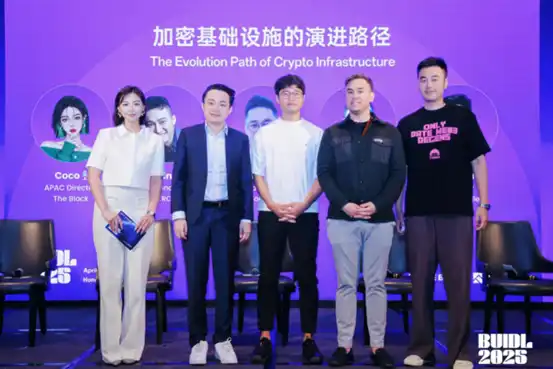
On April 5th, TRON Foundation founder Justin Sun made an appearance at the "BUIDL 2025" crypto conference in Hong Kong. He participated in a roundtable discussion on the "Evolution Path of Crypto Infrastructure" with Tomo Wallet founder Ryan Fang, TVM Ventures founder Steve Yun, and Morph Chief Growth Officer Colin Goltra. The discussion delved into the development history of crypto infrastructure, existing bottlenecks, and innovative technologies, providing valuable insights and perspectives for the industry's development.
The Massive Growth Potential of Stablecoins and the Outstanding Performance of the TRON Ecosystem
When discussing the development history and current state of crypto infrastructure, Justin Sun pointed out that despite price fluctuations in assets like Bitcoin, stablecoins have shown steady growth and have become a key pillar of industry development. Currently, the stablecoin market on the TRON blockchain has exceeded $60 billion, with an increase of approximately $5 billion in the past month alone, and this growth trend is continuing.
Using TRON as an example, the on-chain daily transaction volume of stablecoins has been steadily increasing and is currently between $20 billion and $30 billion. USDT on TRON has demonstrated stable performance and continuously reached new highs. Justin Sun attributes this to the efficiency and stability of the TRON network, as well as the widespread recognition and usage of USDT globally. In the first quarter, TRON introduced the upgraded decentralized stablecoin USDD, further enriching the TRON stablecoin ecosystem. Following its listing on Kraken last week, USDD has gained popularity and now has a market cap of $300 million.
Justin Sun believes that USDD, with its decentralized and trustworthy features, will continue to grow. Decentralization means that no single entity can control the issuance and management of USDD, giving users complete control over their assets, aligning with the demand for asset security and self-management. He predicts that the market cap of USDT on TRON may reach around $100 billion this year, and USDD is expected to reach a scale of $1 billion. This forecast not only reflects Justin Sun's confidence in the TRON ecosystem but also highlights the significant position and immense potential of stablecoins in the cryptocurrency field.
Popularizing Blockchain Awareness to Drive Cryptocurrency Mass Adoption
When asked about the bottlenecks the industry faces, Justin Sun used his own experience to illustrate. He recounted a story from 2013 where he gifted a friend one Bitcoin, and it wasn't until 2025 that the friend remembered and cashed out. This experience vividly reflects the lack of public awareness of cryptocurrency. During that time, the price of cryptocurrency was extremely low, and the value of one Bitcoin was insignificant. The friend, upon receiving it, didn't pay enough attention and left it forgotten in a corner. It was only in 2025 when the price of Bitcoin had significantly risen that the friend realized the value of the Bitcoin.
This event made Justin Sun realize deeply that one of the key tasks of the current industry is to popularize blockchain services and cryptocurrency knowledge to the public. He pointed out that many people still consider fiat currency as "real money" and overlook the actual value of cryptocurrency. In the traditional mindset of the masses, fiat currency is backed by the government, has legal tender status, and is stable, while cryptocurrency is seen as a high-risk, unstable investment product. However, as cryptocurrency continues to develop and its application scenarios expand, the value of cryptocurrency as a new form of currency is gradually becoming more prominent.

Justin Sun believes that there is a need to change people's traditional views on currency and money, making more people realize that cryptocurrency is also a form of "real money." Cryptocurrency possesses characteristics such as decentralization, anonymity, and global circulation, providing people with a more convenient, efficient, and secure payment and store of value method. For example, in some cross-border payment scenarios, cryptocurrency can bypass the cumbersome procedures of traditional financial institutions and high transaction fees, achieving rapid, low-cost fund transfers. By popularizing blockchain knowledge and the advantages of cryptocurrency, mass adoption and application of cryptocurrency among the public can be promoted, facilitating the healthy development of the cryptocurrency market.
Gasfree New Feature: Lowering the Barrier to Entry to Aid Institutional Access
Addressing technical issues, Justin Sun introduced the Gasfree new feature launched by TRON's TRON. This feature, after half a year of development, was officially released two weeks ago, providing a good user experience. In cryptocurrency transactions, Gas fees are the fees users need to pay when conducting transactions, used to incentivize miners to process and validate transactions. However, for regular users and institutions, there are certain challenges in paying and managing Gas fees.
Through the Gasfree new feature, users can generate a mirrored address to receive a USDT key, and regardless of how many addresses they have, the fee can be directly deducted from USDT, eliminating concerns about operational errors. This feature significantly simplifies the transaction process and lowers the barrier to entry. For regular users, there is no need to worry about calculating and paying Gas fees anymore; they can focus solely on the transaction itself. For institutions, the Gasfree feature provides a convenient solution for receiving stablecoins.
Many institutions are looking to integrate blockchain technology to achieve more efficient fund management and payment settlement, but they are reluctant to deal with cryptocurrency. Due to the high price volatility of cryptocurrency, institutions are concerned about asset risk. Additionally, even when using cryptocurrency to pay Gas fees, it adds extra operational costs and complexity for some institutions. The Gasfree feature meets the needs of institutions, allowing them to receive and send funds using addresses without directly dealing with cryptocurrency, significantly reducing the entry barrier and helping to onboard more institutions into the TRON ecosystem, promoting the broader application of blockchain technology.
Building a Better Ecosystem, Emphasizing Security Is Crucial
Justin Sun emphasizes that the ecosystem built on TRON has significant advantages over traditional finance. TRON's no KYC feature allows users to participate more freely in cryptocurrency transactions, protecting user privacy.
On TRON, users have complete control over their assets, eliminating the risk of accounts being frozen, ensuring the security of users' assets.
Furthermore, TRON has introduced the unfreezable stablecoin USDD, providing a more secure and convenient way for users to store wealth. The decentralized nature of USDD ensures that no single entity can freeze or control user assets, allowing users to confidently store wealth in USDD. However, Justin Sun also warns that due to users having 100% control and the autonomy of smart contracts, security issues cannot be ignored.
Events such as Bybit's $1.5 billion loss due to a multisignature smart contract have sounded the alarm for the industry. Multisignature smart contracts require multiple signatures to complete transactions, which should enhance security. However, due to contract vulnerabilities or improper operation, significant losses can still occur. Therefore, while enjoying the convenience brought by blockchain technology, a high emphasis must be placed on security to prevent issues such as hacking and key loss. If a private key is lost or stolen, users lose control of their assets, resulting in irreparable loss.
Additionally, Justin Sun mentioned that the company has implemented advanced security tools, mandatory for every device and software within the company, to address the risks of AI development. With the continuous advancement of AI technology, creating fake images, videos, etc., has become easier, posing a potential threat to financial account security. For instance, someone could potentially use a deepfake AI video to reset someone's exchange account, leading to fund theft. Enabling these technologies can enhance the security of devices and software, effectively mitigating such risks, further emphasizing the importance of security in the Web2 and Web3 domains.
During the roundtable discussion, Justin Sun shared profound insights and innovative practices on the development of crypto infrastructure, providing valuable thoughts and directions for the industry's advancement. This also showcased TRON's efforts in promoting cryptocurrency adoption and infrastructure development. With the collective efforts of all parties, the cryptocurrency industry is believed to embrace a brighter future.
It is reported that "BUIDL 2025," held at the JW Marriott Hotel in Hong Kong, was organized by Foresight News in collaboration with The Block and Foresight Ventures. The event aims to build an efficient platform for collaboration and communication among global crypto practitioners through the strong influence of bilateral media in the East and the West. The conference brought together industry giants, unicorn startups, top VCs, renowned KOLs, and other leading figures from various fields to ignite creative sparks, illuminate thoughts, and drive innovation and breakthroughs in the crypto industry.
This article is a contributed post and does not represent the views of BlockBeats.
You may also like

Will MicroStrategy fall into a death spiral? What will the macro trend be in the second half of the year?

Morning Report | Illinois signs the strictest digital asset tax law in the U.S.; RWA tokenization market size surpasses $43 billion, institutions accelerate the migration of on-chain assets

Full version of the debut Q&A! Federal Reserve Chairman Waller: Sticking to the 2% inflation target, establishing five special working groups, individual did not submit the dot plot

From Disruptor to Shadow Market: The Crypto Market is Becoming a Colony of Traditional Finance
Dalio's important long article: How to position in the current market environment?

OKX Star analyzes Binance's competitive advantages: when regulation levels the playing field, competition has just begun

New gameplay for participating in initial offerings on cryptocurrency exchanges
Why Is Bitcoin Down Today? What the Hawkish FOMC Means for SpaceX, Gold and Nasdaq

DeepSeek Financing Story

Morning Report | DeepSeek completes over $7 billion in financing, with a valuation exceeding $50 billion; Musk's personal wealth has surpassed the total market value of Bitcoin

Cursor, why did you get on Musk's spaceship?
In the name of charity, for the benefit of the family: How the Trump family turned charity into profit?

Will Gold Break $4,500 After Tonight's Fed Decision? What XAUT and PAXG Traders Need to Know

SharpLink CEO: How to understand that Ethereum developers have just surpassed 1 million?

Morning Report | MiCA grace period expires on July 1; Kalshi's trading volume in the first week of the World Cup breaks $5.1 billion, setting a record

The foundation of SpaceX's trillion-dollar valuation: Who is dividing Musk's annual capital expenditure of tens of billions?
How to exit after asset tokenization?

The stablecoin positioning battle escalates: When compliance is just a ticket to entry, will USD1 become the biggest winner?
Will MicroStrategy fall into a death spiral? What will the macro trend be in the second half of the year?
Morning Report | Illinois signs the strictest digital asset tax law in the U.S.; RWA tokenization market size surpasses $43 billion, institutions accelerate the migration of on-chain assets
Full version of the debut Q&A! Federal Reserve Chairman Waller: Sticking to the 2% inflation target, establishing five special working groups, individual did not submit the dot plot
From Disruptor to Shadow Market: The Crypto Market is Becoming a Colony of Traditional Finance
Dalio's important long article: How to position in the current market environment?
OKX Star analyzes Binance's competitive advantages: when regulation levels the playing field, competition has just begun


