
Michael Saylor Microsoft Board Presentation: Bitcoin is the Corporate World's Best Treasury Reserve Asset


Original Author: Michael Saylor, Founder of MicroStrategy
Original Translation: Felix, PANews
Microsoft plans to vote on the proposal to "Evaluate Bitcoin Investment" at its annual meeting on December 10. If the proposal is approved, Microsoft will become the largest publicly traded crypto investment company, surpassing MicroStrategy and Tesla. Ahead of the voting, Michael Saylor gave a 3-minute speech to the Microsoft board, explaining why Bitcoin should be adopted. In his speech, Michael Saylor proposed that Bitcoin represents "digital capital," is the core opportunity of the next wave of technological innovation, embodies the greatest digital transformation of the 21st century, and suggested that Microsoft adopt Bitcoin as a core corporate strategy. Below are some highlights of the presentation slides used:
Microsoft cannot afford to miss the next wave of technological trends, which include 7:
· Personal Computing
· Graphical User Interface
· Internet
· Mobile Computing
· Cloud Computing
· Artificial Intelligence
· Digital Capital

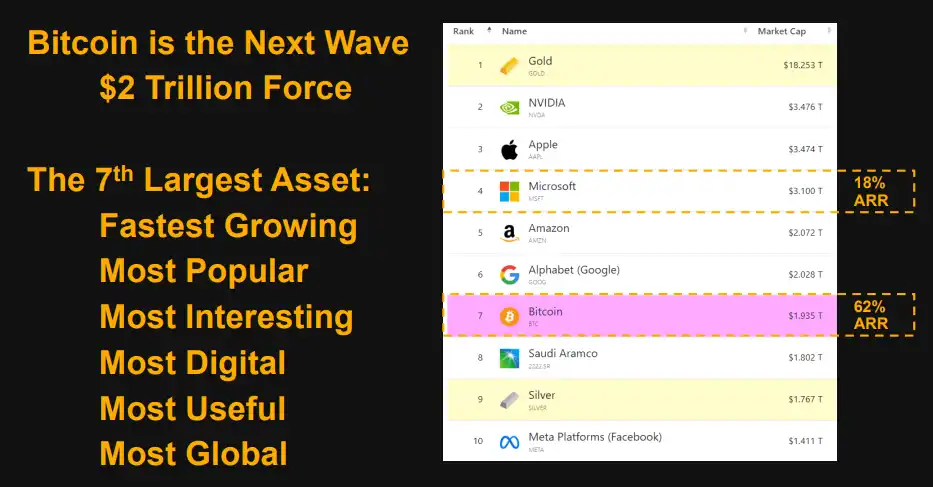
The greatest digital transformation of the 21st century is the transformation of capital, and Bitcoin is digital capital. Bitcoin is currently the world's seventh largest asset, with the fastest growth, most popularity, most intriguing, most digital nature, most utility, and most global. In addition, Microsoft's current Annual Recurring Revenue (ARR) is 18%, while Bitcoin's ARR is 62%.
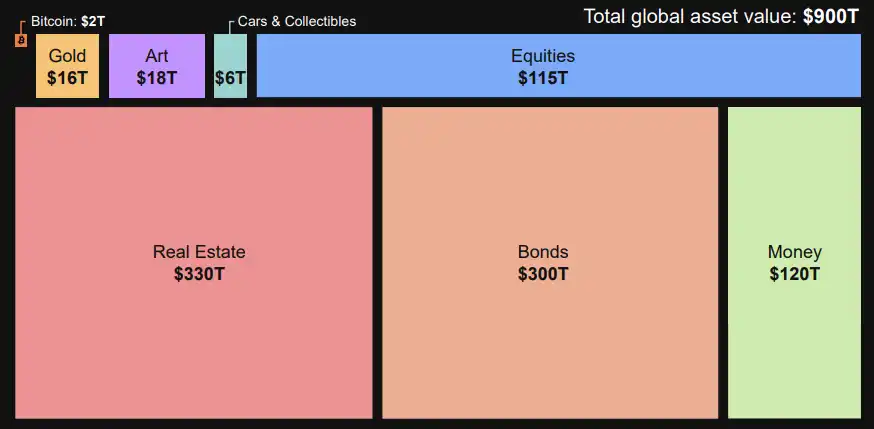
Currently, global wealth is distributed among various assets. In the current global asset market of around $90 trillion, Bitcoin's market cap is around $2 trillion.
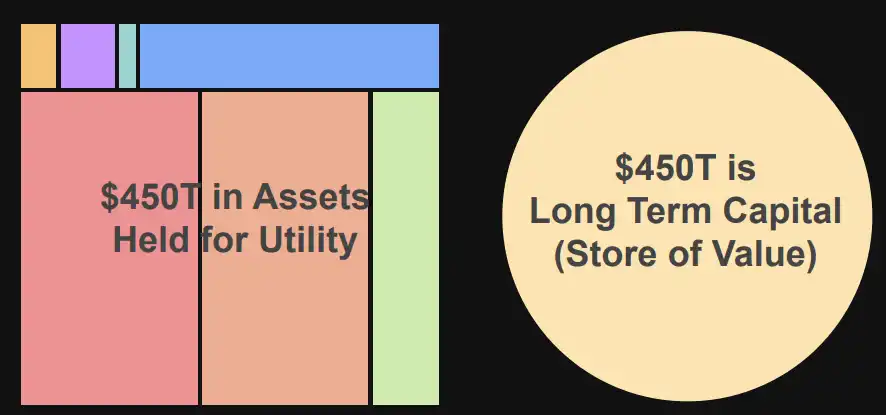
Global wealth is distributed between assets that provide utility and assets that serve as store of value. Of the $450 trillion belonging to long-term capital (value storage), more than $10 trillion of assets are lost each year due to risks such as regulation, taxation, competition, obsolescence, economic and political turmoil, and crime.
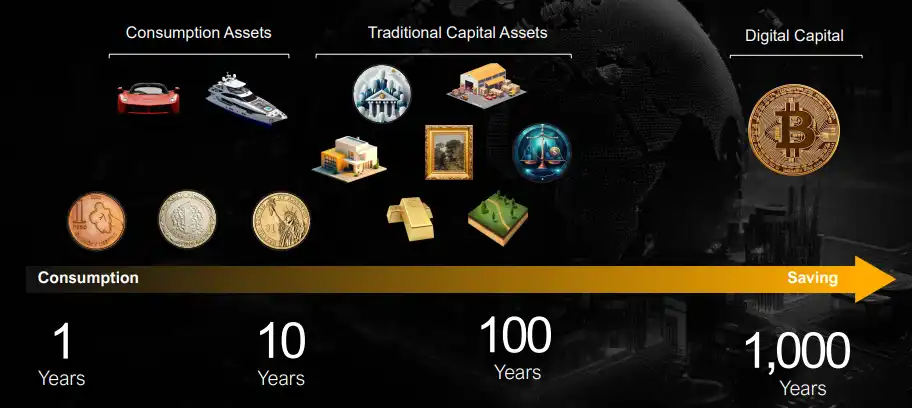
Digital capital is economically and technologically superior to physical capital, and long-term capital is transitioning to digital capital (Bitcoin). Bitcoin offers advantages similar to owning a building but without obvious, fixed asset liabilities. For example: no taxation, no need to consider traffic, tenants, encroachments, weather factors, building decay, and regulatory bodies. Instead, Bitcoin has properties such as intangibility, indestructibility, permanent existence, remote transferability, programmability, divisibility, convertibility, and configurability.
One could argue that Bitcoin is a revolutionary advancement in capital preservation.
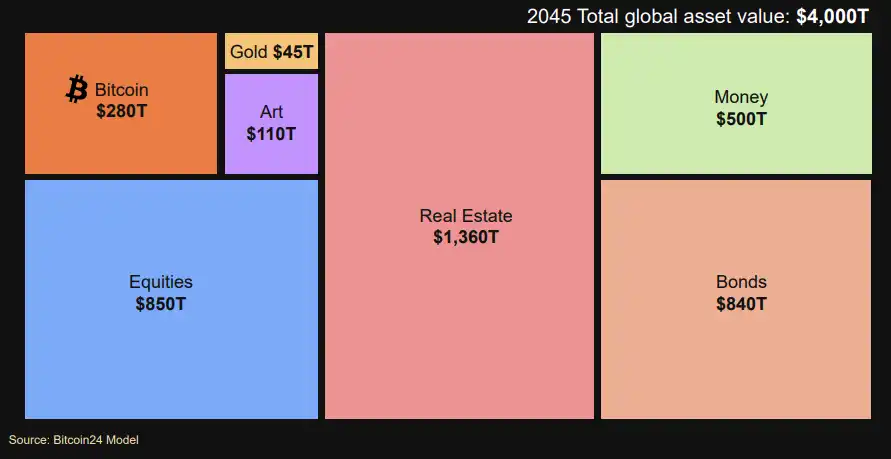
Furthermore, Bitcoin's market capitalization is expected to grow from the current $2 trillion to $280 trillion by 2045, surpassing traditional assets such as bonds and gold.
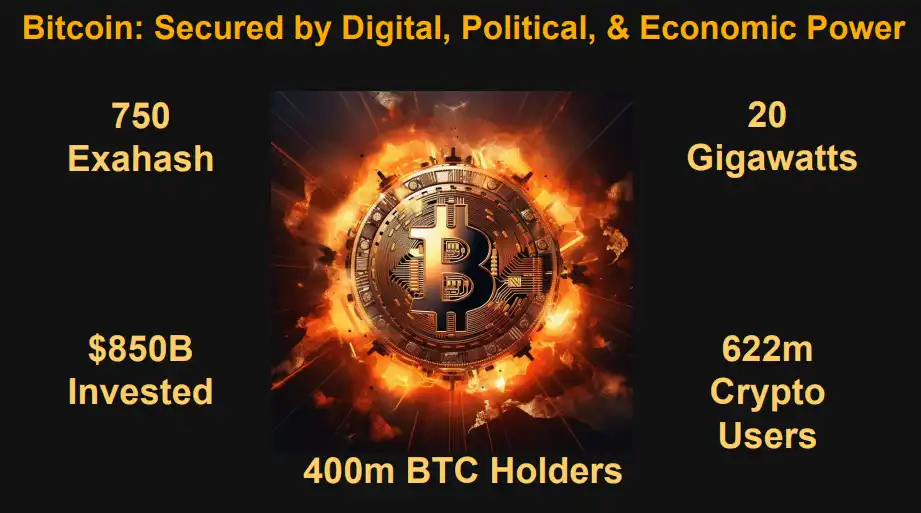
Additionally, Bitcoin is protected by digital, political, and economic forces. The current Bitcoin network has over 750 Exahashes of computing power, with 622 million crypto users and 400 million Bitcoin holders.
Based on a four-year annual asset performance chart, Bitcoin is the best-performing non-correlated asset on a corporate balance sheet.
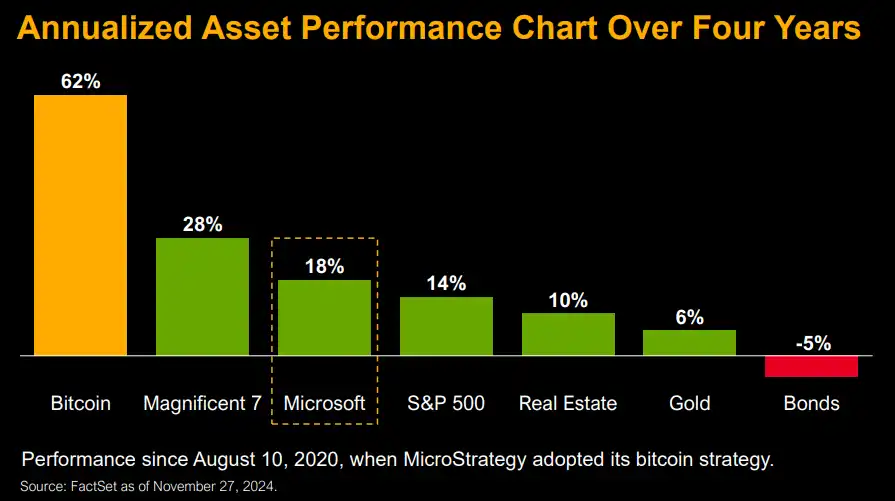
Performance since MicroStrategy adopted a Bitcoin strategy on August 10, 2020
Bitcoin's annual performance is ten times higher than Microsoft's, while bonds have performed less impressively.
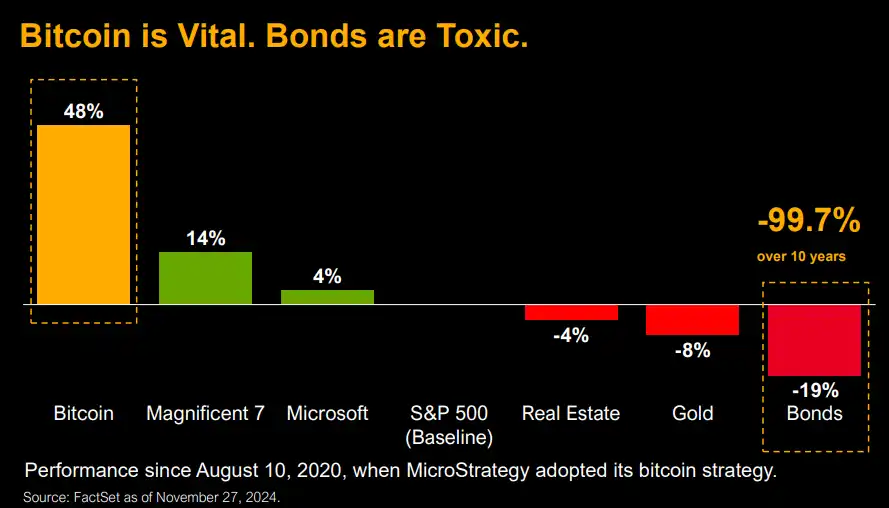
Performance since MicroStrategy adopted a Bitcoin strategy on August 10, 2020
The outstanding performance of corporate stocks is inseparable from Bitcoin (digital capital). Since MicroStrategy adopted a Bitcoin strategy on August 10, 2020, MicroStrategy's stock price has increased by 3045%, while Microsoft (MSFT) has only seen a 103% increase.
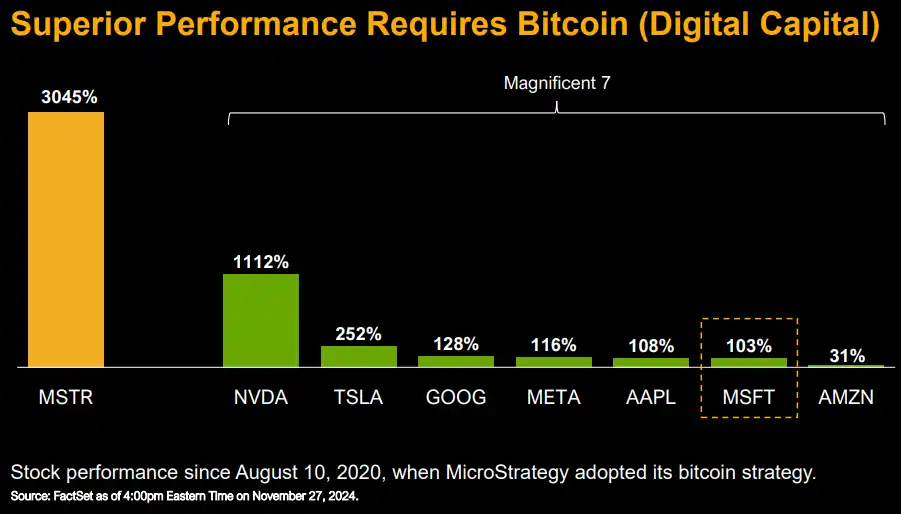
Performance since MicroStrategy adopted a Bitcoin strategy on August 10, 2020
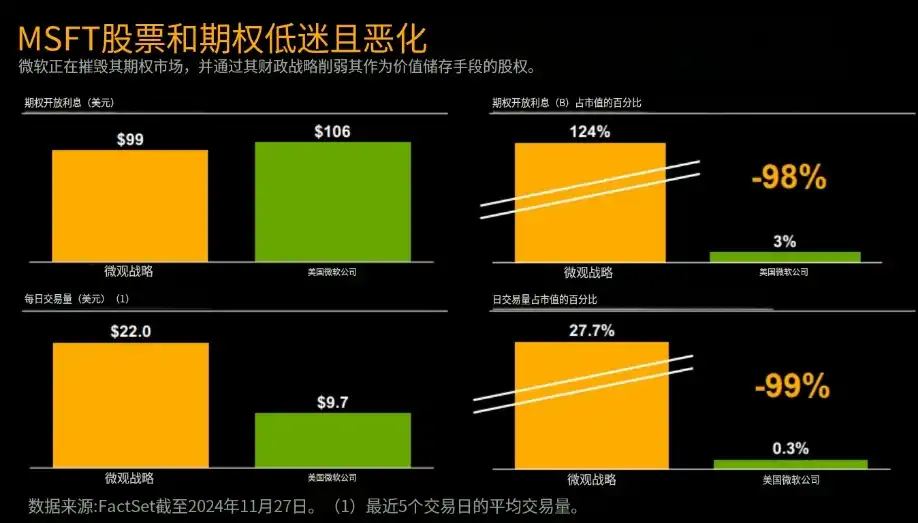
Furthermore, MSFT (Microsoft) stocks and options are weak and deteriorating (Microsoft is actively reducing the options market and stocks as a store of value through its financial strategy).
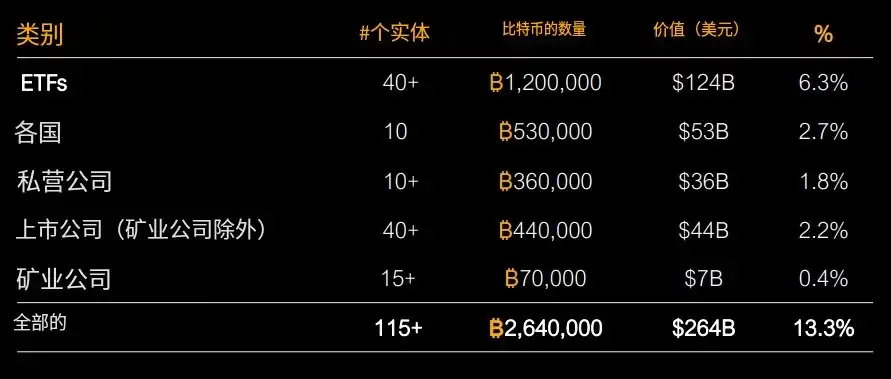
Today, Bitcoin has become an institutional asset, now seen as a viable alternative to corporate bonds. The number of public entities holding Bitcoin has surged:
In addition, a wave of political support for Bitcoin is surging, with endorsements from government, Wall Street, and several well-known political figures. Endorsements have come from the White House, Senate, House of Representatives, and Wall Street, with notable figures such as Donald Trump, JD Vance, Robert Kennedy, Howard Lutnick, and Musk. Meanwhile, support for the United States' strategic Bitcoin reserve is also growing rapidly, with Trump once saying, "Never sell your Bitcoin."
2025 will be the first year of a comprehensive cryptocurrency renaissance. Expect:
· Wall Street adopting ETFs
· FASB fair value accounting
· Over 250 cryptocurrency supporters in Congress
· Bitcoin Strategic Reserve Act
· Repeal of SAB 121
· End to legal battles over cryptocurrency
· Digital asset framework
In this scenario, Microsoft must make a choice:
· Stick to the past: A traditional financial strategy based on government bonds, buybacks, and dividends
· Embrace the future: An innovative financial strategy based on Bitcoin as a digital capital asset
· Step back: Buy back $100 billion annually, increase investor risk, and slow growth
· Move forward: Invest $100 billion annually, reduce investor risk, and accelerate growth
Microsoft has already bought back $200 billion in capital over five years.
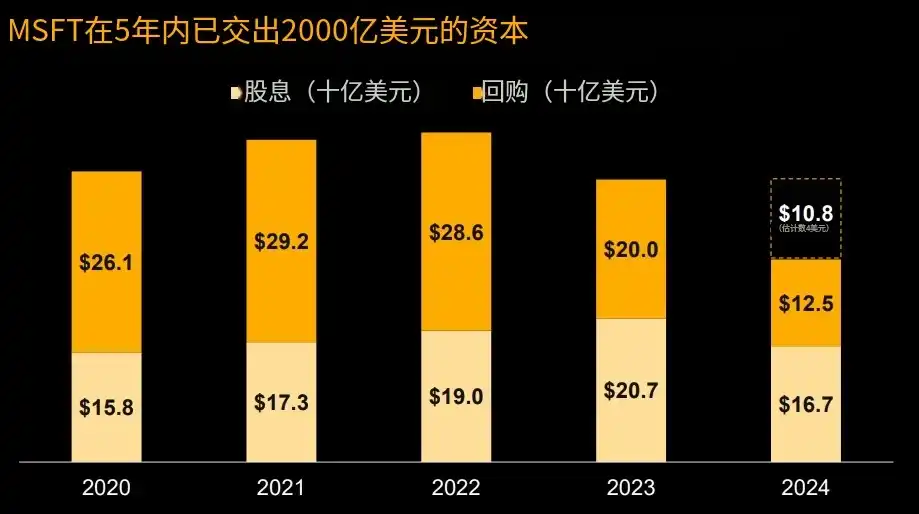
Buybacks and dividends amplify Microsoft's risk factors. Bitcoin is the best way to break free from this vicious cycle. As an asset, Bitcoin has no counterparty risk from competitors, nations, corporations, creditors, cultures, or currencies. It is recommended that Microsoft seize this era-defining opportunity and take a leading position in global digital financial innovation.
You may also like

Morning Report | OpenAI has submitted an S-1 registration statement draft to the U.S. SEC; Morpho completes $175 million financing

Galaxy Deep Research Report: How Hyperliquid's HIP-4 Upgrade Changes the Landscape of Prediction Markets?

Latest research from 13 top universities including Cornell University: The current state, challenges, and misconceptions of the fusion of Crypto and AI

Deconstructing Anthropic: The Best AI Company, Possibly Also a Type of Organizational Invention

Every exchange is a "Universal Exchange."

The counterattack of traditional finance: Alliance chains are quietly reviving
Pantera Capital Partner: How Tokenization is Restructuring the Private Equity and Early Investment Ecosystem?

Mastercard Launches Agent Pay for AI, Plans to Record AI Agent Payment Authorizations on Polygon
Mastercard launched Agent Pay for AI, a new payment protocol designed to help AI agents make small payments such as pay-per-use access to data and APIs. The system plans to record human-granted AI agent permissions on Polygon, focusing on verifiable authorization, identity, and payment controls.

Curve Deploys Llamalend v2 on Optimism With 250,000 OP Incentives
Curve launched Llamalend v2 on Optimism with 250,000 OP incentives from the Optimism Foundation. The upgrade expands Llamalend beyond its earlier crvUSD-focused model, adding broader collateral support, LlamaRisk market reviews, and the ability to use Curve LP tokens as collateral.

Raydium Old Liquidity Pool Reportedly Exploited, With $1.34 Million Moved to Ethereum and Tornado Cash
An old Raydium liquidity pool was reportedly exploited for around $1.34 million in USDC, RAY, and wSOL, with the stolen funds bridged to Ethereum and deposited into Tornado Cash. The incident highlights the tail risks of legacy DeFi pools, old contracts, and cross-chain fund laundering paths.
Kalshi Executive Challenges “SBF Backed AI Unicorns” Narrative, Says Leopold Aschenbrenner Was Key Figure
Kalshi executive John Wang questioned the “SBF backed AI unicorns” narrative, saying Leopold Aschenbrenner was the key figure behind major AI investment decisions.

New York Proposes Stricter Stablecoin Issuer Rules Aligned With Federal GENIUS Act
NYDFS proposed stricter stablecoin issuer rules aligned with the GENIUS Act, covering reserves, custody, redemption timelines, audits, and capital buffers.

CryptoQuant Says Bitcoin Profitable Supply Is Near 45% Pressure Zone as On-Chain Data Points to Market Repricing
CryptoQuant said Bitcoin’s profitable supply is nearing the 45% pressure zone, signaling rising market stress, unrealized losses, and a possible on-chain repricing phase.

Bitcoin Falls Below 200-Week Moving Average as On-Chain Data Shows Over Half of Supply in Loss
Bitcoin dropped below its 200-week moving average as on-chain data showed over 50% of circulating supply is now in loss, signaling rising market stress.

CFTC Reportedly Plans New Prediction Market Rules Focused on Manipulation Risk and Public Interest Review
The CFTC is reportedly preparing new prediction market rules focused on manipulation risk, public interest review, and retail trader protections.

Meet the new WEEX trial fund—your gateway to greater profits

WEEX Labs Lands at Dutch Blockchain Week: A Disruptive Crypto × AI Conversation Sets Sail in Amsterdam
SK Hynix Reportedly Plans U.S. ADR Listing as Early as August, With SEC Approval Possible in Late June
SK Hynix may pursue a U.S. ADR listing as early as August, with SEC approval reportedly possible in late June amid strong AI chip supply chain demand.
Morning Report | OpenAI has submitted an S-1 registration statement draft to the U.S. SEC; Morpho completes $175 million financing
Galaxy Deep Research Report: How Hyperliquid's HIP-4 Upgrade Changes the Landscape of Prediction Markets?
Latest research from 13 top universities including Cornell University: The current state, challenges, and misconceptions of the fusion of Crypto and AI
Deconstructing Anthropic: The Best AI Company, Possibly Also a Type of Organizational Invention
Every exchange is a "Universal Exchange."
The counterattack of traditional finance: Alliance chains are quietly reviving


