
 Buy Crypto
- Markets
 Futures
- Spot
- Copy Trade
- Earn
- More
New York 'Egg on Face' Showdown: Polymarket Opens Shop, Kalshi Issues Vouchers, What's the Big Idea Behind the Scenes?

Original Article Title: "Polymarket Opens in New York, Kalshi Sprinkles $50 Grocery Vouchers, Is the Prediction Market Also Giving Away Eggs?"
Original Article Author: Wenser, Odaily Planet Daily
"Every generation has its own way of getting eggs," and the value of this statement keeps rising!
This time, the prediction market duopoly sparking this egg battle is Kalshi and Polymarket.
To gain more attention before the "American Spring Festival" Super Bowl, the two major platforms recently began their own "ground promotion performance" in unison—Kalshi distributed $50 worth of free food benefits to users in a certain supermarket in New York; Polymarket went even further, launching a meticulously planned "New York's First Free Grocery Store," scheduled to open on February 12. In terms of vying for attention and user base, the billion-dollar valuation prediction market giant chose the most cliché but effective "offline ground promotion" route.
In response to this, we also contacted our New York-based colleague Connie for the first time, and obtained real information about the "Kalshi, Polymarket offline ground promotion" and "how much can $50 buy in New York, USA," to share with our readers.
When Prediction Market Giants Engage in Ground Promotion: Kalshi Does Flash Mobs, Polymarket Opens a Store with One Click
As the top metropolitan area in the United States, New York has become the battleground and focal point for Kalshi and Polymarket, the two prediction market giants.
And around the escalating cost of living pressure in the New York area and even across the United States, Kalshi and Polymarket have come up with trump cards—
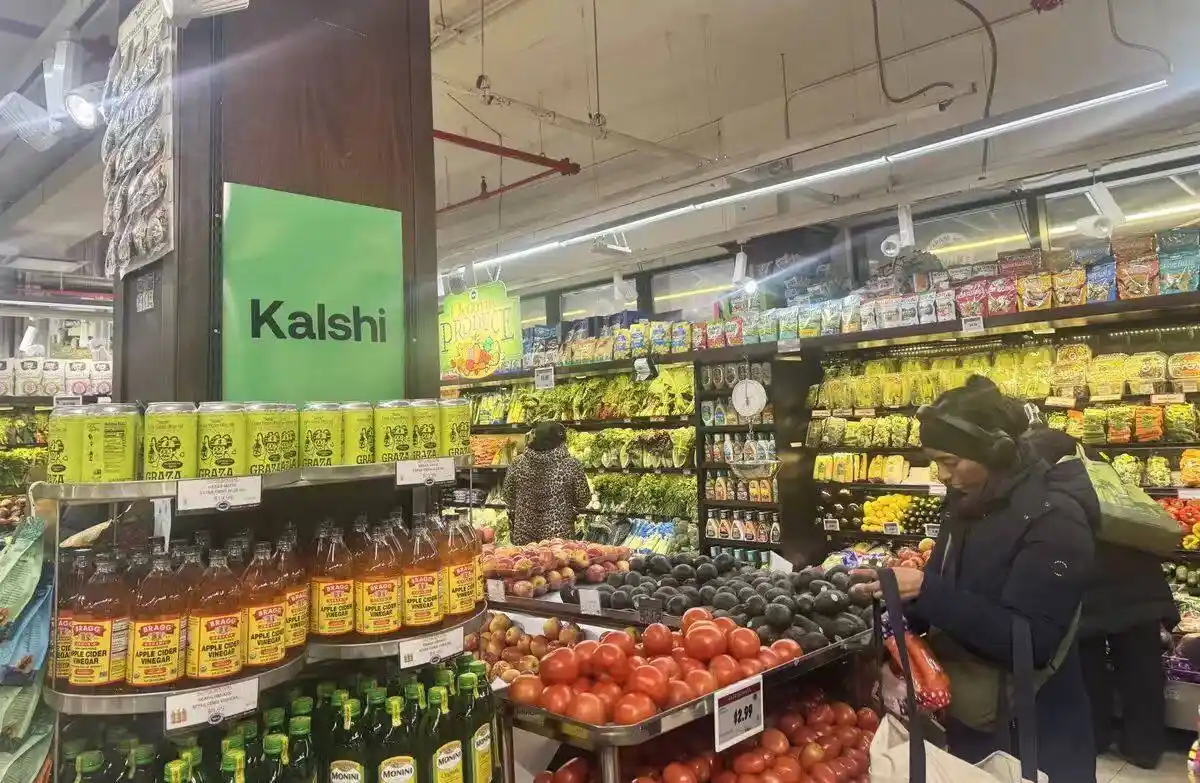
On February 3, Kalshi distributed $50 worth of free food benefits to some users at the West Market on 84 Third Avenue in New York for a limited time to attract more users to participate in various real-world event predictions on the platform.
Based on the surrounding "utility pole mini billboards," "supermarket interior KT boards," and other surrounding materials, Kalshi's offline ground promotion this time seemed more like an impromptu "flash mob event," that is, cooperating with local supermarkets to distribute some offline materials in a short period of time, using the "free $50 food giveaway" benefit as bait to attract people to line up to participate and observe the offline event. This point was also verified and confirmed by Connie.
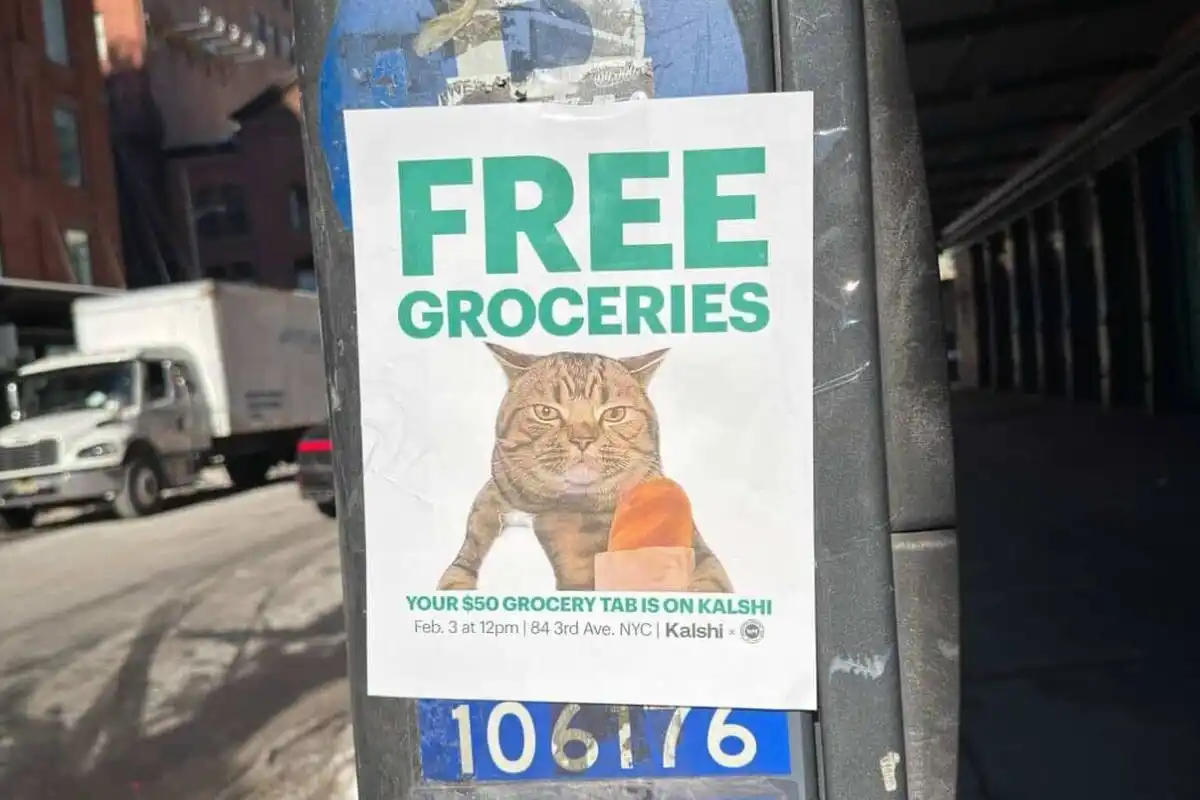
Additionally, it is evident that through this flash mob event, Kalshi hopes to involve more people in prediction markets with bet-able questions such as "Will this year's New York City oil price exceed $3.3," which are relatable, low-barrier, and easy to understand, to achieve branding and user acquisition goals.


Kalshi Co-Branded Flash Sale Eggs Sold Out
Compared to Kalshi's somewhat rough and highly commercial approach, Polymarket's preparations are undoubtedly more thorough.
On February 3, slightly earlier than Kalshi's official announcement, Polymarket officially announced that after months of careful preparation, they plan to open the "first free grocery store in New York" through an offline store lease on February 12 (EST). Additionally, Polymarket has donated $1 million to the Food Bank For New York City to address the "hunger issue" in the area.
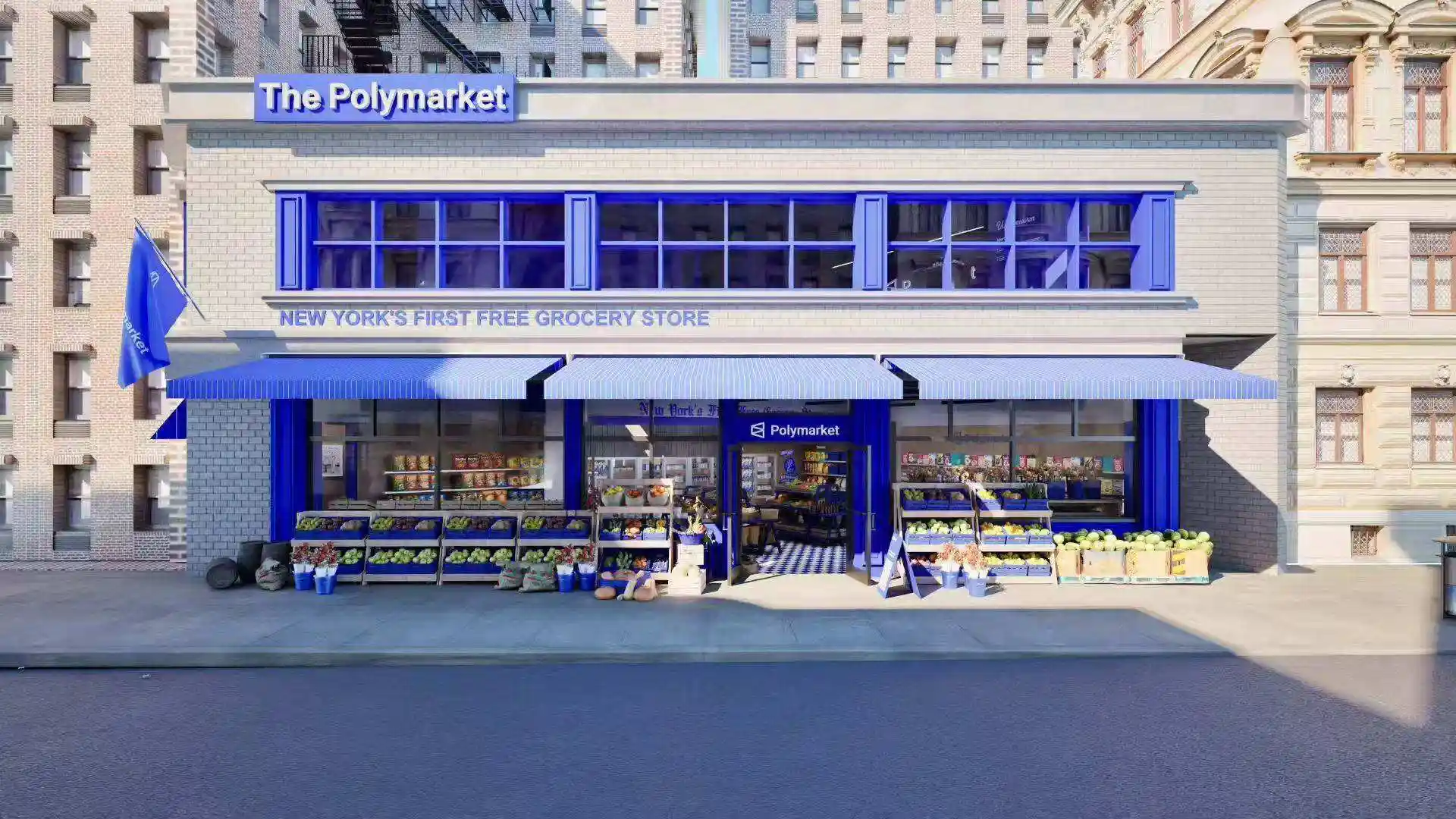
Polymarket also released real shots of offline distribution of vegetables such as tomatoes and eggplants, reminiscent of the bygone era of ground promotion on domestic internet platforms, with a strong sense of "Download the APP to receive eggs" and "First recharge to receive a newcomer's gift package."
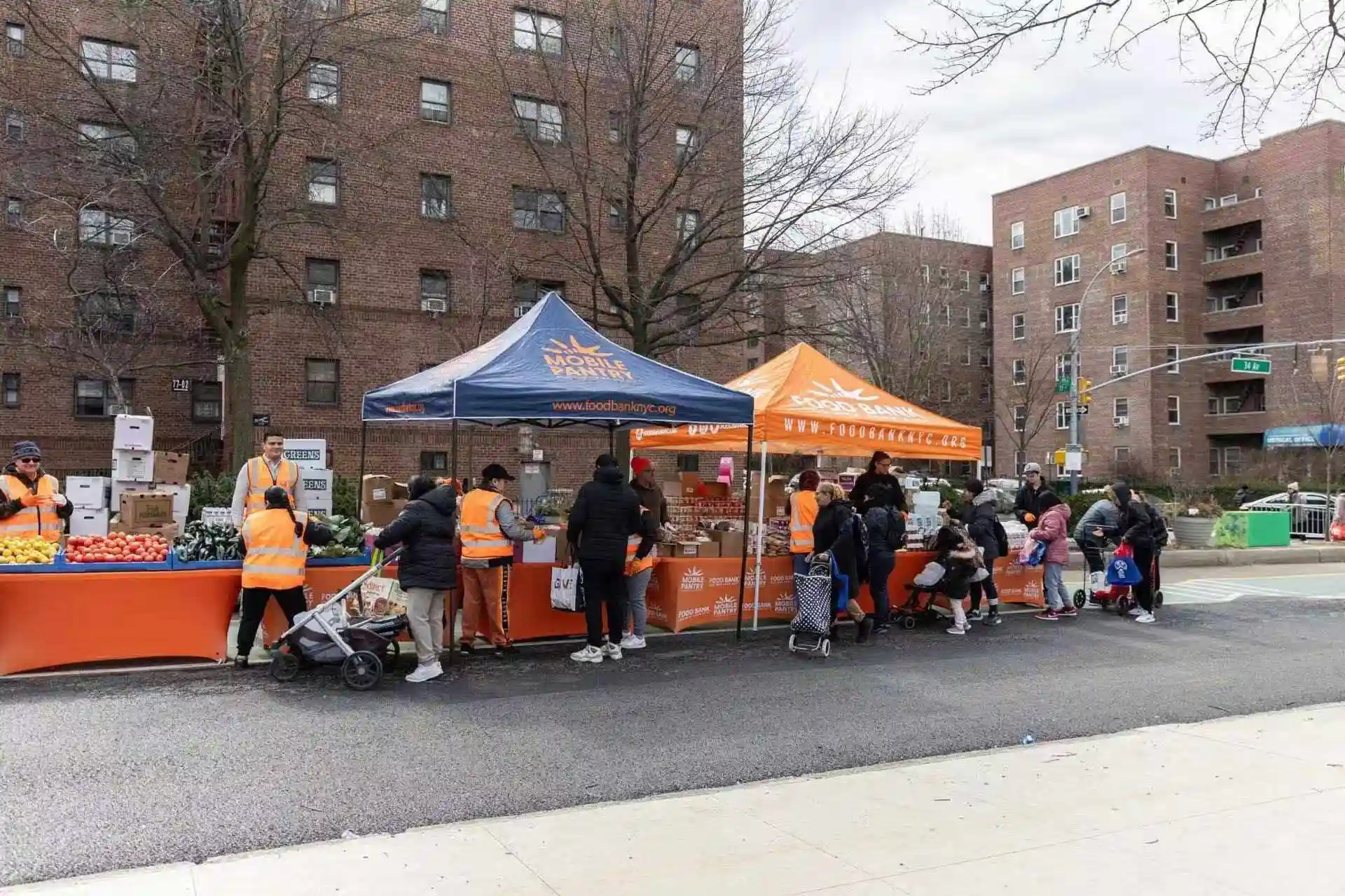
It is worth mentioning that Polymarket not only emphasizes that "Polymarket's offline store has sufficient supply, no purchase necessary," but also at the end of the tweet calls on everyone to donate to the Food Bank For New York City, encouraging people to take practical action to address the high food costs and the ongoing high cost of living leading to the "hunger problem."
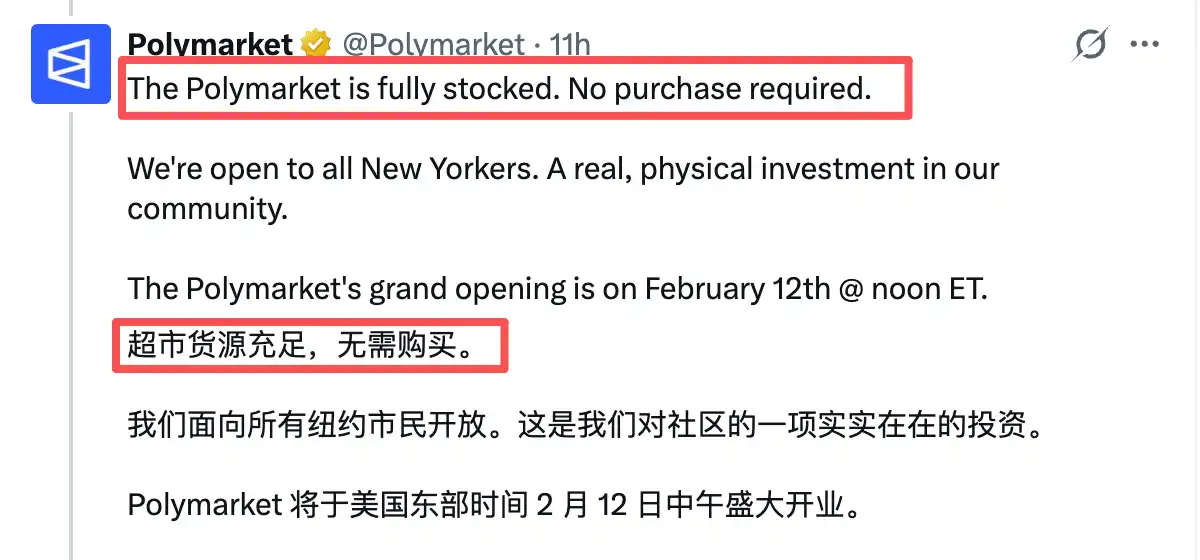
Seeing this scene, it can't help but make me sigh—
False cryptocurrency project ground promotion: hold offline conferences, indulge in seafood meals, promote various false concept tokens;
Real cryptocurrency project ground promotion: distribute vegetables, give away eggs, open offline stores to provide free food, engage in charity and public welfare, and call on people to donate to show love.

Regarding the real purchasing power of the "Free Egg Event" for Kalshi and Polymarket, we also had a detailed discussion with Connie.
$50 Real Purchasing Power in New York, USA: 5 McDonald's Meals, 1.5 Pounds of Beef, or 2 Days of Meals for an Average Person
According to Connie, $50 in New York, USA, can also be considered "quite valuable."
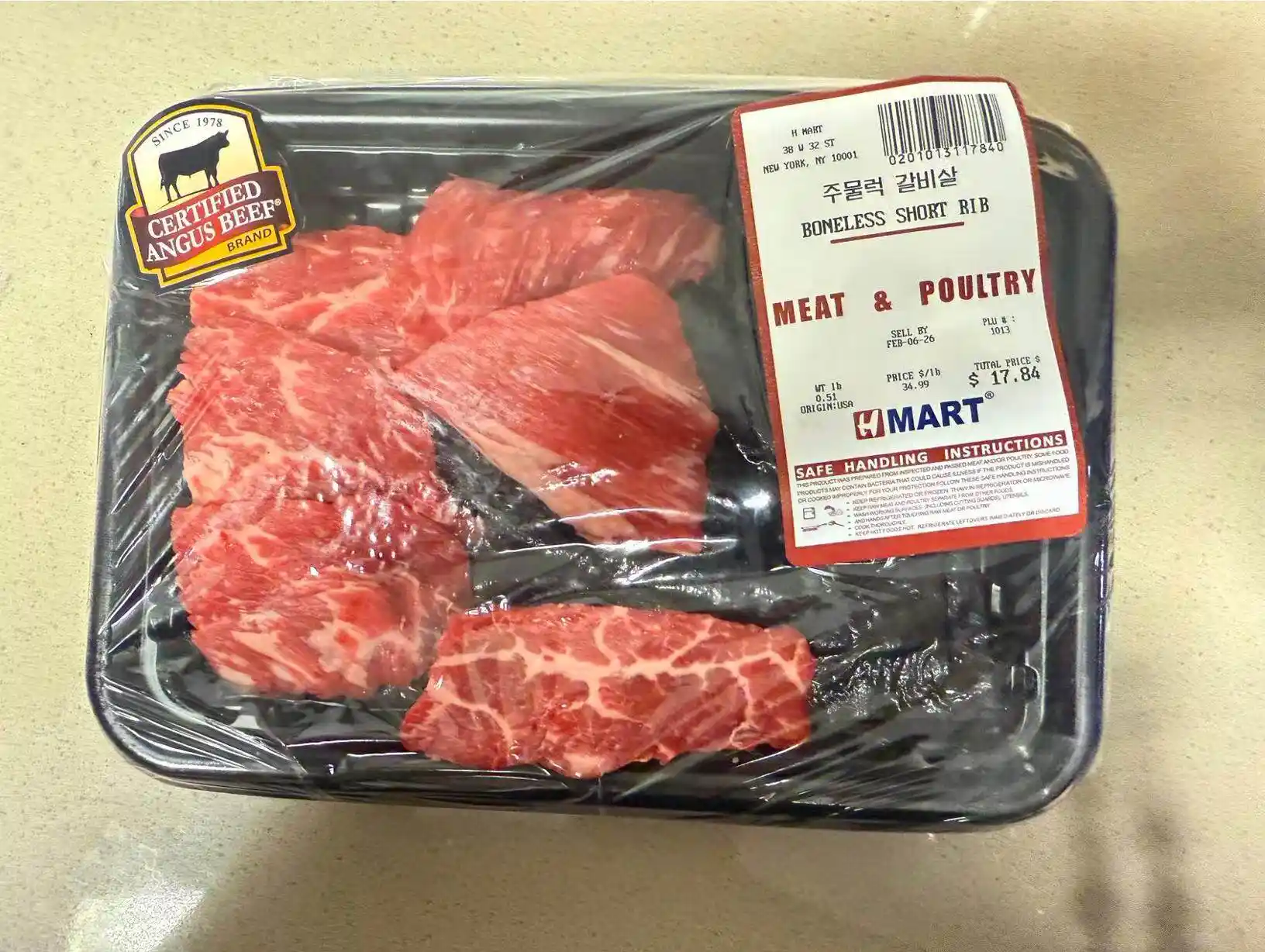
“Buying 0.5 pounds of beef at a local supermarket in New York, USA costs approximately $18, and $50 can buy about 1.5 pounds of beef,” which is enough protein for an adult for three meals in a day. For comparison, the price of one pound of beef in China is only about 30 RMB, equivalent to 1/8 of the cost in New York, USA.
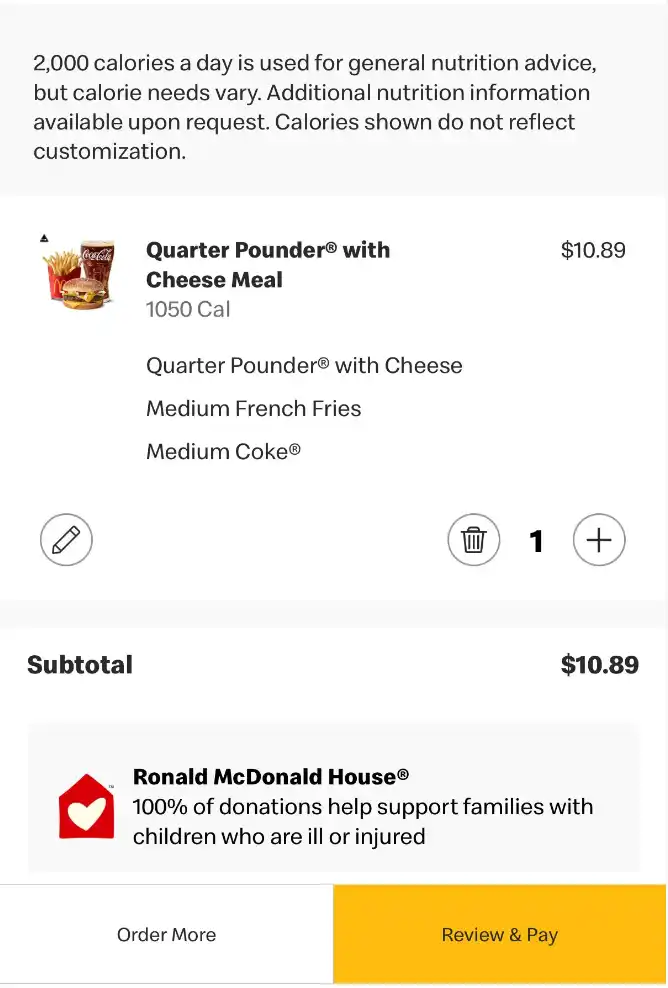
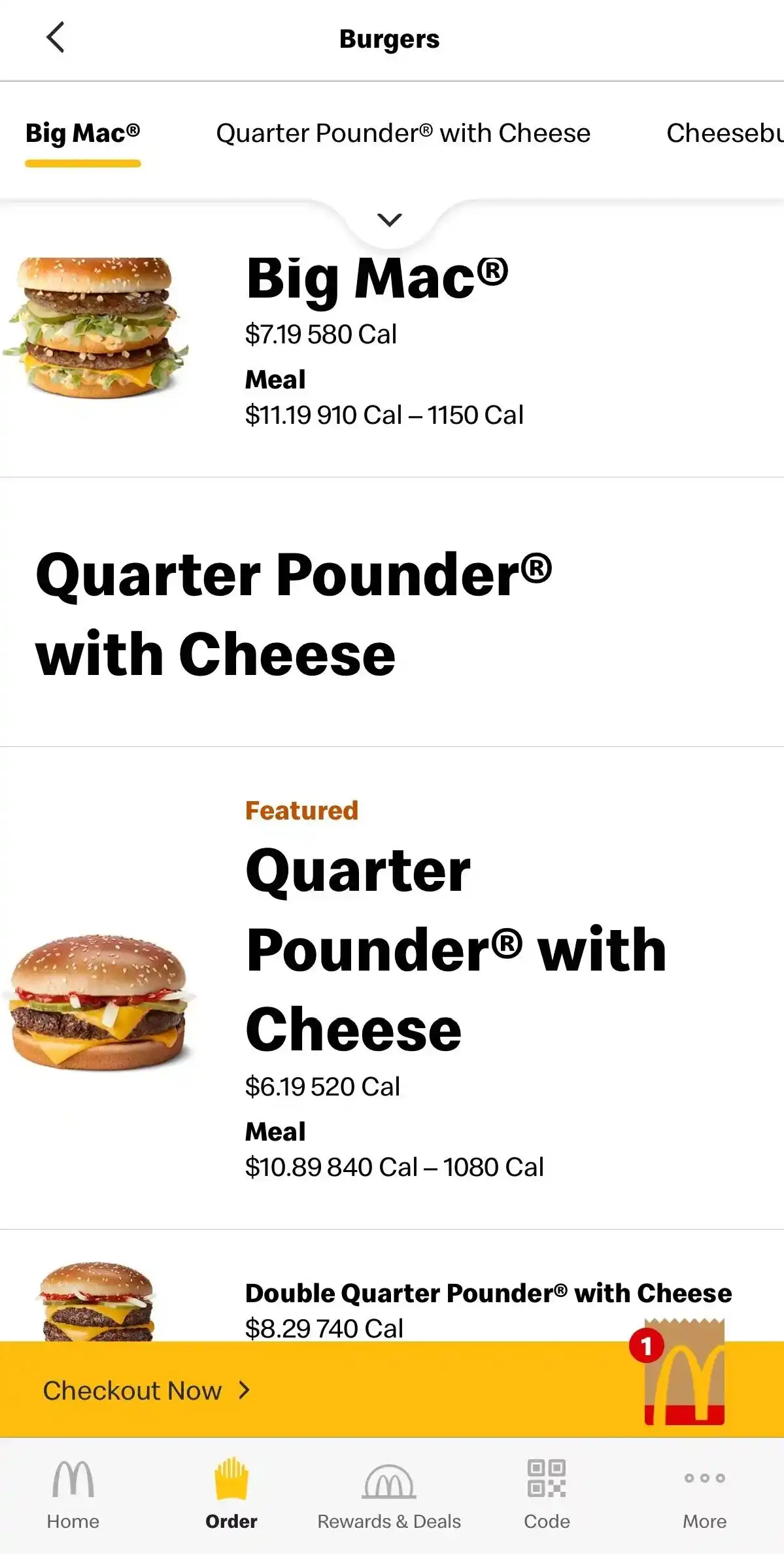
When converted to the well-known "McDonald's Index," the real purchasing power of $50 is also quite impressive—a takeaway order of a cheeseburger combo with 800-1000 calories costs about $10.89, and $50 can buy 5 combos; if you buy a 580-calorie double cheeseburger, it costs only around $7.2. Of course, this price would be considered "sky high" in China. For the same combo meal, the price in China is only about 25-40 RMB, costing only 1/2 of the same food in New York, USA.
In other words, saving a little money, $50 is close to covering an average person's food cost in New York for about 2 days (calculated based on 5-6 meals). According to Connie, Kalshi's event has attracted many Americans to line up to "receive food," and even "the enthusiasm of Americans lining up to receive things is higher than that of Chinese people." Polymarket's "offline free grocery store" event is also estimated to attract a large number of people to line up and participate. Based on the information released by Kalshi and Polymarket, the upfront costs of the two platforms' related events are at least $50,000 to $100,000.
With such a significant investment of manpower and resources, aside from charity and goodwill, Kalshi and Polymarket, the two major prediction market platforms, also have their own "calculations."
The "Business Acumen" Behind Prediction Market Platforms' "Free Egg Giveaway": Influencing Regulatory Agencies with Political Issues
The above food donation activities by Kalshi and Polymarket were not coordinated or communicated with the New York City government, but were voluntary actions by the companies.
However, the external statements and purposes of both are very similar to the "policies" repeatedly emphasized by New York's newly elected mayor, Zohran Mamdani, during his campaign — the latter had proposed "opening public grocery stores in the five administrative regions of New York to lower food prices." Zohran Mamdani pointed out that city-owned grocery stores could reduce rent and operating costs through a non-profit operating model and the use of public property. This plan is currently in the pilot phase, and the final implementation schedule has not yet been determined.
On the other hand, as one of the key states in the United States, New York legislators are actively issuing new bills regarding the prediction market, an emerging industry track. Among them, the "ORACLE Bill" plans to restrict or prohibit New York residents from betting on certain prediction market events and impose stricter restrictions on event-based prediction markets. Another bill plans to require prediction market operators to obtain a license from the state government before operating.
It is evident that some legislators still have various concerns about the prediction market, viewing it as akin to unregulated gambling or more susceptible to insider manipulation.
In view of this, although the New York City mayor does not have direct regulatory authority over the prediction market (note from the author: regulatory authority over prediction market platforms belongs to state and federal governments), Kalshi and Polymarket's actions may also be an indirect attempt to seek regulatory friendliness.
Lastly, regardless of how the actions of the two regarding "egg donation" ultimately impact, we have to acknowledge that the promotion model of Chinese internet platforms may be at least 5-10 years ahead of the Western world.
You may also like

From x402 to MPP: Cloudflare's crucial vote, will it go to Coinbase or Stripe?

BlackRock CEO issues annual open letter: The wave of tokenization has arrived, and we will lead this trend

When Backpack backstabs the community

When gold is no longer a safe haven, and Bitcoin continues to panic

Trump, the World's Largest Oil Trader

If the US and Iran have not reached an agreement in 5 days, what other cards does Trump have?

Tether Whale Dumps £12 Million, Backing Crypto’s ‘British Trump’
Ethereum Foundation Post: Rethinking the Division of Work Between L1 and L2 to Build the Ultimate Ethereum Ecosystem

Two Major Prediction Market Platforms Unite Rarely, What Is the Story Behind This New Fund?

WEEX Official Product Launch: Win LALIGA Tickets & Unlock the 3-in-1 Crypto Trading Suite
Trade crypto without downloading an app. Join the WEEX H5, API, SKILLs livestream to explore the new trading experience, win LALIGA VIP tickets, and share 420 USDT rewards.
Dragonfly Partners: Most agents will not engage in autonomous trading, how can crypto payments prevail?

US AI Startup Goes All In on Chinese Mega-Model | Rewire News Morning Brief

Trump Lies Again: A "Five-Day Pause" Psyop, How Wall Street, Bitcoin, and Polymarket Insiders Synced Uposciogen

When a Token Becomes Labor, People Become the Interface

Ceasefire News Leaked Ahead of Time? Large Polymarket Bets on Outcome Before Trump's Tweet
BlackRock CEO's Annual Shareholder Letter: How is Wall Street Using AI to Keep Profiting from National Pension Funds?

Sun Valley Releases 2025 Financial Report: Bitcoin Mining Revenue Reaches $670 Million, Accelerating Transformation to AI Infrastructure Platform
On March 16, 2026, in Dallas, Texas, USA, CanGu Company (New York Stock Exchange code: CANG, hereinafter referred to as "CanGu" or the "Company") today announced its unaudited financial performance for the fourth quarter and full year ended December 31, 2025. As a btc-42">bitcoin mining enterprise relying on a globally operated layout and dedicated to building an integrated energy and AI computing power platform, CanGu is actively advancing its business transformation and infrastructure development.
• Financial Performance:
Total revenue for the full year 2025 was $688.1 million, with $179.5 million in the fourth quarter.
Bitcoin mining business revenue for the full year was $675.5 million, with $172.4 million in the fourth quarter.
Full-year adjusted EBITDA was $24.5 million, while the fourth quarter was -$156.3 million.
• Mining Operations and Costs:
A total of 6,594.6 bitcoins were mined throughout the year, averaging 18.07 bitcoins per day; of which 1,718.3 bitcoins were mined in the fourth quarter, averaging 18.68 bitcoins per day.
The average mining cost for the full year (excluding miner depreciation) was $79,707 per bitcoin, and for the fourth quarter, it was $84,552;
The all-in sustaining costs were $97,272 and $106,251 per bitcoin, respectively.
As of the end of December 2025, the company has cumulatively produced 7,528.4 bitcoins since entering the bitcoin mining business.
• Strategic Progress:
The company has completed the termination of the American Depositary Receipt (ADR) program and transitioned to a direct listing on the NYSE to enhance information transparency and align with its strategic direction, with a long-term goal of expanding its investor base.
CEO Paul Yu stated: "2025 marked the company's first full year as a bitcoin mining enterprise, characterized by rapid execution and structural reshaping. We completed a comprehensive adjustment of our asset system and established a globally distributed mining network. Additionally, the company introduced a new management team, further strengthening our capabilities and competitive advantage in the digital asset and energy infrastructure space. The completion of the NYSE direct listing and USD pricing also signifies our transformation into a global AI infrastructure company."
"As we enter 2026, the company will continue to optimize its balance sheet structure and enhance operational efficiency and cost resilience through adjustments to the miner portfolio. At the same time, we are advancing our strategic transformation into an AI infrastructure provider. Leveraging EcoHash, we will utilize our capabilities in scalable computing power and energy networks to provide cost-effective AI inference solutions. The relevant site transformations and product development are progressing simultaneously, and the company is well-positioned to sustain its execution in the new phase."
The company's Chief Financial Officer, Michael Zhang, stated: "By 2025, the company is expected to achieve significant revenue growth through its scaled mining operations. Despite recording a net loss of $452.8 million from ongoing operations, mainly due to one-time transformation costs and market-driven fair value adjustments, the company, from a financial perspective, will reduce its leverage, optimize its Bitcoin reserve strategy and liquidity management, introduce new capital to strengthen its financial position, and seize investment opportunities in high-potential areas such as AI infrastructure while navigating market volatility."
The total revenue for the fourth quarter was $1.795 billion. Of this, the Bitcoin mining business contributed $1.724 billion in revenue, generating 1,718.3 Bitcoins during the quarter. Revenue from the international automobile trading business was $4.8 million.
The total operating costs and expenses for the fourth quarter amounted to $4.56 billion, primarily attributed to expenses related to the Bitcoin mining business, as well as impairment of mining machines and fair value losses on Bitcoin collateral receivables.
This includes:
· Cost of Revenue (excluding depreciation): $1.553 billion
· Cost of Revenue (depreciation): $38.1 million
· Operating Expenses: $9.9 million (including related-party expenses of $1.1 million)
· Mining Machine Impairment Loss: $81.4 million
· Fair Value Loss on Bitcoin Collateral Receivables: $171.4 million
The operating loss for the fourth quarter was $276.6 million, a significant increase from a loss of $0.7 million in the same period of 2024, primarily due to the downward trend in Bitcoin prices.
The net loss from ongoing operations was $285 million, compared to a net profit of $2.4 million in the same period last year.
The adjusted EBITDA was -$156.3 million, compared to $2.4 million in the same period last year.
The total revenue for the full year was $6.881 billion. Of this, the revenue from the Bitcoin mining business was $6.755 billion, with a total output of 6,594.6 Bitcoins for the year. Revenue from the international automobile trading business was $9.8 million.
The total annual operating costs and expenses amount to $1.1 billion.
Specifically, they include:
· Revenue Cost (excluding depreciation): $543.3 million
· Revenue Cost (depreciation): $116.6 million
· Operating Expenses: $28.9 million (including related-party expenses of $1.1 million)
· Miner Impairment Loss: $338.3 million
· Bitcoin Collateral Receivable Fair Value Change Loss: $96.5 million
The full-year operating loss is $437.1 million. The continuing operations net loss is $452.8 million, while in 2024, there was a net profit of $4.8 million.
The 2025 non-GAAP adjusted net profit is $24.5 million (compared to $5.7 million in 2024). This measure does not include share-based compensation expenses; refer to "Use of Non-GAAP Financial Measures" for details.
As of December 31, 2025, the company's key assets and liabilities are as follows:
· Cash and Cash Equivalents: $41.2 million
· Bitcoin Collateral Receivable (Non-current, related party): $663.0 million
· Miner Net Value: $248.7 million
· Long-Term Debt (related party): $557.6 million
In February 2026, the company sold 4,451 bitcoins and repaid a portion of related-party long-term debt to reduce financial leverage and optimize the asset-liability structure.
As per the stock repurchase plan disclosed on March 13, 2025, as of December 31, 2025, the company had repurchased a total of 890,155 shares of Class A common stock for approximately $1.2 million.



 App
App