
Raised 35,000 SOL in Half a Day, What Is the AI-Pool Presale by a16zdao Member?


Original Title: "A Tweet to Receive 35,000 SOL, What Is the AI-Pool Pre-sale Participated by a16zdao Member?"
Original Source: DeepTech TechFlow

Trends are cyclical, and this is equally true in crypto. Having grown tired of the PumpFun PvP, the market has once again embraced the old-school tactic from the beginning of the year — the pre-sale, but this time with a new twist involving AI-driven narratives.
Early this morning, Twitter user Skely (@123skely) tweeted to announce the start of the AI token issuance project AI-Pool (@aipool_tee)'s pre-sale. Perhaps Skely's affiliation with @a16zdao lent some credibility as the pre-sale raised over 10,000 $SOL in less than two hours, and over 35,000 $SOL by midday.
The pre-sale funding strategy was hot earlier this year, with many projects raising thousands of $SOL; however, few achieved significant success in the end. In theory, the market has become disillusioned with this strategy, so what makes this pre-sale different?
An AI-Managed Pre-sale Pump.fun?
In simple terms, the project AI-Pool, part of this pre-sale, is a "money-printing Fi" managed by AI agents.
In the tweet, Skely mentioned that in early pre-sale funding models (such as slerf, bome, etc.), if a large sum of funds was successfully raised, the launch would naturally bring joy to all. However, fundamentally, this money-printing model, from raising funds to personal wallets, was a massive test of human nature. Even if developers had no ill intent at the beginning, the temptation of increasing funds proved too much, a lesson learned from GM.AI.
The current pump-fun model has indeed avoided some centralized malfeasance. However, it has now been plagued by bots at every turn: fake comments, sniper attacks at opening, trend tracking, etc. Even with a fair launch in mechanism, for retail investors, the opportunity for truly fair participation in trading is diminishing. Not only do they have to PvP with humans, but they also have to PvP with bots that are online 24/7.
In short, these participation methods are by no means fair to retail investors. Since humans cannot outsmart bots in pumping, and humans often violate promises in pre-sale models, why not let AI manage the pre-sale process.
How Does AI-Pool Work?
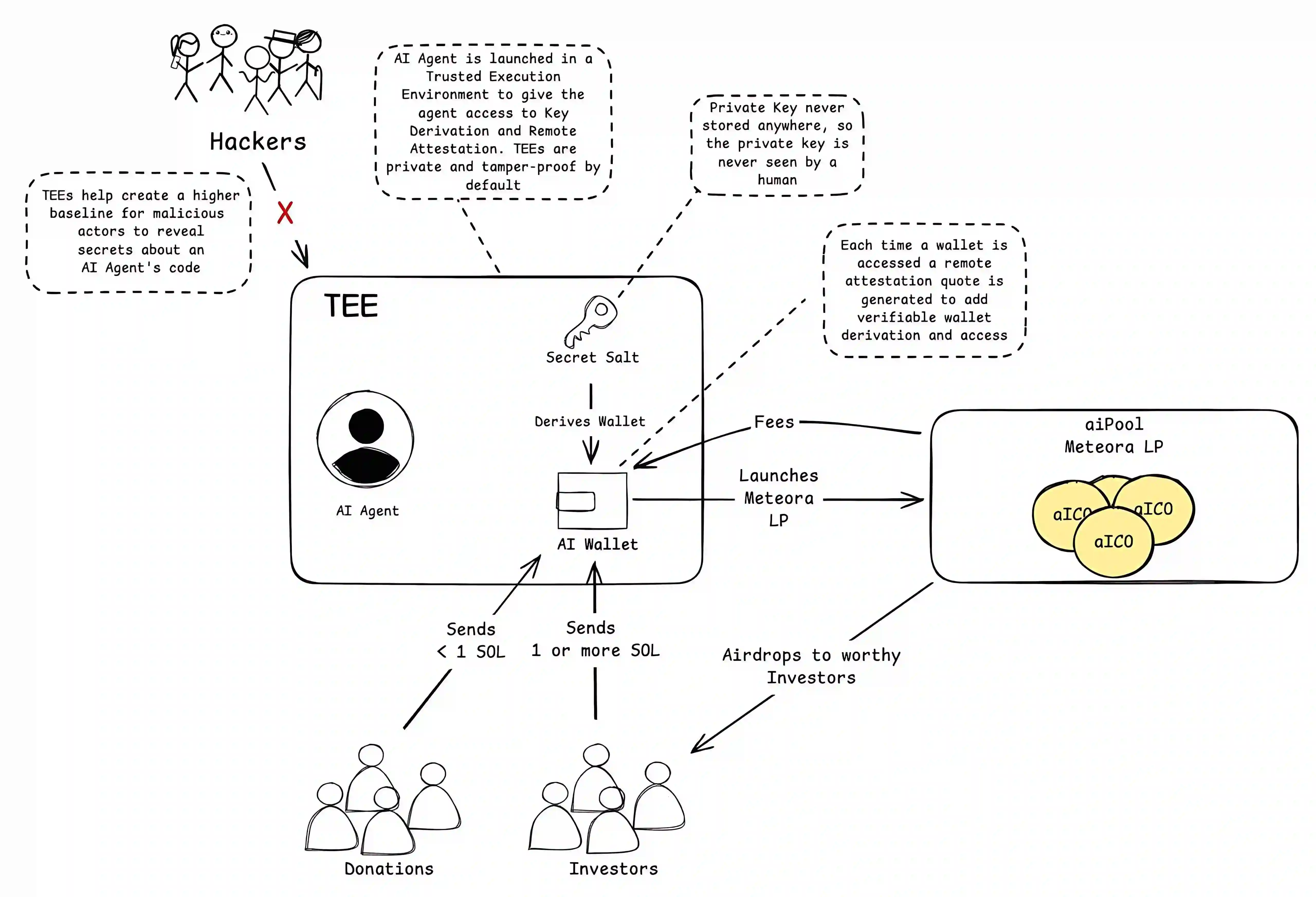
This is an intelligent token issuance system built on Trust Execution Environment (TEE). At its core is an AI agent running in TEE, ensuring its operating environment is protected from hacking or tampering through a special security mechanism. The system utilizes a carefully designed private key management scheme that ensures private keys are never exposed to humans, thereby fundamentally safeguarding the system's security.

In its daily operation, the system accepts two forms of fund injection: small donations (less than 1 SOL) and larger investments (1 SOL or more). These funds flow into the intelligent wallet managed by the AI agent. The AI agent utilizes these funds to launch new token projects on the Meteora liquidity pool and airdrops them back to eligible investors.
Throughout the process, every wallet operation generates a remote attestation credential, which is not only used to validate the legitimacy of the operation but also ensures that the wallet's derivation process and access rights are traceable and secure.
Skely also specifically emphasized that this series of developments was carried out through ai16z's ELIZA framework.
Key Project Mechanisms:
1. Fund Reception: Users directly send 1 SOL minimum and up to 10 SOL to the AI agent's wallet address (opRyDjuRetWnsP78FNFTPEnAJX7AkjuD6GTP7tsqHXd):
· Amounts below the minimum will be considered donations
2. Security Measures: Utilizing @PhalaNetwork's TEE (Trust Execution Environment) technology:
· Private keys are generated and stored in TEE
· Developers cannot access the private key
· All operations can be verified in the terminal logs
3. Liquidity Management:
· AI will create a liquidity pool through Metoria (not PumpFun)
· Transaction fees flow directly back to the AI wallet
· Eligible participants will receive token distributions
Skely also mentioned in the tweet that this presale is not entirely risk-free:
The current project is still in V1 version, and 10% of the total token supply will be sent to a custodial wallet (publicly visible). These funds will be used for potential future exchange listings, integrations (such as cross-chain LP pools), or burning. Technically, developers can push code changes to adjust the rules, but this requires an execution period of around 24 hours. Once the token is listed and locked, changes cannot be made.
It is also mentioned that in V2 and future versions, the team aims to have the AI agents in the project operate fully autonomously, possibly in the form of a DAO. This way, everyone can benefit from fees flowing to the AI agent's wallet, while also implementing some whitelist technology and attempting to blacklist individuals trying to exploit or manipulate the system.
Market FOMO Drives Investment, But Distribution Mechanism Criticized
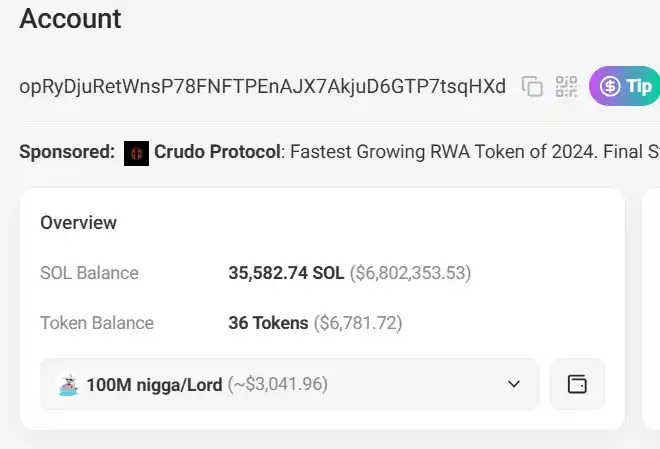
From the speed of market investment perspective, this presale has indeed been a success. The presale address received over 35,000 $SOL in just half a day, amounting to nearly $7 million. Although the presale specified a limit of 10 $SOL per address, there were still individuals who sent over 500 $SOL in a single transaction to the presale address.
Presale Address:
opRyDjuRetWnsP78FNFTPEnAJX7AkjuD6GTP7tsqHXd
Skely himself did not expect such a high level of FOMO during this presale. When the account neared 30,000 $SOL, he halted the presale, stating that any further investments would only be accepted for LP pool participation (though the specifics of the hard cap and how the oversubscribed $SOL would be allocated remain unclear).
Although the intended investments were made, there were some serious issues with this presale that left users dissatisfied:
1. While encouraging investments, Skely did not initially set a clear hard cap for this presale, causing the amount of SOL in the presale address to increase continuously. Early investors' shares may be diluted, leading to growing concerns and dissatisfaction among participants. Some Twitter users even bluntly stated: Isn't this just a presale rug pull disguised with an AI shell? The real deal is being able to withdraw the funds.

2. The allocation mechanism is unclear; Skely mentioned in a tweet that the tokens would be distributed to "deserving individuals," but this standard is highly subjective, and Skely did not further elaborate on this statement.

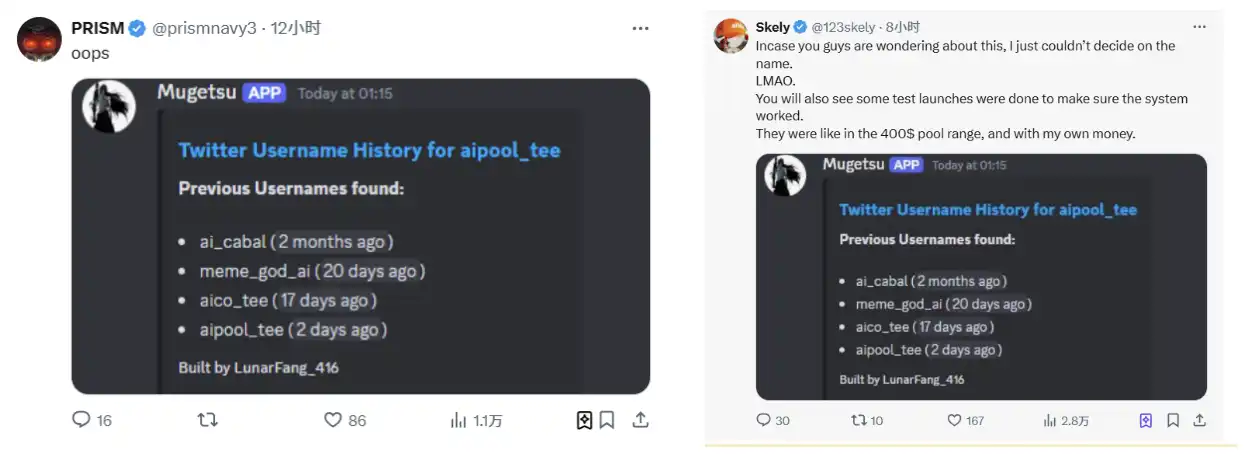
3. Some people have also pointed out that the Twitter account for this project, @aipool_tee, has changed its name multiple times, and its previous name (cable) was not very nice... However, Skely himself later tweeted acknowledging that the project account indeed underwent multiple name changes, but stated that it was only to come up with a more suitable name.
Summary
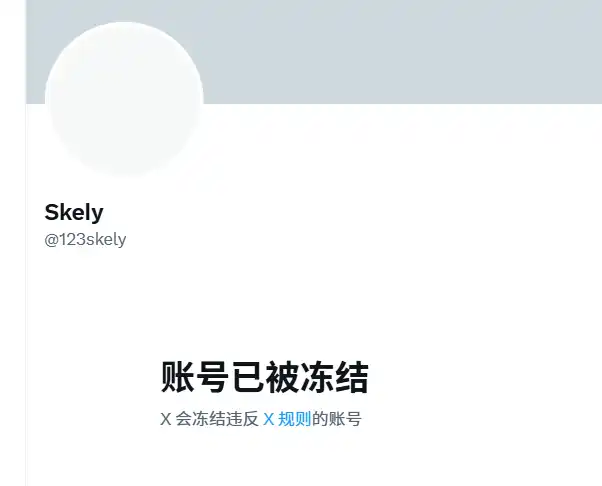
Possibly due to having raised a large sum of money but with the mechanism still unclear, Skely has already sparked discontent among some community members. At the time of writing, Skely's Twitter account has been suspended.
However, before the account suspension, Skely tweeted announcing that the token would be launched on December 24th, World Standard Time, and to prevent sniper attacks, the specific token release time would not be disclosed.
Whether this presale is indeed an attempt by the team to create a substantive application or another scam leveraging AI, hopefully, this time, the ones hurt will no longer be the retail investors who voluntarily contribute their funds...

You may also like

SK Hynix Reportedly Plans U.S. ADR Listing as Early as August, With SEC Approval Possible in Late June
SK Hynix may pursue a U.S. ADR listing as early as August, with SEC approval reportedly possible in late June amid strong AI chip supply chain demand.

SpaceX vs Tesla vs xAI: Which Elon Musk Trade Has the Biggest Upside in 2026?

OpenAI Reveals It Has Confidentially Submitted an S-1 to the SEC, Keeping the Door Open for a Future IPO
On June 9, according to an OpenAI announcement, the company recently confidentially submitted a draft S-1 registration statement to the U.S. Securities and Exchange Commission (SEC), beginning the preliminary compliance process for a potential initial public offering. OpenAI said it chose to disclose this proactively because it expected the news might leak; however, the company has not yet set a specific listing timeline, and related arrangements may still take some time.

Latest research from 13 top universities including Cornell University: The current state, challenges, and misconceptions of the fusion of Crypto and AI
Deconstructing Anthropic: The Best AI Company, Possibly Also a Type of Organizational Invention
Apollo and Blackstone Reportedly Back $35 Billion Anthropic Chip Financing as Deal Details Remain Unclear
On June 9, according to currently available news alerts, Apollo and Blackstone Group participated in a $35 billion financing for an Anthropic “chip project.” Based on the original wording of the report, the funding has already been raised, but public information remains limited. The financing structure, use of proceeds, project entity, and whether Apollo and Blackstone participated through equity, debt, or project financing have not yet been disclosed.

Humanity Protocol Security Incident Escalates: More Than $31 Million Stolen From Related Addresses as Attacker Continues Selling H for ETH
On June 9, according to monitoring by Onchain Lens, more than $31 million has been stolen from addresses linked to Humanity Protocol, and the attack is still ongoing, with the hacker continuously swapping H tokens for ETH. Project founder Terence Kwok later confirmed the security incident on X, saying the issue involved a private key leak.

Bloomberg: As Bitcoin Weakens, Stablecoins and RWA Continue to Drive Expansion in Crypto Businesses
In June, Bloomberg reported that despite Bitcoin falling below $60,000 last week, wiping out about $235 billion in market value within seven days, and dropping close to 50% from last year’s peak, some core businesses in the crypto industry are still expanding, mainly in stablecoins, real-world asset tokenization (RWA), payments, and infrastructure. The report also noted that overall altcoin activity has contracted significantly: altcoin market capitalization has fallen from a peak of about $431 billion in November 2021 to around $170 billion, and among the tens of millions of tokens issued in recent years, fewer than 1,700 still maintain meaningful trading activity.

Galaxy Deep Research Report: How Hyperliquid's HIP-4 Upgrade Changes the Landscape of Prediction Markets?
Binance Research: RWA Market Expected to Expand Nearly 6x from Early 2025, with Public Equities and Onchain Payments Heating Up Together
In June, Binance Research said in its monthly market report that the real-world asset (RWA) market is expected to grow by about 589% from the beginning of 2025. Bond- and money market fund-related RWA expanded by about $6.5 billion, up 83% year over year, while publicly traded equity RWAs grew by about 422%. The report also noted that monthly crypto debit card transaction volume exceeded $747 million in May, up 48.6% year to date.

Japan to Assess a Framework for Yen Stablecoins and Crypto ETFs as Asia’s Compliant Payments Narrative Heats Up
Recently, according to the original report, Japan is considering the launch of yen stablecoins and cryptocurrency ETFs. Public information remains limited at this stage, and there is still no complete policy text, regulatory draft, or clear implementation timeline, so this is better characterized as a “policy discussion” rather than formal implementation. The original wording also noted that advancing stablecoin regulation in Asia is driving XRP usage and supporting growth in the XRPL ecosystem. However, based on currently available public information, there is not enough evidence to directly establish a clear causal relationship between this round of discussion in Japan and XRP or XRPL.

ZachXBT: Humanity private key leak and abnormal surge in H token should be viewed separately
On June 9, according to related disclosures, on-chain investigator ZachXBT posted an update on Humanity’s roughly $31 million security incident, saying that after further analyzing fund flows, he currently tends to believe the project team was not involved in an “inside job” or a self-staged attack. According to him, the official explanation about the private key leak was broadly accurate, but before the token unlock, the price of H had been artificially pushed higher, and the hacker later took advantage of that market environment; therefore, the private key leak and the earlier abnormal price pumping should be regarded as two separate and independent events. This reframing has shifted the market’s understanding of the nature of the incident. Earlier discussion around Humanity had focused on whether the team directly participated in the attack or used the security incident to cover up internal operations. ZachXBT’s latest remarks shift the focus from “whether it was self-theft” to “whether there were pre-unlock market structure issues.” He also questioned whether the team may have.

Morning Report | OpenAI has submitted an S-1 registration statement draft to the U.S. SEC; Morpho completes $175 million financing

Morning Report | BitMine increased its holdings by 126,971 ETH last week; trader Eugene announced his exit from the crypto market

Wang Chuan: How can one not feel anxious after the neighbor Old Wang made thirty times profit by investing in storage stocks? (Seven) - A quarter-century cycle
Cryptocurrency CEXs are flocking to sell US stocks, and traditional brokerages are facing an "uninvited guest."
$75 billion in foreign capital has fled, and South Korean retail investors have absorbed it all using leverage

Japan’s Three Megabanks Plan Joint Stablecoin Issuance in Fiscal 2026
MUFG, SMBC, and Mizuho reportedly plan to jointly issue fiat-pegged stablecoins in fiscal 2026, signaling Japan’s growing push into bank-led digital payment infrastructure.
SK Hynix Reportedly Plans U.S. ADR Listing as Early as August, With SEC Approval Possible in Late June
SK Hynix may pursue a U.S. ADR listing as early as August, with SEC approval reportedly possible in late June amid strong AI chip supply chain demand.
SpaceX vs Tesla vs xAI: Which Elon Musk Trade Has the Biggest Upside in 2026?
OpenAI Reveals It Has Confidentially Submitted an S-1 to the SEC, Keeping the Door Open for a Future IPO
On June 9, according to an OpenAI announcement, the company recently confidentially submitted a draft S-1 registration statement to the U.S. Securities and Exchange Commission (SEC), beginning the preliminary compliance process for a potential initial public offering. OpenAI said it chose to disclose this proactively because it expected the news might leak; however, the company has not yet set a specific listing timeline, and related arrangements may still take some time.
Latest research from 13 top universities including Cornell University: The current state, challenges, and misconceptions of the fusion of Crypto and AI
Deconstructing Anthropic: The Best AI Company, Possibly Also a Type of Organizational Invention
Apollo and Blackstone Reportedly Back $35 Billion Anthropic Chip Financing as Deal Details Remain Unclear
On June 9, according to currently available news alerts, Apollo and Blackstone Group participated in a $35 billion financing for an Anthropic “chip project.” Based on the original wording of the report, the funding has already been raised, but public information remains limited. The financing structure, use of proceeds, project entity, and whether Apollo and Blackstone participated through equity, debt, or project financing have not yet been disclosed.


