
Splurging $80 Million in Growth "Subsidies," Uniswap is Taking Big Steps


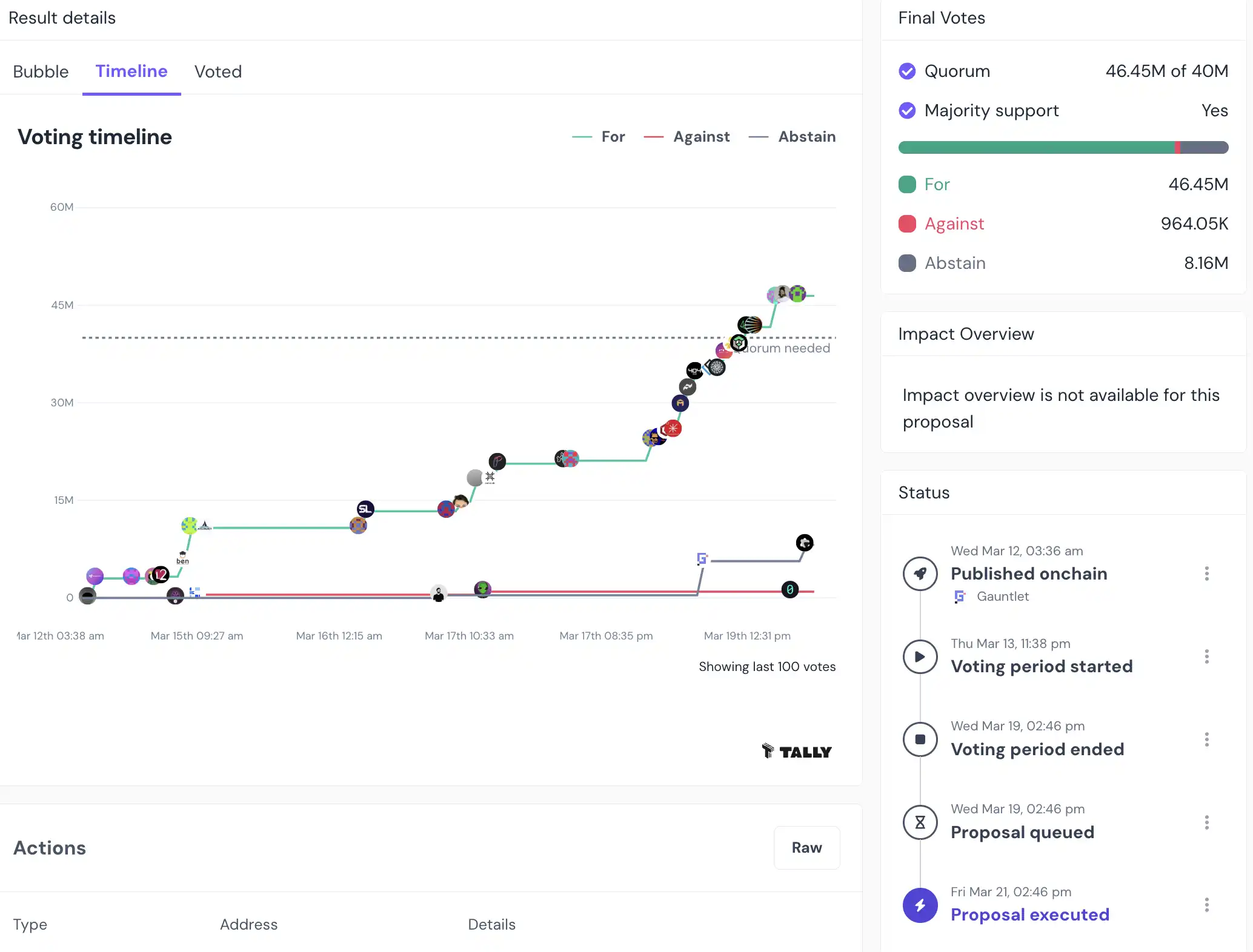
On February 14, 2025, Devin Walsh, Executive Director and Co-founder of the Uniswap Foundation, initiated a liquidity incentive proposal regarding Uniswap v4 and Unichain in the Uniswap Governance DAO. The proposal passed through Temp Check on March 3 and was formally completed on March 21 in tally on Snapshot, with a total of 53 million UNI tokens and 468 addresses participating in the vote. The plan's technical support partner, Gauntlet, announced that the first phase of activities under this proposal would last for 2 weeks and commence on April 15.
The proposal sparked intense community discussion upon its release, with some expressing support while others believed the plan to be meaningless and detrimental to DAO interests. This article will detail the main contents of the proposal, how to participate, and the community's perspectives.
Proposal Details
The proposal encompasses plans for the next six months of UniSwap v4 and one year of Unichain. The Foundation's goal for Uniswap v4 over the next six months is to migrate the 30-day rolling trading volume of $32.8 billion from v3 to the target chain's v4. A budget of $24 million has been applied for this six-month plan.
On the other hand, Unichain's activities are planned to span an entire year. The Foundation's plan for the next three months is to achieve a TVL of $7.5 billion and a cumulative trading volume of $110 billion on Unichain. To achieve the aforementioned goals, Unichain plans to request around $60 million in incentives for the first year, including the $21 million requested in this proposal. Operating similarly to Uniswap v4, the rewards will consider non-DEX DeFi activities to increase organic liquidity demand, primarily composed of the Uniswap Foundation and other projects built on Unichain.
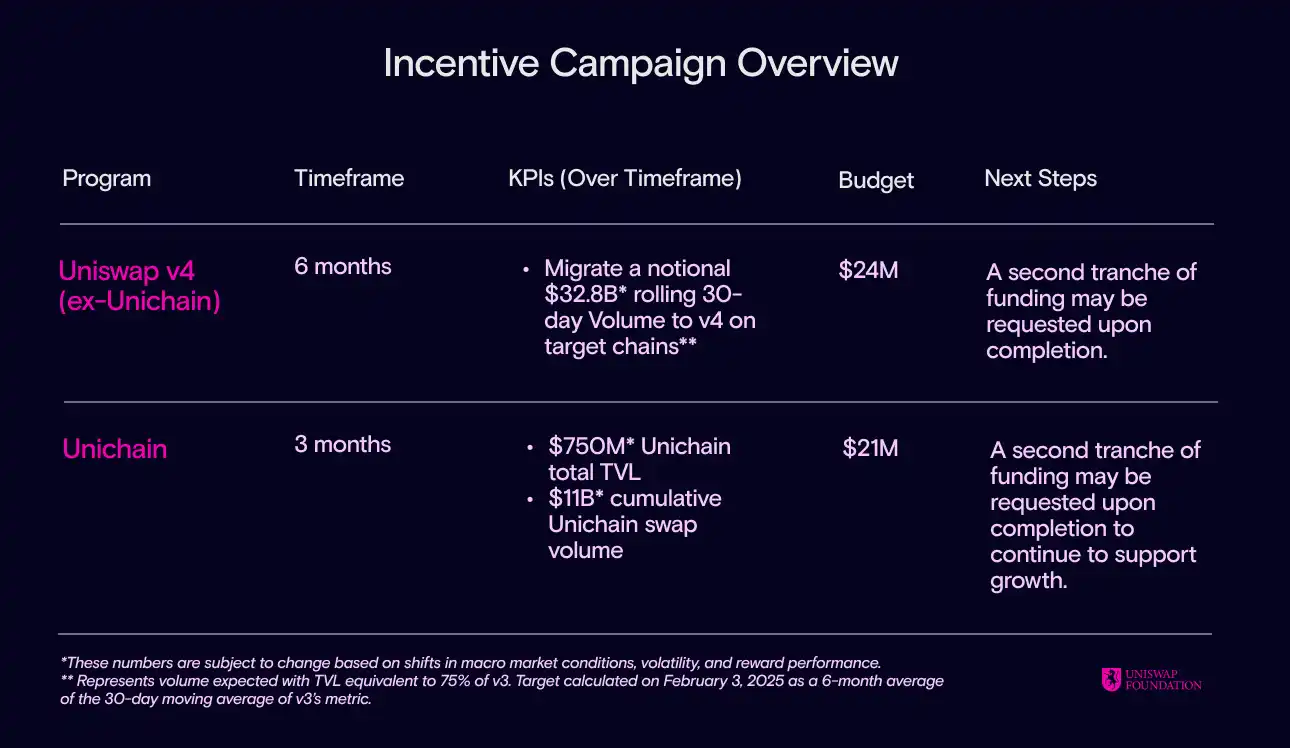
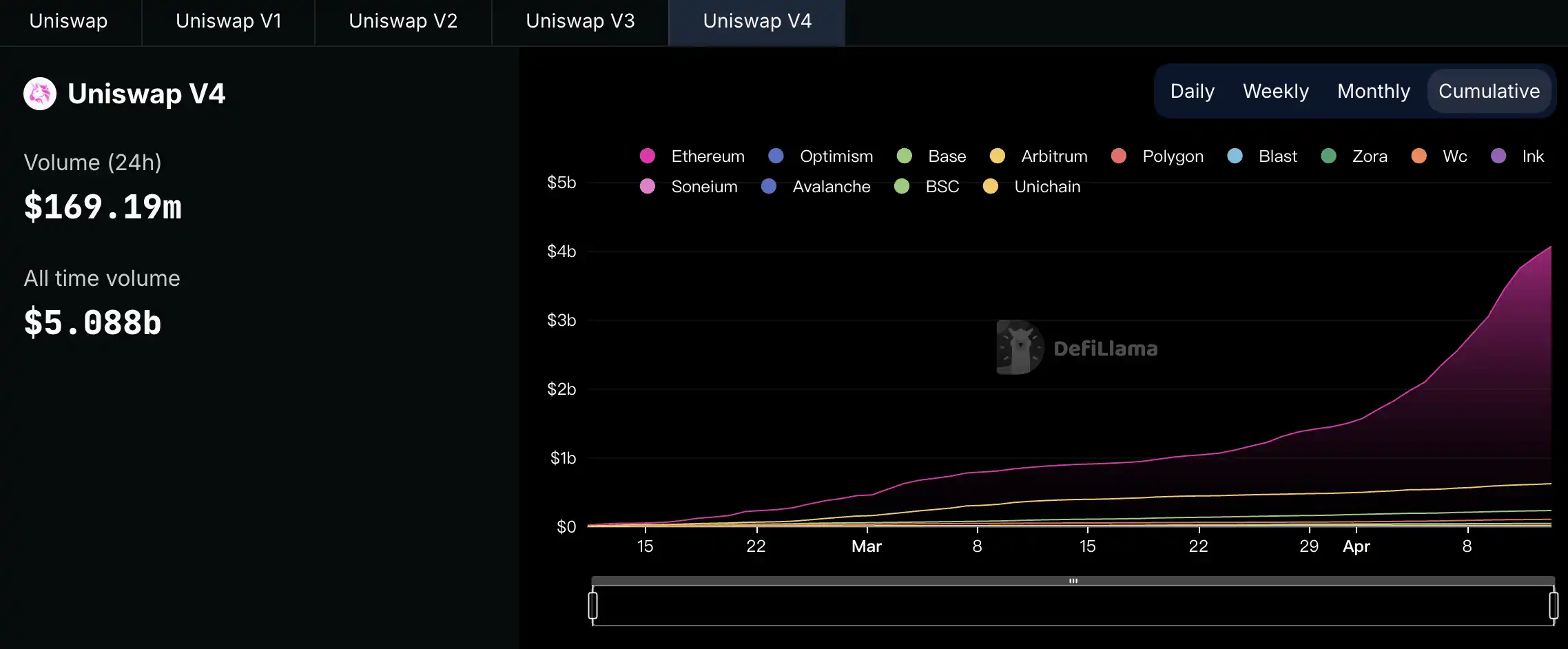
The incentive activities on both chains differ slightly. Uniswap v4's activities will focus on driving AMM trading volume on each chain, while Unichain's activities will strategically deploy AMM incentives to promote broader DeFi activities across the chain and internally within AMMs.
The initial Unichain activity will commence on April 15, 2025, for a duration of three months, distributing millions of dollars in incentive funds. The $UNI incentive measures will be spread across 12 different Unichain pools to reward LPs. For the first two weeks, the following 12 pools will receive $UNI rewards: $USDC/$ETH, $USDC/$USDT0, $ETH/$WBTC, $USDC/$WBTC, $UNI/$ETH, $ETH/$USDT0, $WBTC/$USDT0, $wstETH/$ETH, $weETH/$ETH, $rsETH/$ETH, $ezETH/$ETH, $COMP/$ETH.
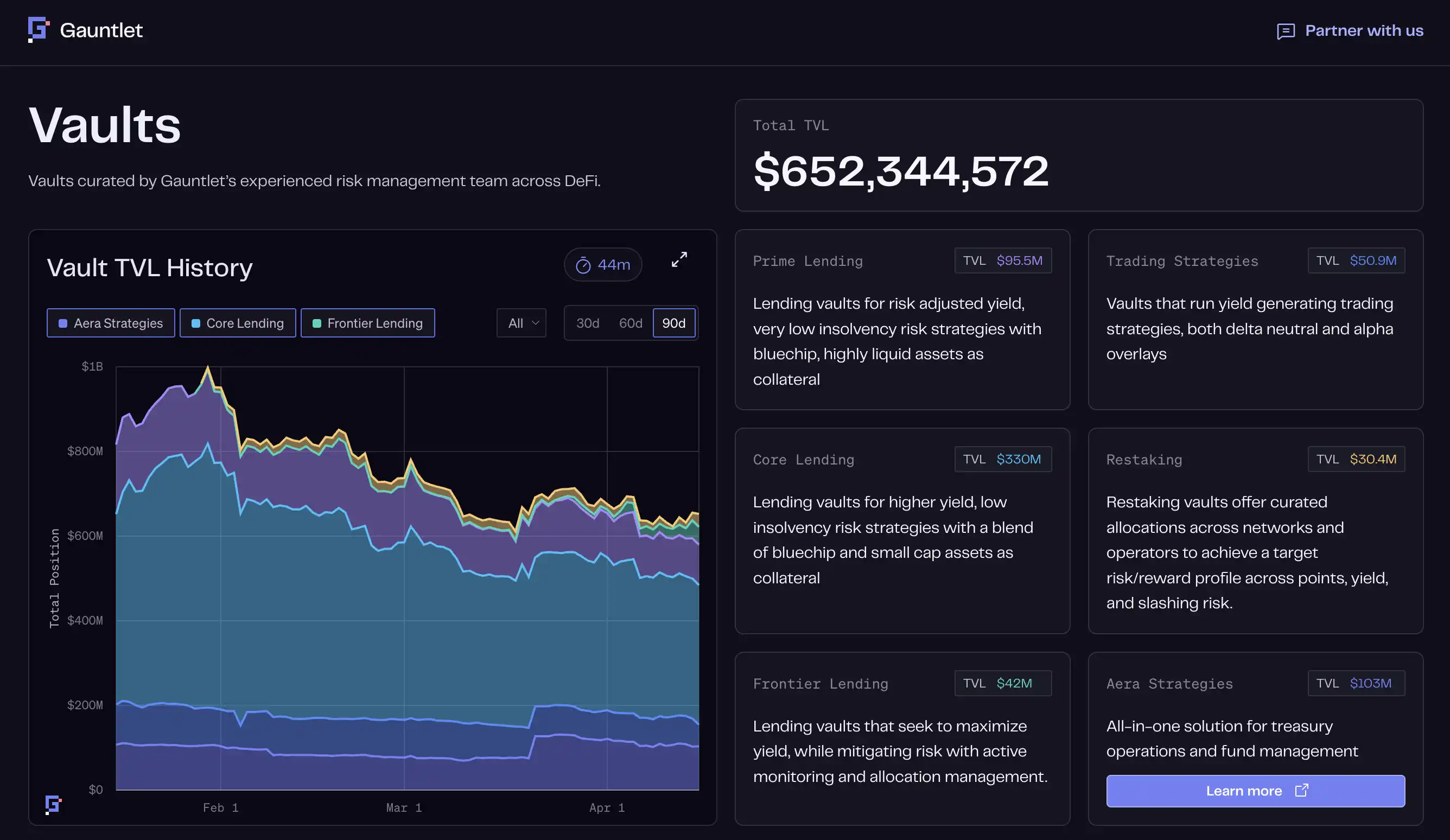
In this event, Gauntlet and Merkl play a significant role. Gauntlet is a simulation platform for on-chain risk management that uses agent-based simulation to adjust key protocol parameters, thereby enhancing capital efficiency, fees, risk, and incentives. Merkl, on the other hand, is incubated by a16z and is a one-stop platform that integrates multiple chains and DeFi investment opportunities across protocols.
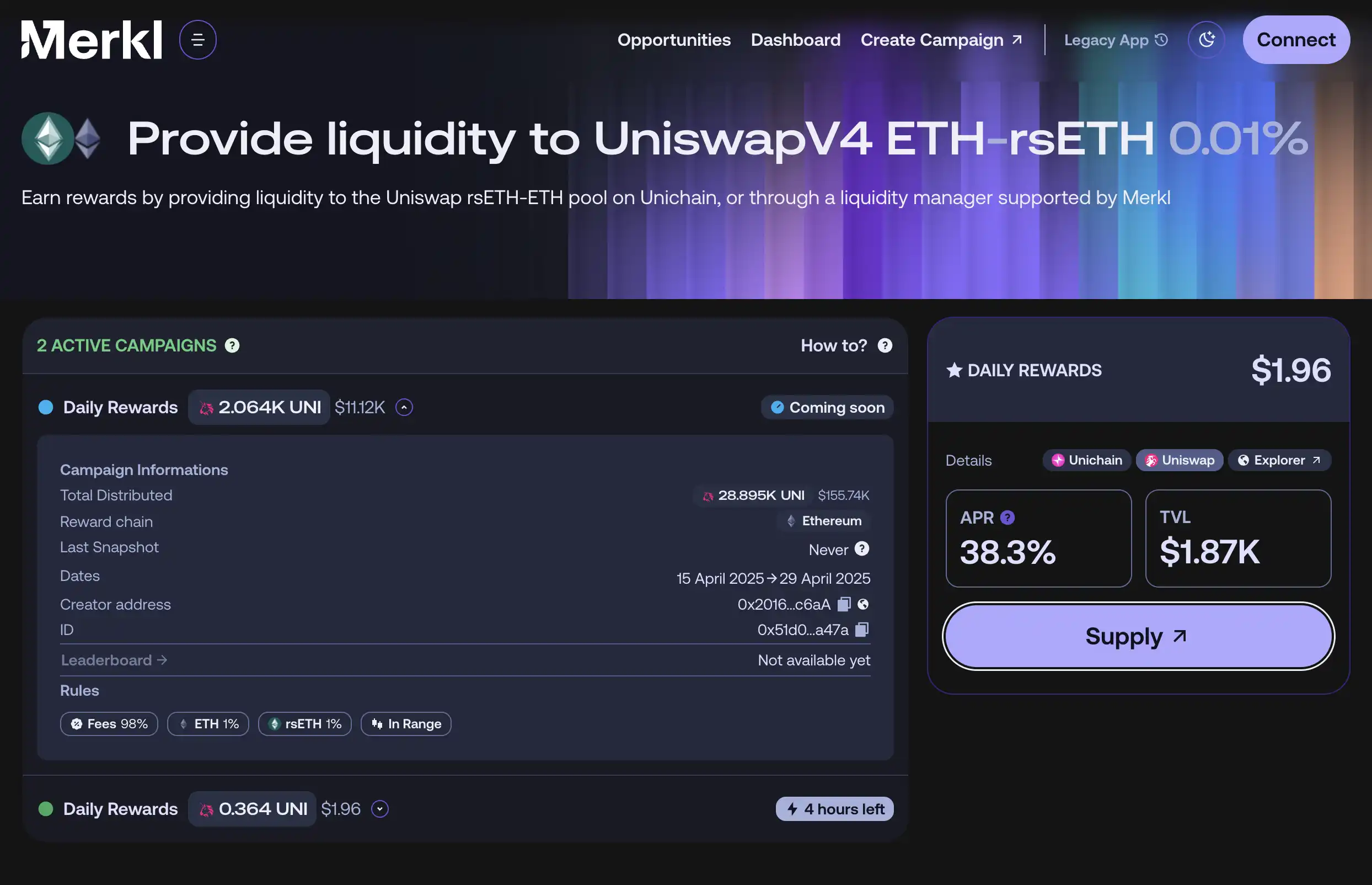
In this event, Gauntlet provides its "Aera" treasury insurance technology, where funds approved through DAO voting for a grant are stored in a treasury vault. Gauntlet identifies the most liquid pools on each network and calculates the additional yield required to make Uniswap v4 a more economically attractive choice. Adjustments are made every two weeks, determining which pools receive incentives and how much, with reward distribution details available on the Merkl website.
Aggressive Growth Goals, Traditional Growth Strategies
Incentive Effectiveness and Subsequent Retention Discussion
Member "UreNotInD" initially opposed this proposal in the DAO voting discussion, primarily because the proposal, when requesting funds, drew parallels to the spending of funds on liquidity by other projects, such as "Aerodrome spending $40-50 million per month, ZkSync Ignite spending $420 million over 9 months, and Arbitrum spending nearly $200 million since March last year." He believed this to be a tired strategy that many projects have already attempted with minimal results.
Meanwhile, the strongest competitor Fluid is gaining market share without offering any incentives. The popular L2 network Base has successfully captured market share without user incentives. These measures do not address the structural problems that can help Unichain grow, such as interoperability between layer-1 chains, creating unique DeFi use cases, improving on-chain native asset issuance (RWA, meme coins, AI tokens), as native assets are the stickiest. The foundation should attract and fund more developers through the aforementioned methods.
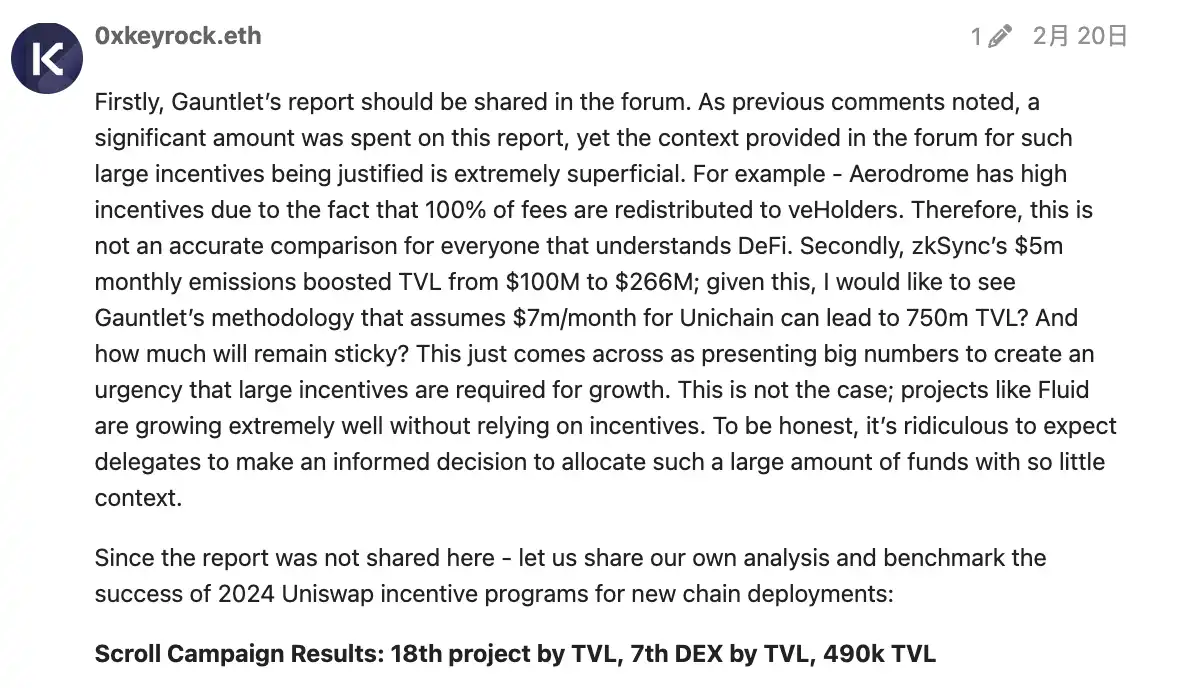
Member "0xkeyrock.eth" shares the same concern, believing that Gauntlet's report should be publicly shared on the forum. The report incurred significant costs, yet the information presented on the forum is superficial and insufficient to justify such a large-scale incentive program.
He raised several unreasonable points in his reports. For example, Aerodrome's high incentive is due to 100% of the fees being redistributed to veHolders, making it incomparable to liquidity incentive models. Additionally, zkSync's monthly $5 million token reward only increased TVL from $100 million to $2.66 billion.
Meanwhile, Unichain's total TVL is only $10 million, indicating a lack of organic demand for Unichain. Gauntlet's claim to raise Unichain to a $750 million TVL with $7 million monthly incentives appears questionable.
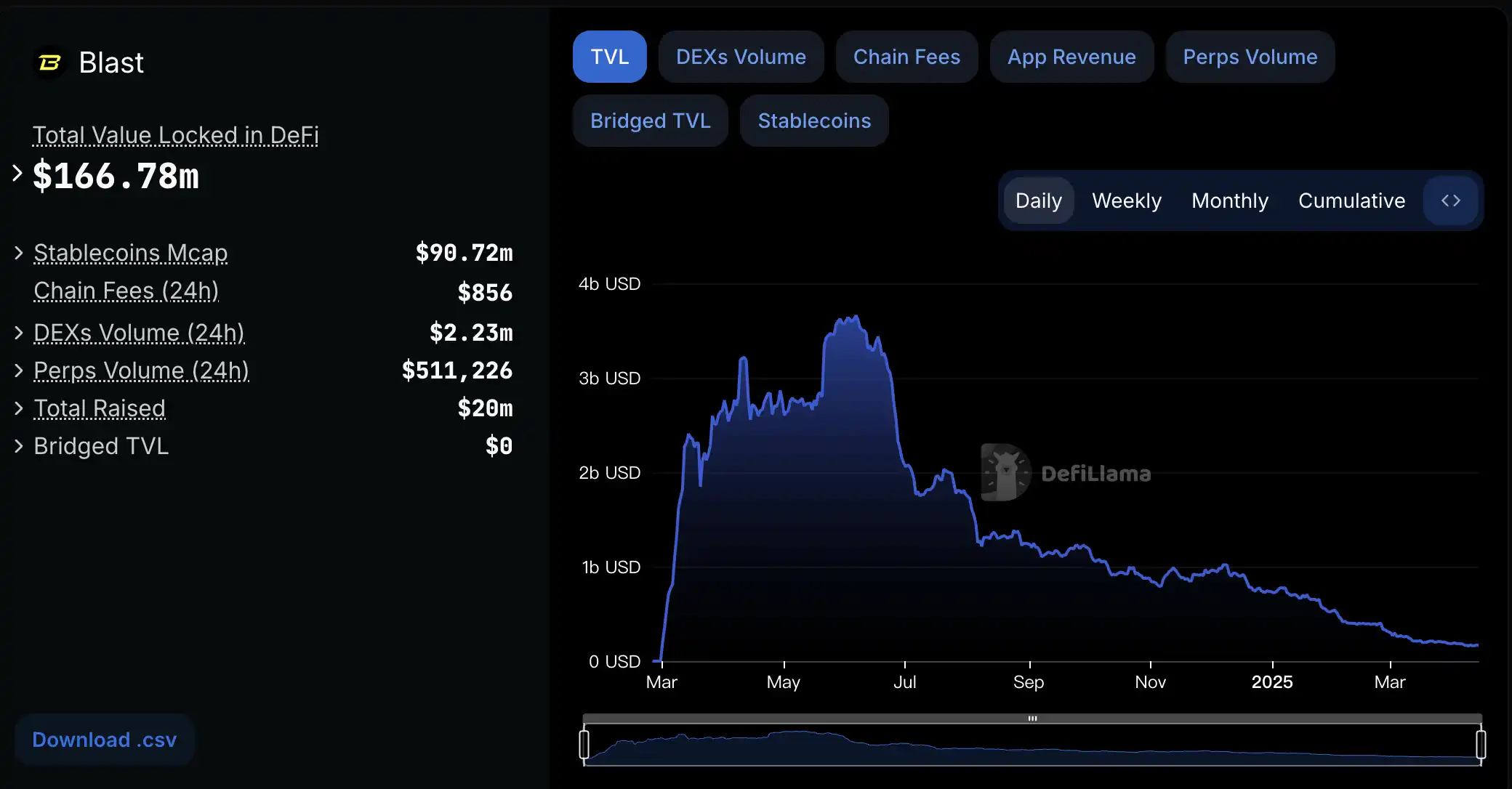
While subsidy-driven activities may temporarily boost activity, the sustainability of demand is uncertain. Historical cases like MODE's TVL dropping from $575 million to $19 million, Manta's from $667 million to $46 million, and Blast's from $2.27 billion to $233 million suggest Unichain may face a similar fate.
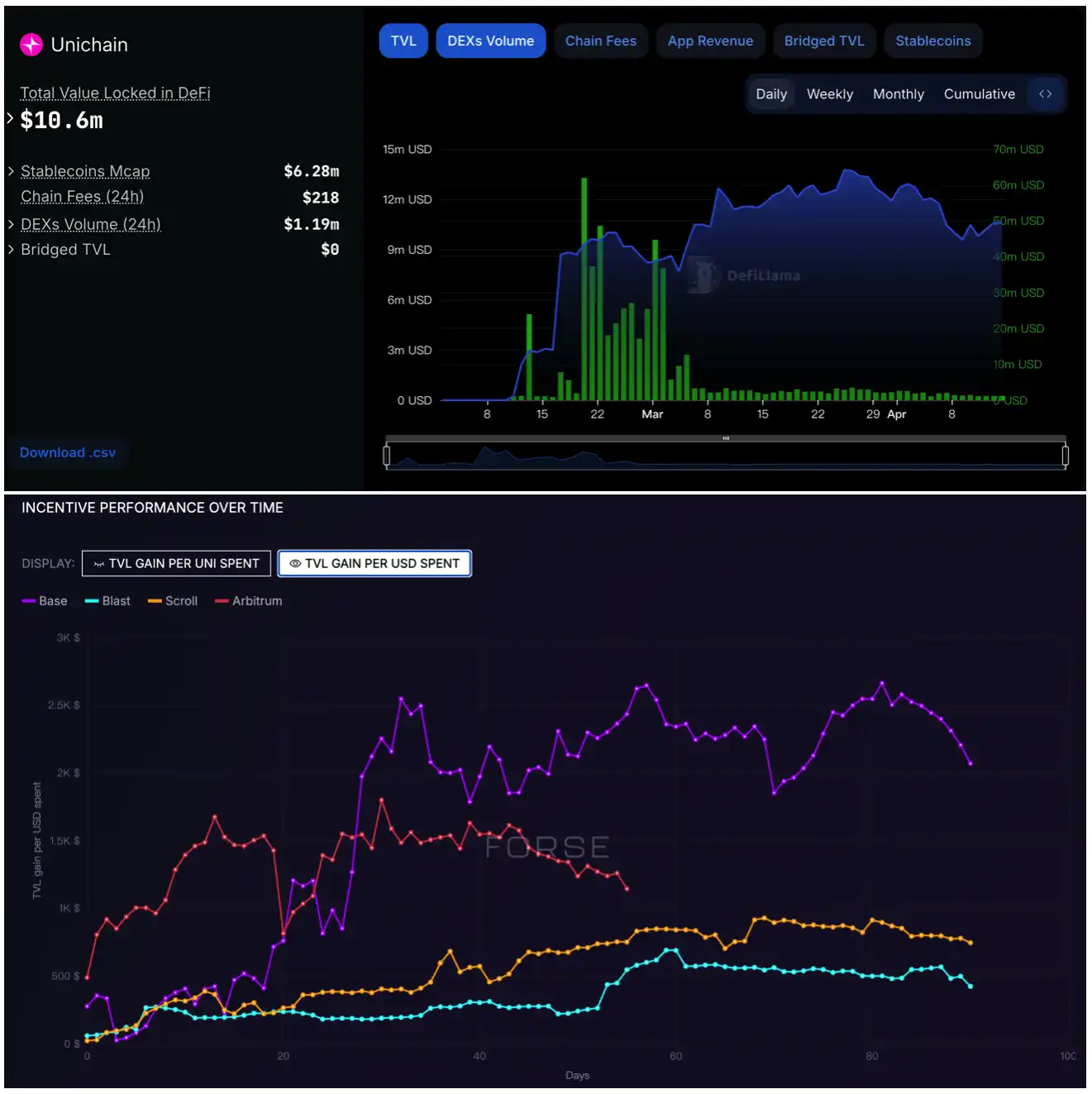
Building on this, comparing UniSwap's "TVL Growth per Dollar Incentivized" data across chains from Forse Analytics reveals that in the most developed infrastructure on L2 like Base, the best-case scenario is $2,600 TVL per dollar, while the worst-performing Blast is around $500. To reach the $750 million TVL goal, a simple calculation shows the former would need $300,000 daily and the latter would need $1.5 million.
Although analog data is imperfect, it represents a certain range proportion. To raise Unichain's TVL to $750 million with $7 million in three months, infrastructure completeness and user levels need to be elevated to levels similar to Base. Additionally, Blast, the worst-performing chain, has a TVL over 10 times that of Unichain.
The member also shared data on the activity results of Uniswap v3's incentive plan for new chain deployments in 2024. The best-performing was Sei's DEX TVL ranking 6th in the chain's ecosystem with only $718,000 TVL, while the worst was Polygon zkEVM with a meager $2,600 TVL, ranking 13th in DEX TVL. None of these deployments exceeded $1 million in TVL and hardly any entered the top DEX on the chain. These deployments mostly lost their vitality, with the only trading activity coming from arbitrageurs correcting outdated prices.
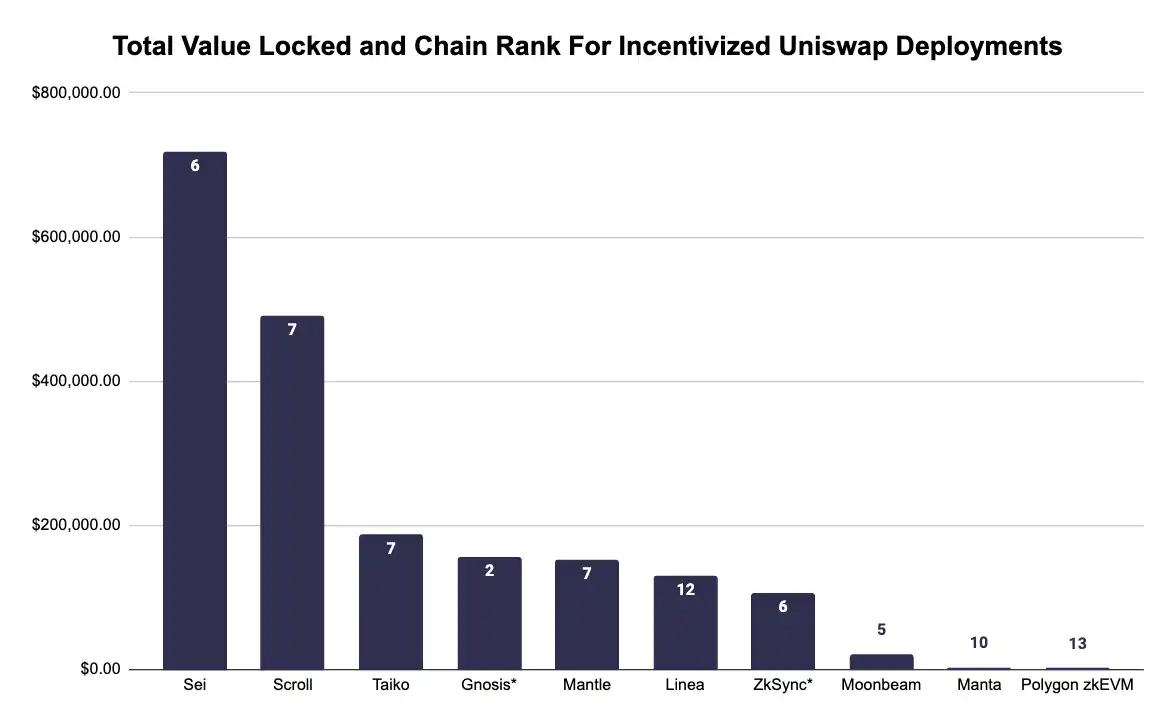
Table created by 0xkeyrock.eth, showing the TVL harvested after Uniswap's multi-chain deployment incentives and the ranking within DEXes
However, these incentive pool deployments have hardly generated any flywheel effect and have experienced a cliff-like drop after the activity ended. Uniswap spent $2.75 million on these deployments, excluding the protocol's match amount, with an annualized cost for these deployments of $310,000. Even with fee conversion to recoup costs (assuming a 15% fee capture), the DAO can only generate about $46,500 in revenue annually, equivalent to a 1.7% return rate, and it would take 59 years to achieve breakeven.
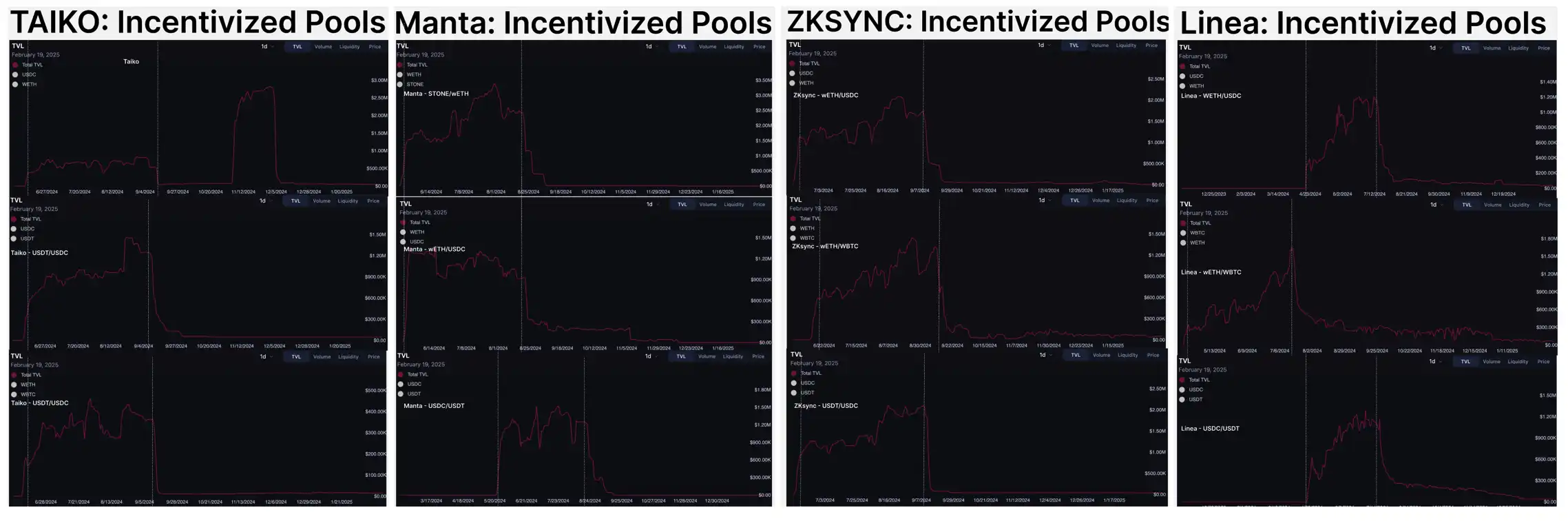
The dashed lines represent the incentive activity period, and almost all liquidity pools experienced a cliff-like drop after the activity
Of course, some members have also stated that despite the widespread liquidity cliff drop after the end of incentives, this incentive program remains the most effective strategy. Member "alicecorsini" used Forse Analytics data in a recent review of UNI incentives on Uniswap v3 on Base to show the difficulty of retaining users, liquidity, and trading volume after the incentives end.
For Base, Uniswap's main competitor is Aerodrome, but the data presents a more complex scenario. 27.8% of Uniswap incentive LPs provided liquidity to Aerodrome after the incentives ended, with 84.5% completely leaving Uniswap, and about 64.8% of users who left Uniswap did not switch to Aerodrome, even though they had a better APR than the incentive-free Uniswap v3.
While some LPs have migrated to Aerodrome, a larger proportion of users have simply exited directly rather than moving to a direct competitor. This indicates a broader structural challenge in retaining users and liquidity. He believes that brainstorming some methods to improve retention through the deployment of incentives "simultaneously" is a worthwhile effort, but this incentive plan remains the most effective strategy as the first step in the traffic funnel.
Community Skepticism of Gauntlet's Capability
Community member Pepo "@0xPEPO" expressed concerns about Gauntlet's capabilities on social media X, noting that the Uniswap Foundation had already paid participation fees of $1.2 million and $1.25 million to Aera and Gauntlet, respectively, even before the proposal was approved. However, there are doubts about whether the Aera team has the ability to deliver on such a project as they lack a track record.
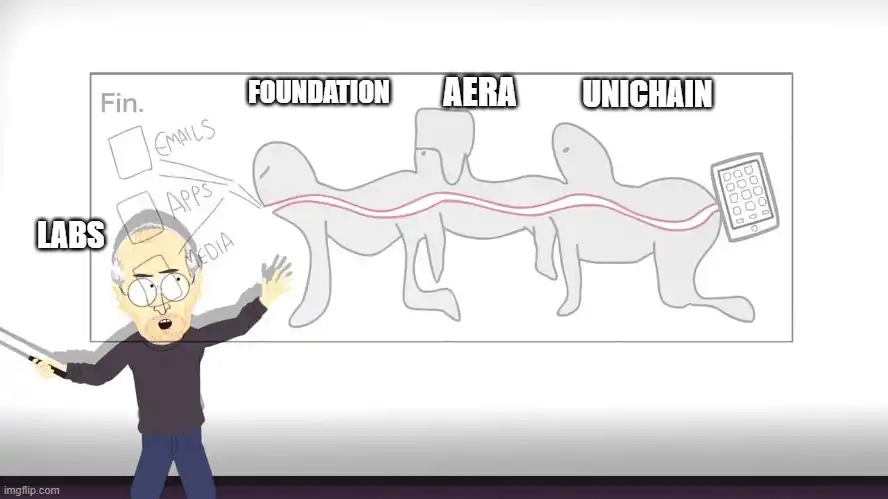
He mentioned that Uniswap's Growth Manager designated by Gauntlet, Peteris Erins, was the founder of Auditless and a member of the Aera team. Despite Peteris having little to no public track record outside of his work at Aera, the only notable public achievement was that the protocol reached over $80 million TVL in its first year.
However, he believes that this total locked value may not be a true performance indicator, as every customer of Aera is also a customer of Gauntlet. When a company's performance relies on its parent company, the growth data becomes questionable. He further compared Aave and Gauntlet's data, suggesting that Gauntlet may have been hindering growth, and after Aave parted ways with Gauntlet, both TVL and profitability saw significant increases.
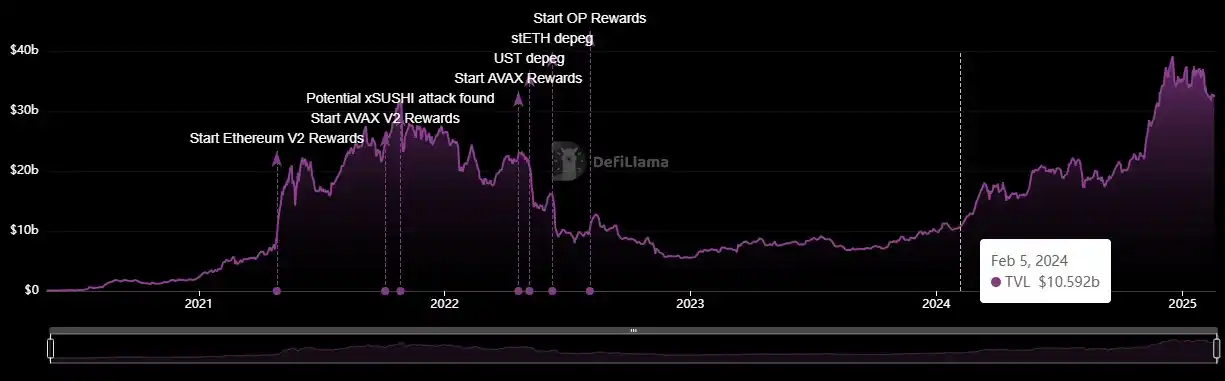
Devin Walsh, Executive Director and Co-Founder of the Uniswap Foundation, responded to this by stating that Gauntlet has undergone a more rigorous review than typical partners in the past, having undergone two due diligence processes.
The first was in early 2023 when selecting an advisor for incentive analysis. To choose a vendor, we provided similar proposals to three potential partners and evaluated the final results based on the rigor, comprehensiveness of the analysis, and the ability to drive execution post-analysis. Gauntlet's performance far exceeded other companies at that time. The second was in the third quarter of 2024, where the Foundation assessed a group of candidates to determine who was best suited to partner in carrying out the incentive activities for Uniswap v4 and Unichain. We evaluated candidates' track records, relevant experience, and ability to achieve expected outcomes. Based on the analysis, we believed Gauntlet was best suited for the task. At the same time, we took the opportunity to renegotiate the contract, currently planning to pay per activity and lock in the rate until 2027.
Recurring Security Issue of USDT0 Underlying Technology Layer0
Before the event started, analyst Todd "0x_Todd" pointed out the security vulnerability of USDT0 on social media platform X. USDT0 is the cross-chain version of USDT, with the parent asset USDT existing on ETH and crossing to other chains through Layer0 becoming USDT0. The chains supporting USDT0 can also cross-chain with each other, such as ETH-Arb-Unichain-BearChain-megaETH, and so on.
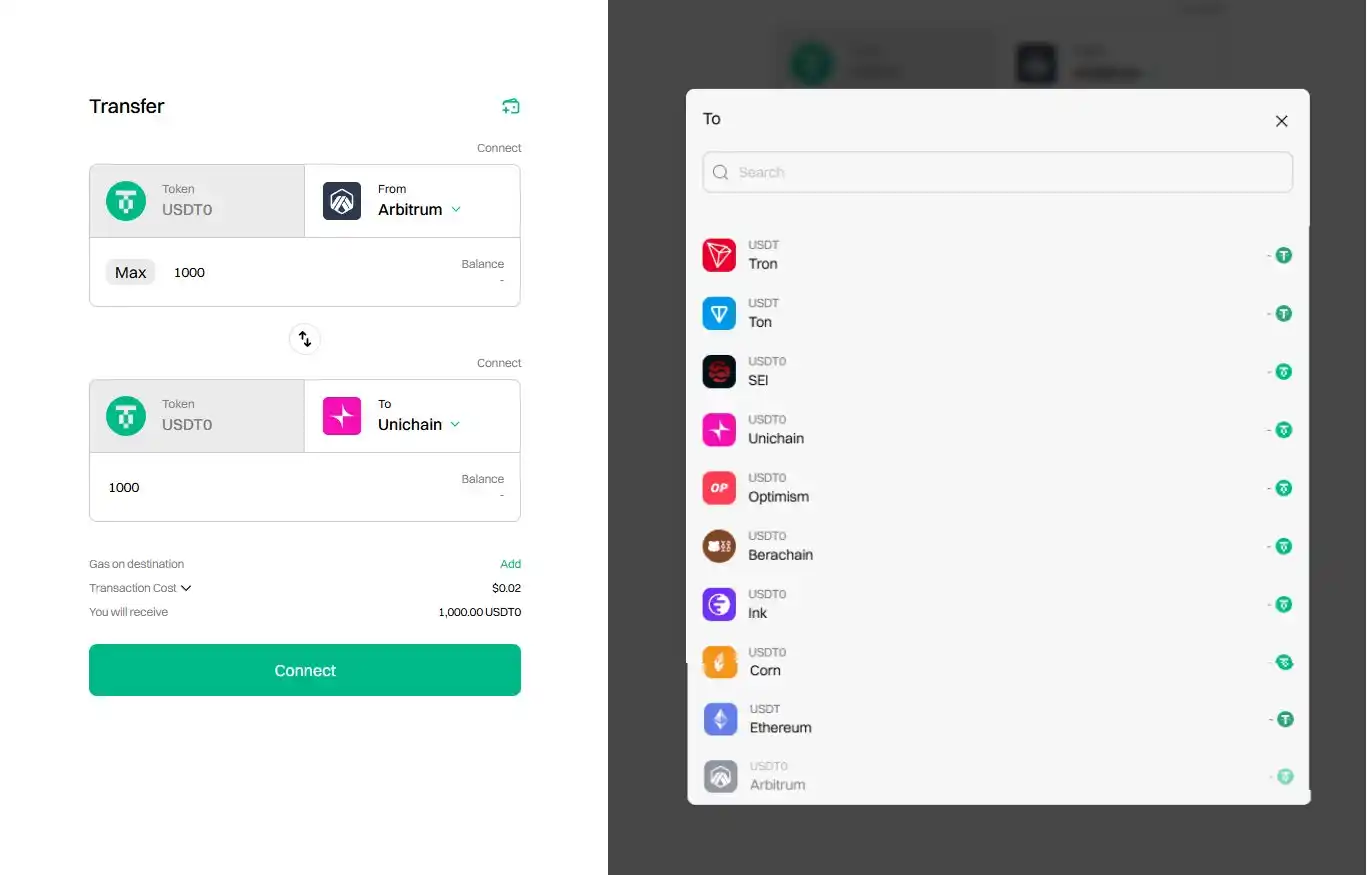
USDT0 is led by Everdawn Labs, utilizing Layer0's underlying technology and backed by Tether and INK. Todd expressed concerns about the trustworthiness of Layer0, stating, "My level of trust in Layer0 is limited, and the history of failures in top cross-chain bridges is abundant, from multichain to thorchai; cross-chain technology is fundamentally low-threshold, merely involving multisigs." Due to the current situation, apart from bearing the risks of Tether and Uniswap, there are an additional 4 risks to consider, namely the security of Everdawn, Layer0, Unichain, and the security of other chains supporting USDT0. If other chains are compromised and USDT0 experiences unlimited minting, then Unichain's USDT0 will also be tainted.
How Can Users Farm?
Visit Merkl to view the incentive pools. These incentive mechanisms may increase or decrease over time. To efficiently farm $UNI, one must constantly monitor the reward changes in the 12 pools.
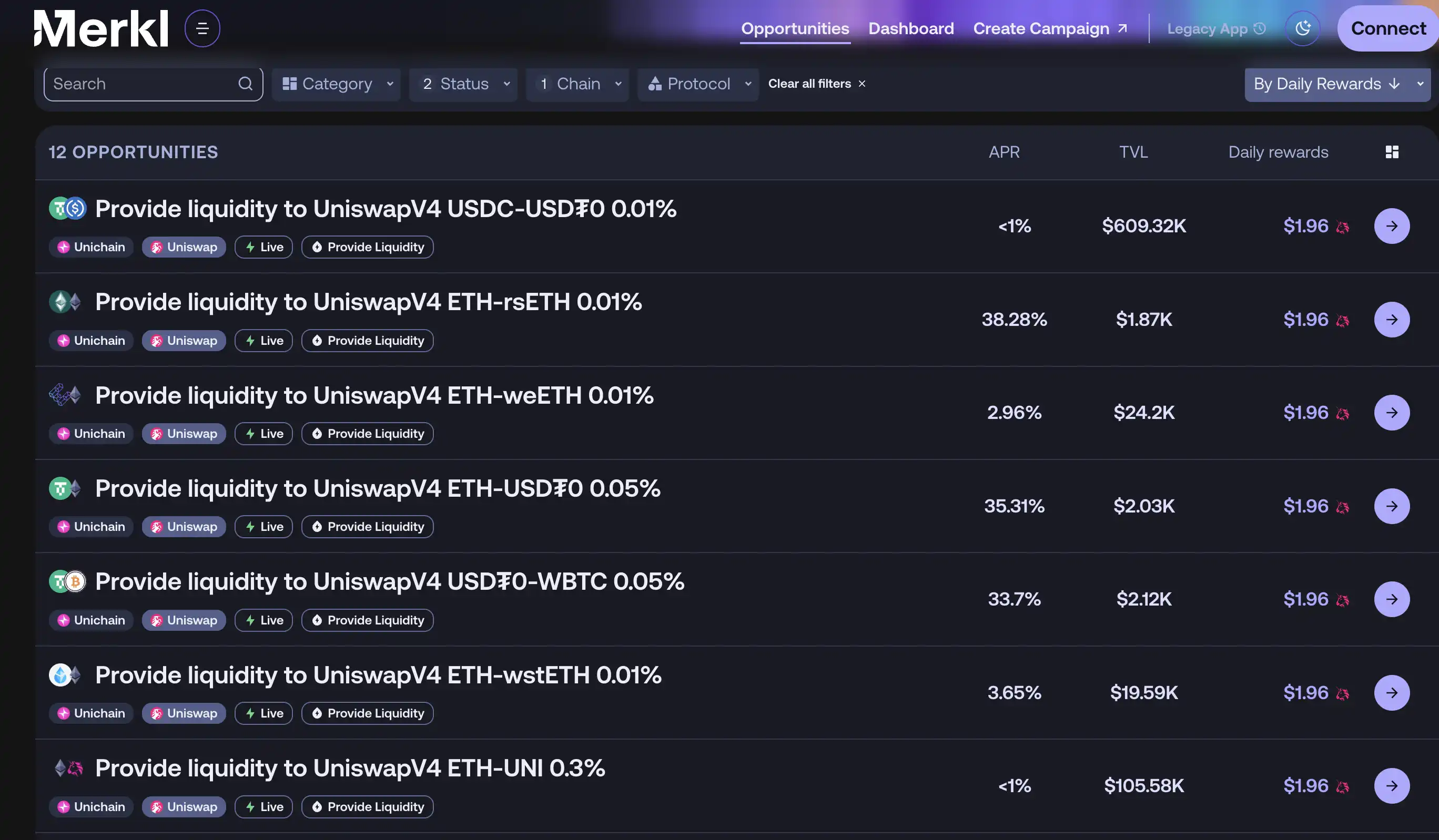
Provide liquidity to these pools by supplying liquidity to the incentive pools from any interface and receive liquidity mining rewards.
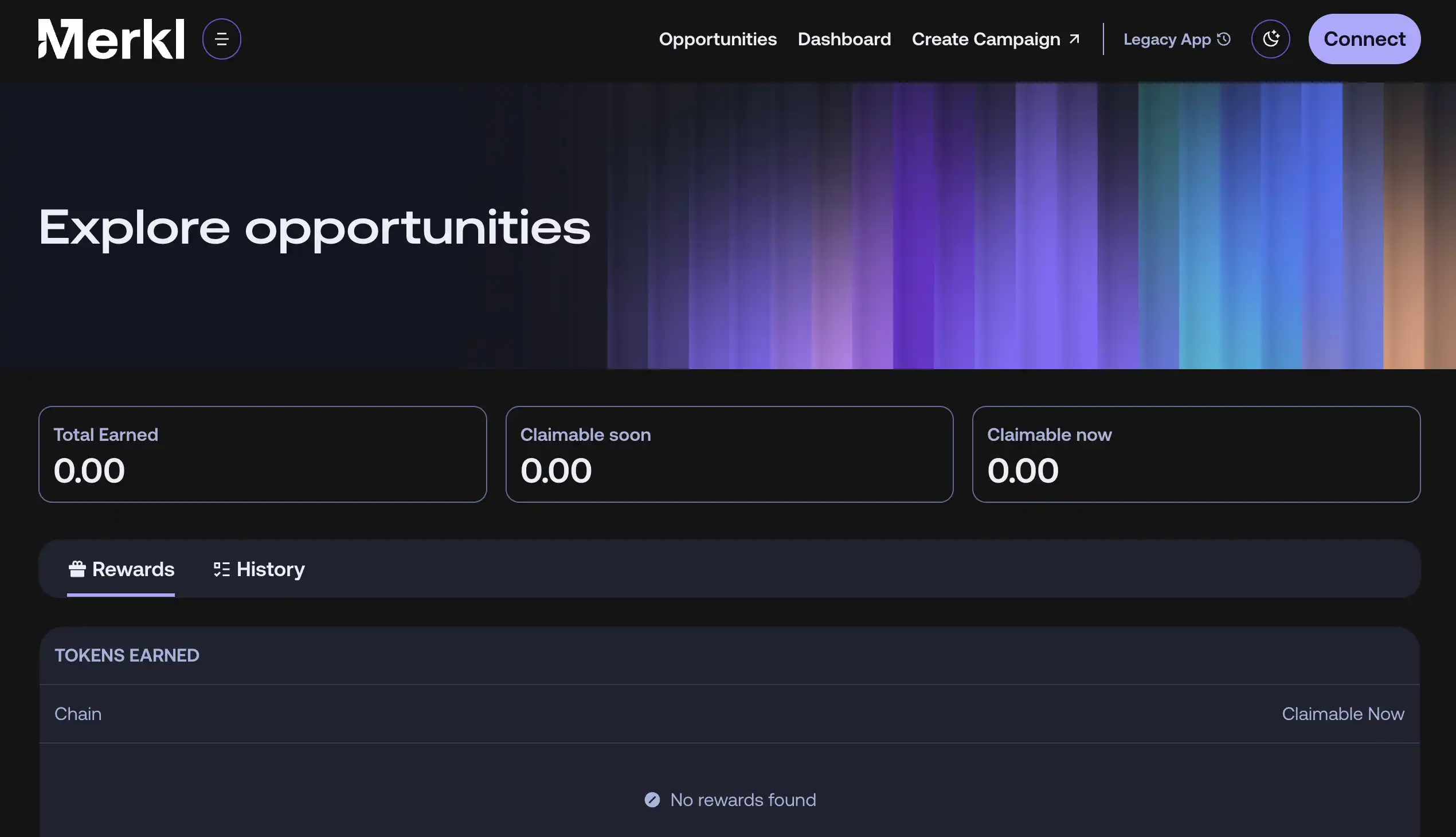
Claim rewards on the Merkl personal interface, where users can claim rewards through the Merkl interface or any interface connected to the Merkl API.
Overall, most of the community users do not have a positive view of this proposal. They believe that it is harmful to $UNI holders in various ways. However, for retail investors who simply want to farm $UNI, they need to be cautious of the potential risks involved and pay attention to the bi-weekly changes in liquidity pool rewards. In anticipation of potential future risks, BlockBeats will continue to monitor and report on developments.
You may also like

Bitcoin Market Analysis 2026: Can BTC Reach $150K by Year-End?

STRC unanchored by 11%, can the perpetual motion machine of Strategy still operate?

Bitcoin ETF Outflows Hit a Record $4.4 Billion: What Are Traders Doing With Their Cash?

WEEX App Just Got Smarter – New Tabs for Faster Trades & Easy Asset Management

Blockchain Capital Partner: The Core Secret of Arbitrage

WEEX All-New Search Features: Find, Trade & Earn Faster Than Ever

Will MicroStrategy fall into a death spiral? What will the macro trend be in the second half of the year?

Morning Report | Illinois signs the strictest digital asset tax law in the U.S.; RWA tokenization market size surpasses $43 billion, institutions accelerate the migration of on-chain assets

Full version of the debut Q&A! Federal Reserve Chairman Waller: Sticking to the 2% inflation target, establishing five special working groups, individual did not submit the dot plot

From Disruptor to Shadow Market: The Crypto Market is Becoming a Colony of Traditional Finance
Dalio's important long article: How to position in the current market environment?

OKX Star analyzes Binance's competitive advantages: when regulation levels the playing field, competition has just begun

New gameplay for participating in initial offerings on cryptocurrency exchanges
Why Is Bitcoin Down Today? What the Hawkish FOMC Means for SpaceX, Gold and Nasdaq

DeepSeek Financing Story

Morning Report | DeepSeek completes over $7 billion in financing, with a valuation exceeding $50 billion; Musk's personal wealth has surpassed the total market value of Bitcoin
Cursor, why did you get on Musk's spaceship?
In the name of charity, for the benefit of the family: How the Trump family turned charity into profit?
Bitcoin Market Analysis 2026: Can BTC Reach $150K by Year-End?
STRC unanchored by 11%, can the perpetual motion machine of Strategy still operate?
Bitcoin ETF Outflows Hit a Record $4.4 Billion: What Are Traders Doing With Their Cash?
WEEX App Just Got Smarter – New Tabs for Faster Trades & Easy Asset Management
Blockchain Capital Partner: The Core Secret of Arbitrage
WEEX All-New Search Features: Find, Trade & Earn Faster Than Ever


