
The $PROMPT Airdrop was front-run by MEV for 120 ETH, and the community has raised questions about the developer "using AI to write the contract."


The AI Agent platform Wayfinder, under the Parallel umbrella, was thrust into the spotlight today, along with the previously hot Kaito and the TokenTable token distribution platform under CZ's "patronage," all caught in the whirlwind. What exactly happened during this period?
Today is the day Wayfinder started airdropping the $PROMPT token. Following the launch, it has successfully been listed on OKX and CoinBase, and has launched perpetual contracts on Binance. However, the process of claiming the airdropped tokens was not smooth. Many users reported that after interacting, the page showed they had received the tokens, but they themselves did not actually receive the airdrop. At the same time, some individuals reportedly "snatched" over 120 ETH (around $189,000) through this airdrop. What exactly happened in this scenario?
Parallel, backed by Solana Venture, Base, Amber Group, and others, is a gaming company that raised $85 million in funding. It has developed the AI-driven survival simulation game Colony. The protagonist of this article, Wayfinder, is meant to connect the AI game Colony with blockchain and various use cases outside of gaming.
This TGE consisted of three parts conducted together: Caching rewards (staking $PRIME), APP usage rewards, and KAITO rewards. However, issues arose during the KAITO airdrop claiming process.
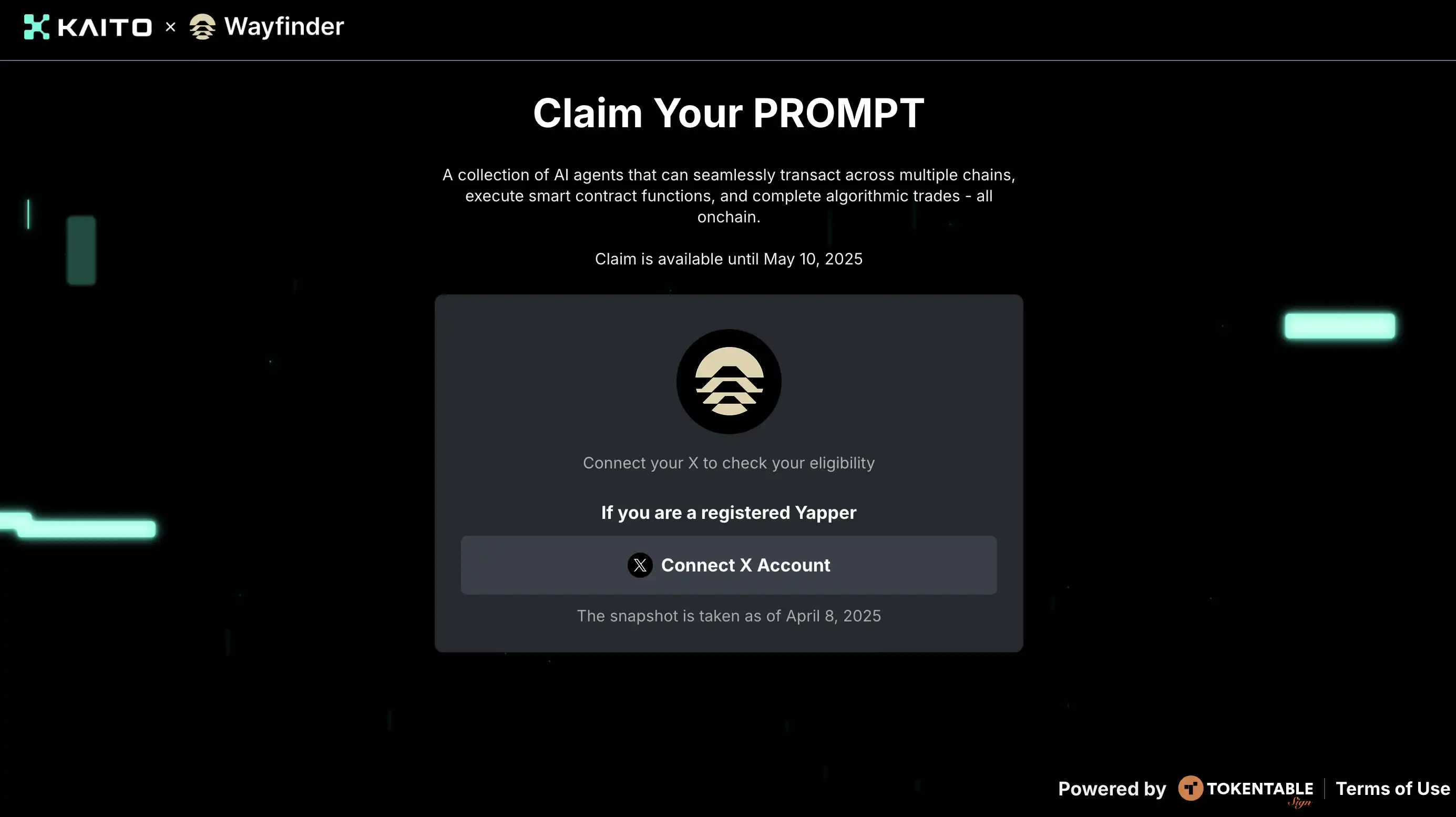
KAITO and WayFinder's Airdrop Got "Yoinked"
Root Cause of the Event
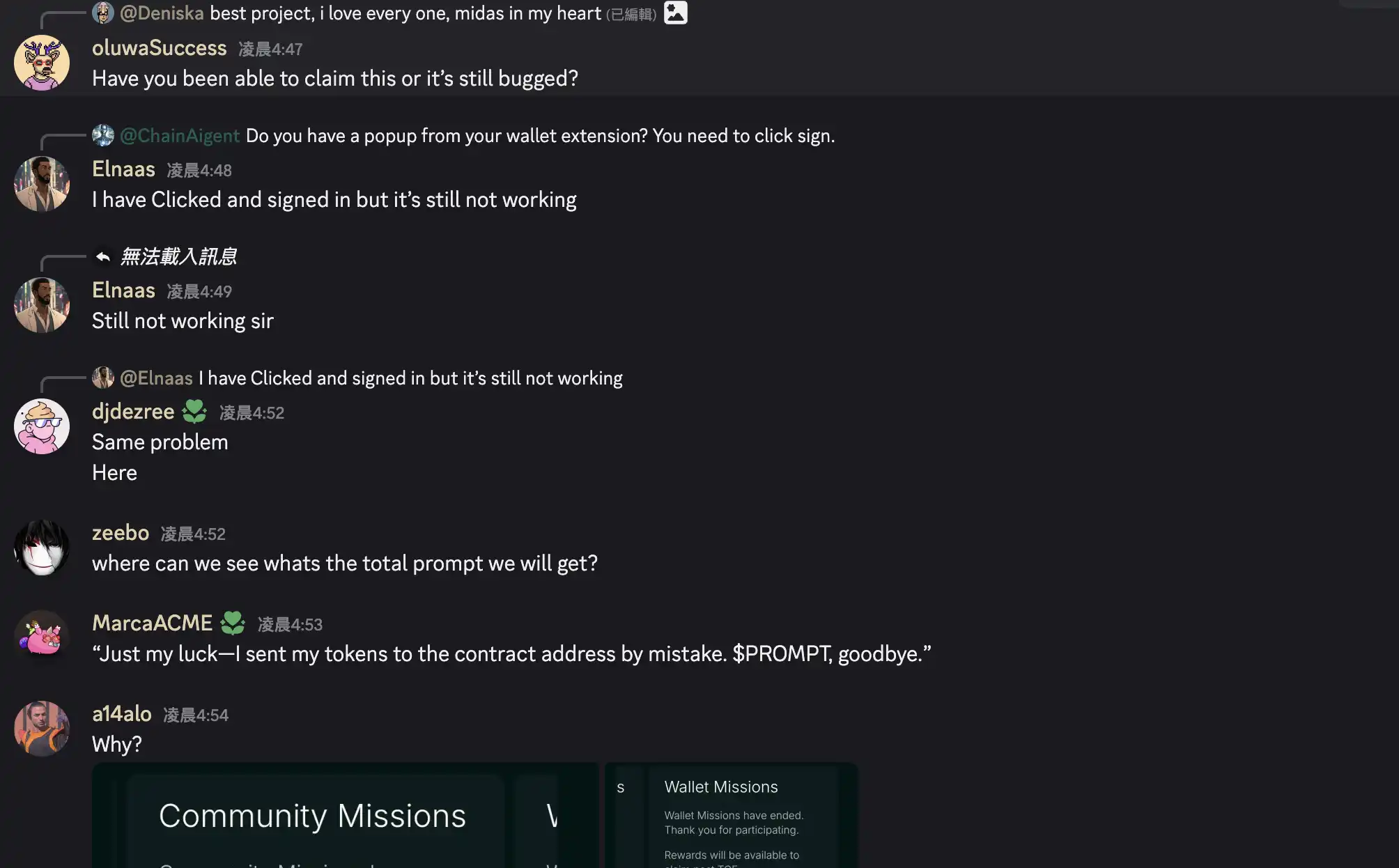
The KAITO and Wayfinder airdrop event was planned to distribute 5 million tokens to Yappers, with those Yap scores exceeding 90 receiving 4 million tokens and those with scores above 0 but below 90 receiving 1 million tokens. As the event kicked off, Yappers began claiming their tokens. However, problems quickly emerged. Many users in the Discord channel reported that they had interacted but did not receive the tokens, with the system showing their tokens had already been claimed.
Just as confusion reigned, developer Ultra reached out to AIWayfinder on social platform X, indicating that an MEV frontrunner was stealing the $PROMPT being exchanged on the KAITO event page and converting it to ETH. Ultra self-deprecatingly mentioned that they quickly noticed this because they had also been "Yoinked."
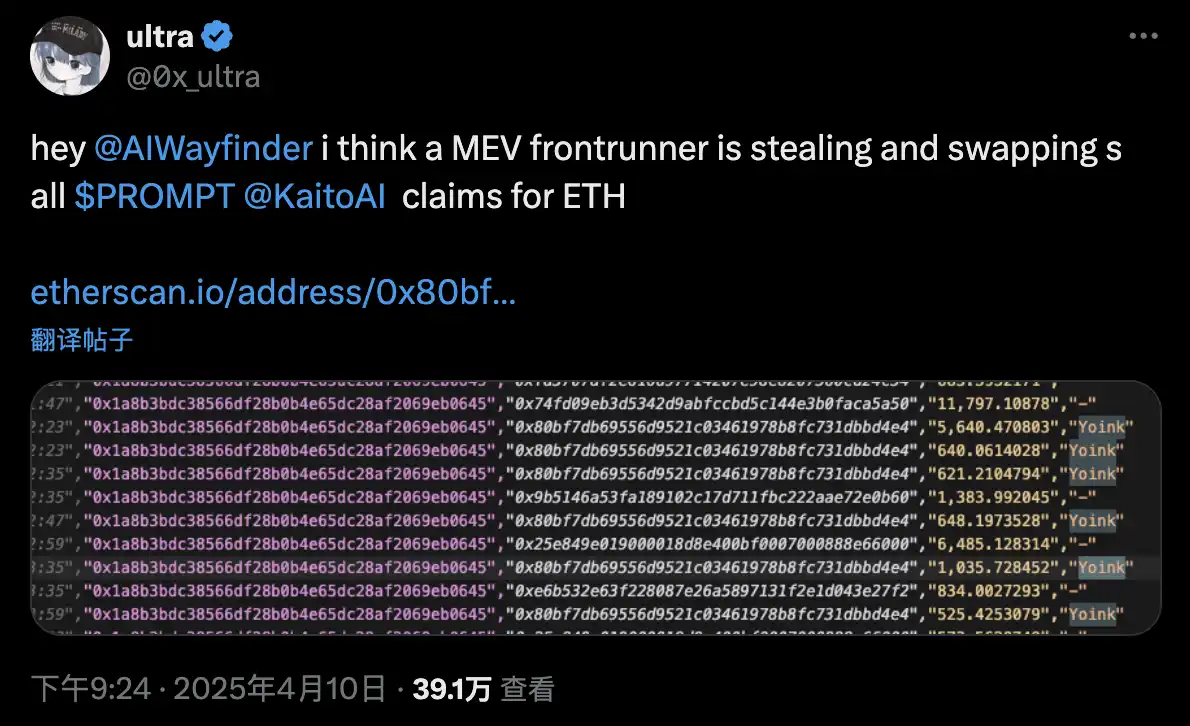
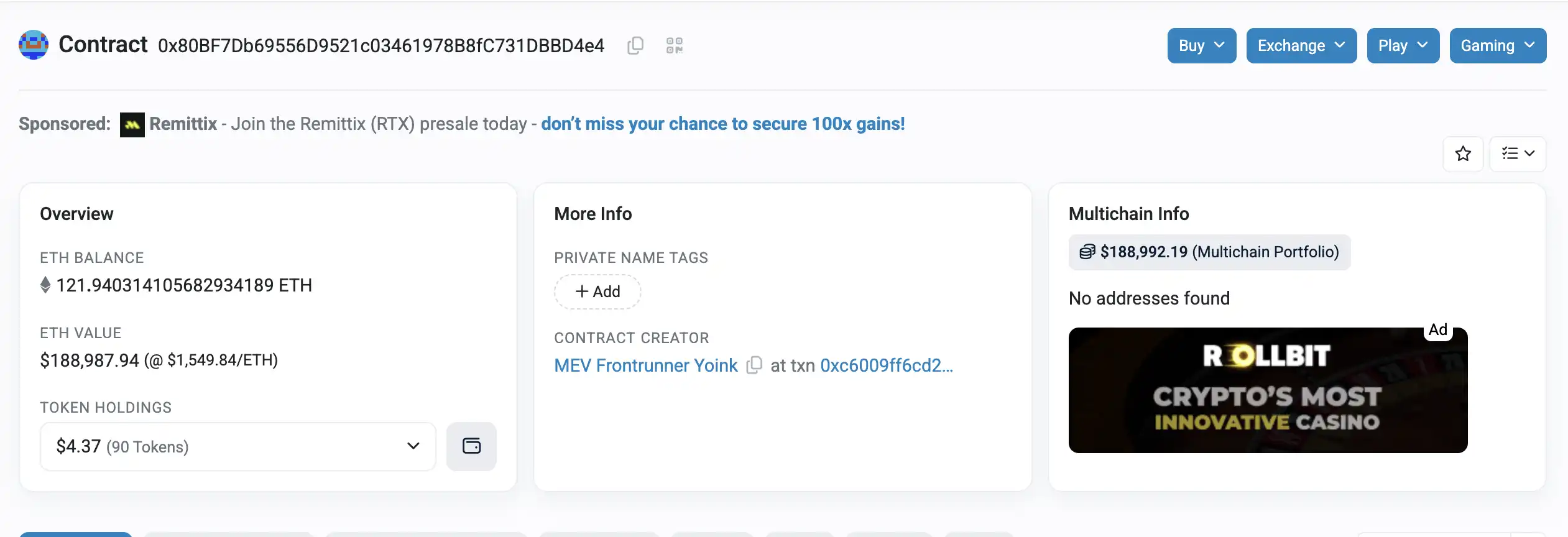
Yoink is a slang term meaning "to quickly snatch" or "to steal," which emerged during DeFi Summer and has been widely used. An MEV Frontrunner Yoink typically refers to a specific MEV bot or strategy that specializes in "snatching" other users' transaction opportunities through frontrunning.
Now EtherScan-authenticated MEV Frontrunner Yoink address has linked to a social media account X with the handle yoink6980. Previously, yoink6980 had disclosed as the actual attacker who informed the community about a vulnerability in the ERC-2771 protocol, saved community funds, such as in December 2022 when they rescued funds from DFX Finance and returned them to users.
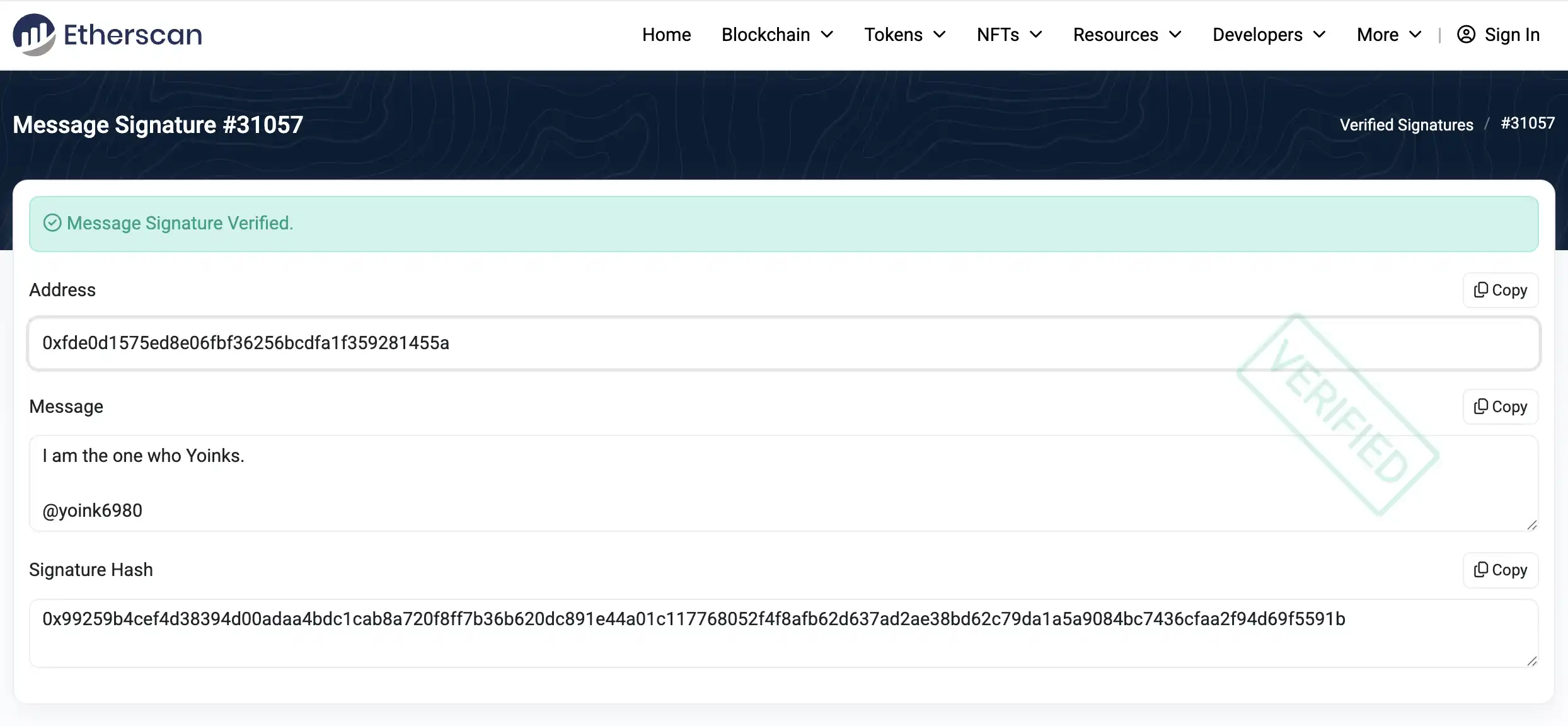
The individual who lost 120 ETH in this recent theft fell victim to an MEV frontrunning attack using the "Yoink" method. However, in this case, the purpose seemed to be not to protect users but genuinely to loot.
Developer Ultra "0x_ultra" recounted, "What happened today was that Kaito Yappers' AI Wayfinder claimed contract was misconfigured, with the airdrop recipient not pre-configured in the Merkle proof, allowing MEV Yoink to spot an opportunity in the mempool and act swiftly, exploiting this vulnerability to frontrun any slow token claims."
Whose fault is this, ultimately?
Since then, "I get yoinked" and "Bro was lucky not to get yoinked" have become the most shared terms on social media by users who either missed out on or received the airdrop during the WayFinder and KAITO event.
Team member Kalos made an announcement stating that "the token claim issue with Kaito is not on our side, but we are working with them to resolve it," and specifically mentioned that "the contract was not created by Wayfinder." Within the community, there is growing FUD regarding this issue, with questions arising about whether the claiming contract was either unaudited or simply written by AI.
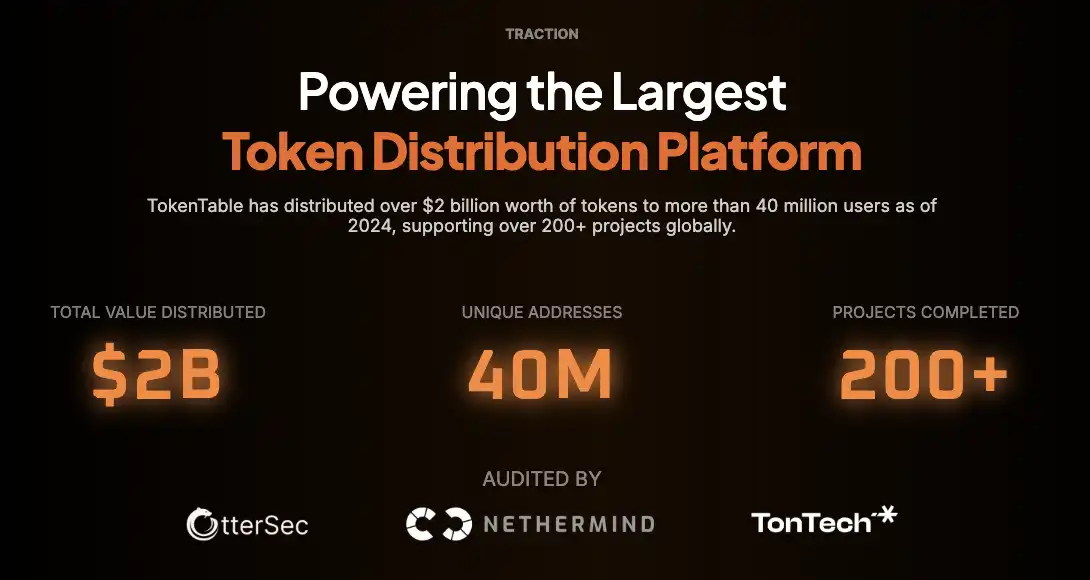
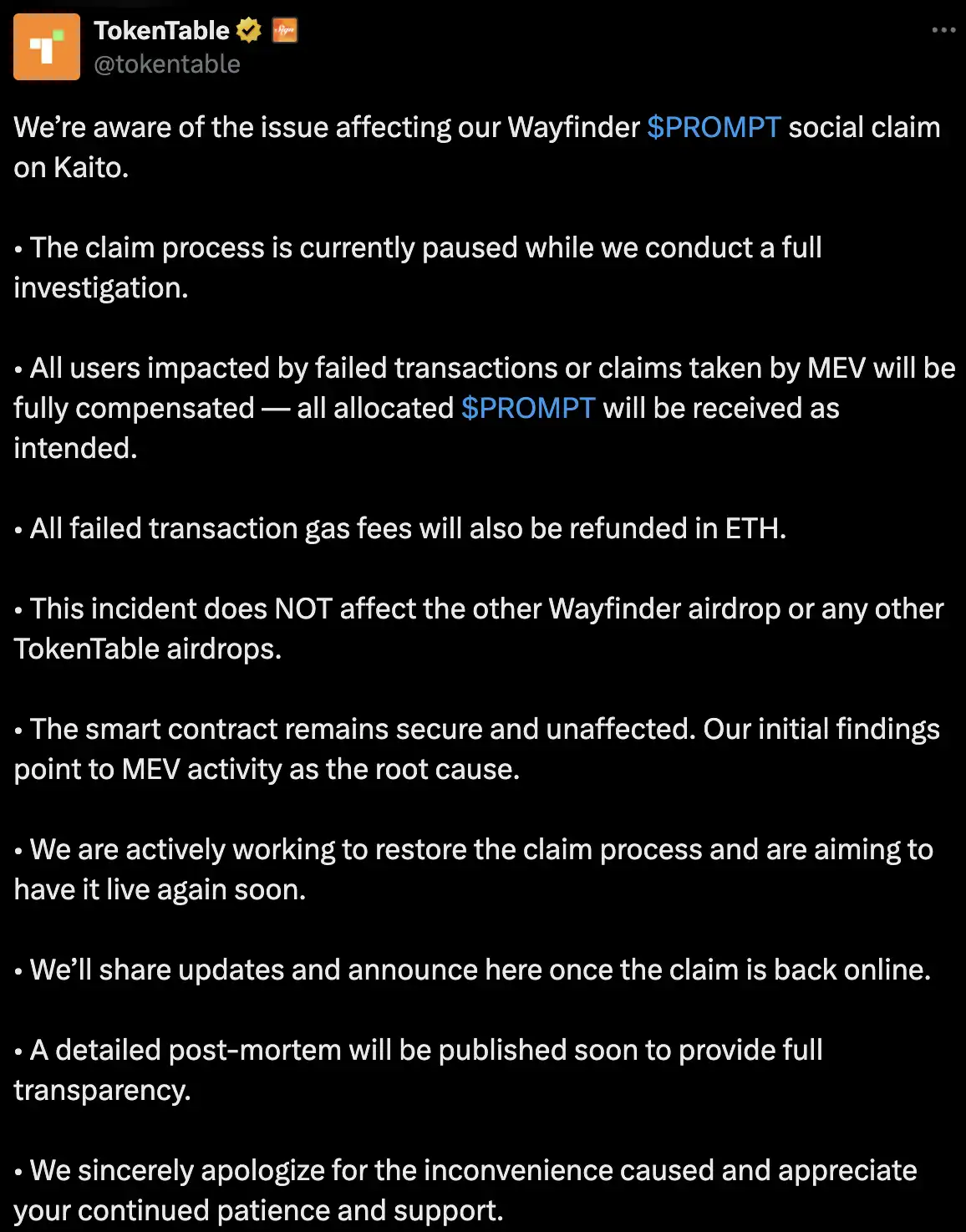
The technical support platform TokenTable responsible for the KAITO airdrop quickly responded, stating that this event will not affect other Wayfinder airdrops or any other TokenTable airdrops. They will compensate for all users who did not receive tokens in this airdrop due to MEV impacts, including refunding all failed transaction fees in ETH. They mentioned that the smart contract is fine and that MEV is the fundamental issue. From the official website, we can see that TokenTable's contract was audited by companies such as tteSec, Nethermind, and TonTech.
The founder of g8keep, PopPunk, commented on this event on social media platform X by saying, "I warned you all a long time ago!" In fact, as early as the day before the airdrop, he posted on X mocking some of the issues in Wayfinder's claiming contract, believing that storing each individual claim in an on-chain mapping rather than using a Merkle root approach was very poor.
Wayfinder team member Kalos had responded to this tweet, saying, "The smart contract was audited by Quantstamp and other companies, and it has done multiple Merkle roots. It may have saved us some gas, but mapping is better for users." PopPunk expressed his lack of understanding as to why mapping would be better for users unless they interact directly with the contract to claim the airdrop, rather than through the website.
While this event may not be due to Wayfinder's responsibility for the "Caching" claim contract issue, some community members pointed out that the Merkle root contract may indeed reduce Yoink risk. For example, requiring users to submit a unique Proof "binding address" or limiting the single claim window can increase the difficulty of bot-replicated transactions. Off-chain Proof distribution can be combined with private transaction pools like Flashbots to hide mempool visibility and reduce monitoring opportunities.
Based on the existing clues, TokenTable may have taken on greater responsibility in this event, but we do not yet know specifically which party's mistake it belongs to, as we are awaiting further investigation reports. Nevertheless, it is fortunate that TokenTable is willing to take responsibility for this, and users will not incur any losses.
One Wave After Another, Stakeholders' Complaint
$PRIME Three-Year Stakers Suffer Heavy Losses
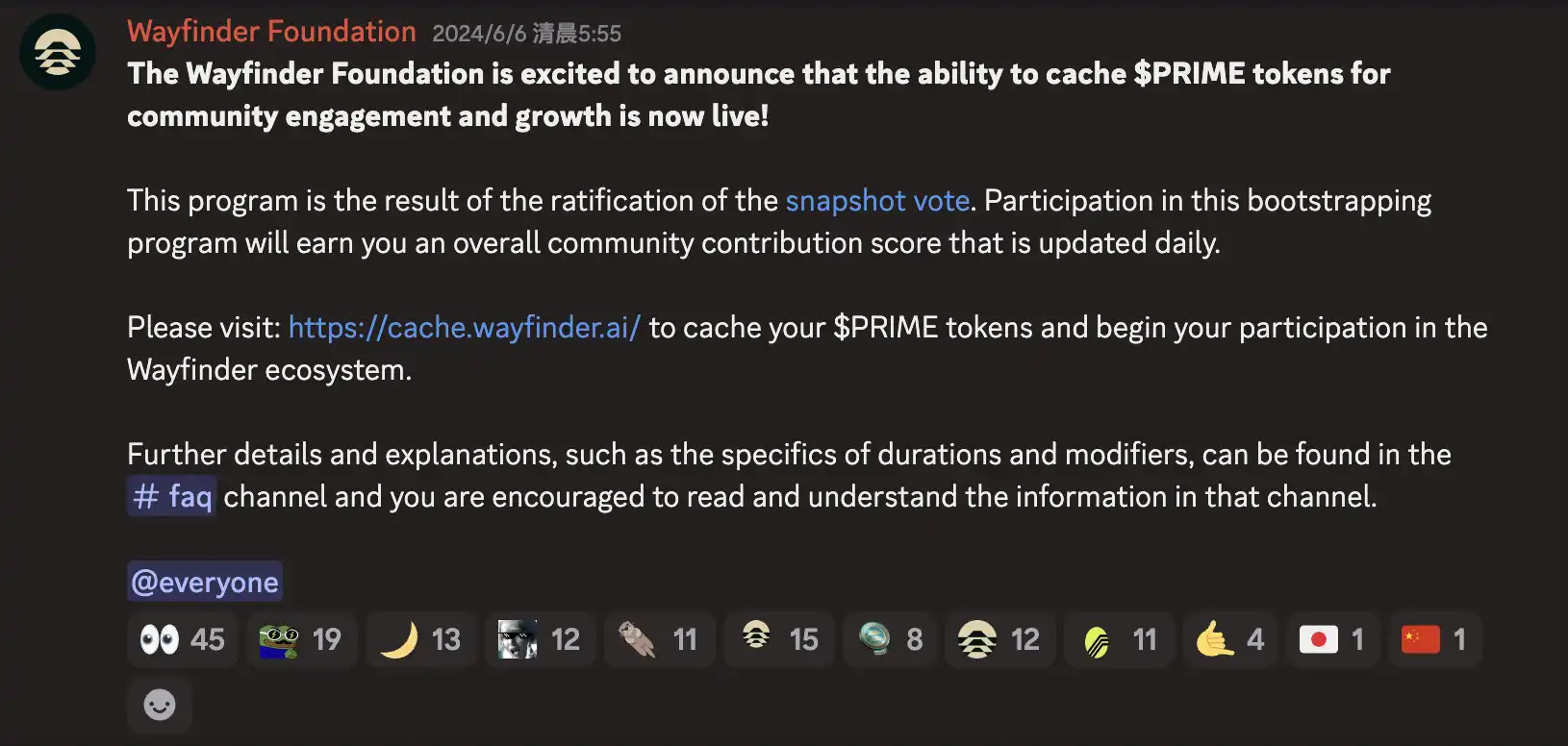
In June 2024, Wayfinder announced an event where staking $PRIME would give participants the opportunity to join the Wayfinder "Future Airdrop," with greater rewards based on the length of their staking period.
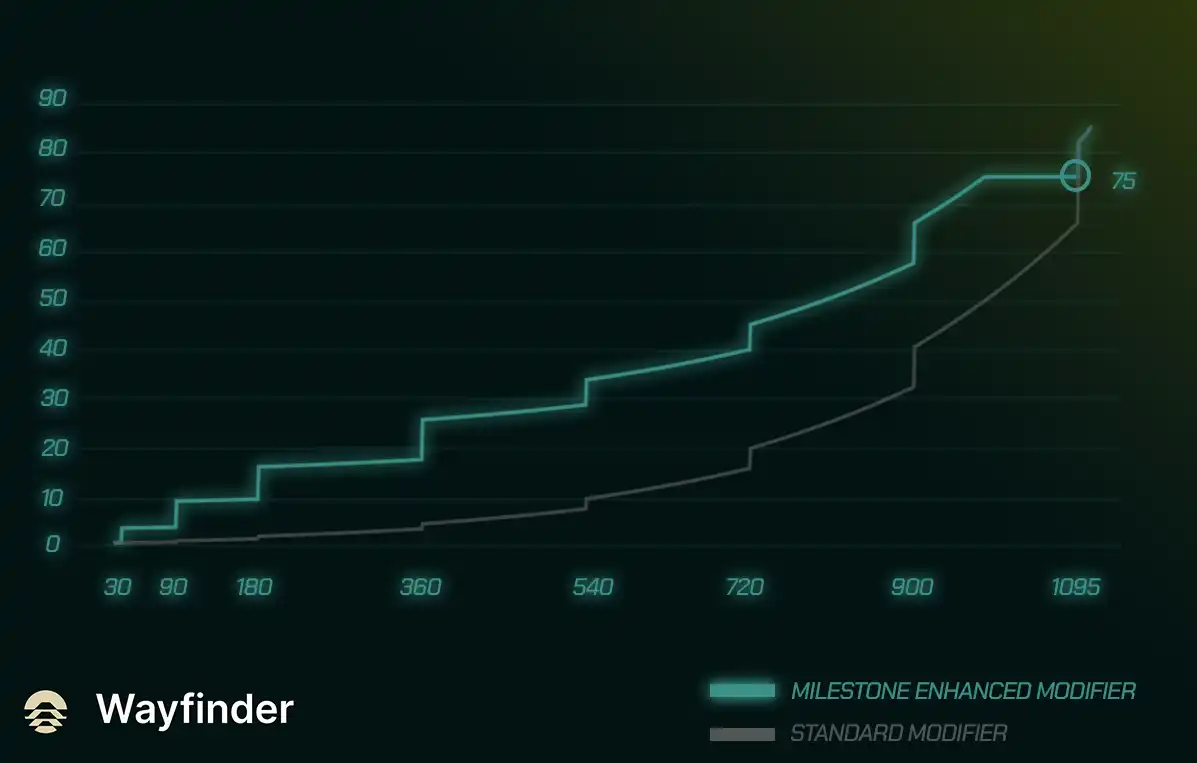
The resolution of Kaito's and WayFinder's airdrop distribution has just been reached. On the other hand, those who initially staked $PRIME to become Cache users are now expressing their dissatisfaction. Community member Lsi-luna, who participated in the event, raised a poignant question on Discord, "Despite receiving a portion of this airdrop, considering the sharp decline in $PRIME's price, I only received 2% of what I put in."
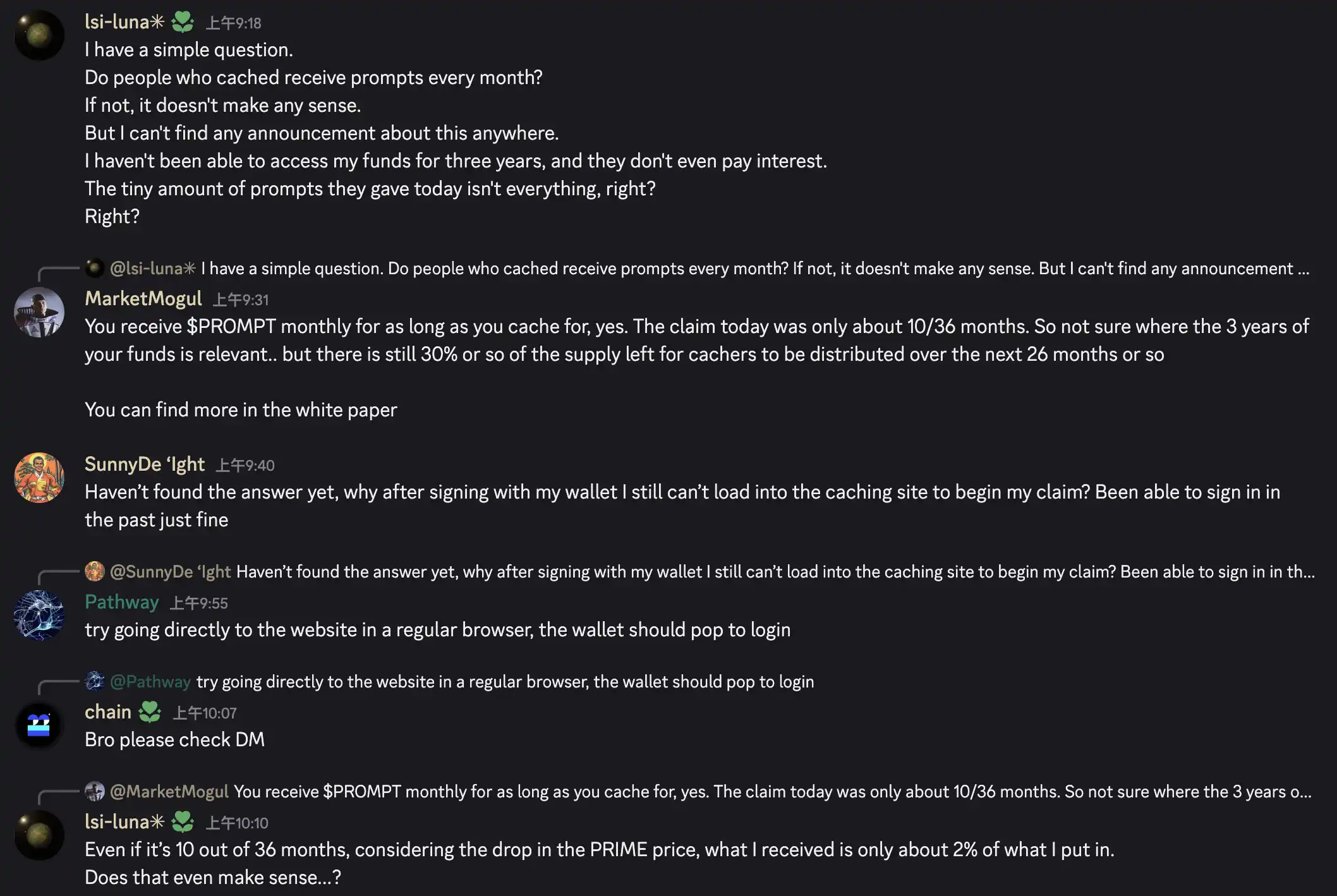
In times of allocation imbalance, do we still need to engage with the community?
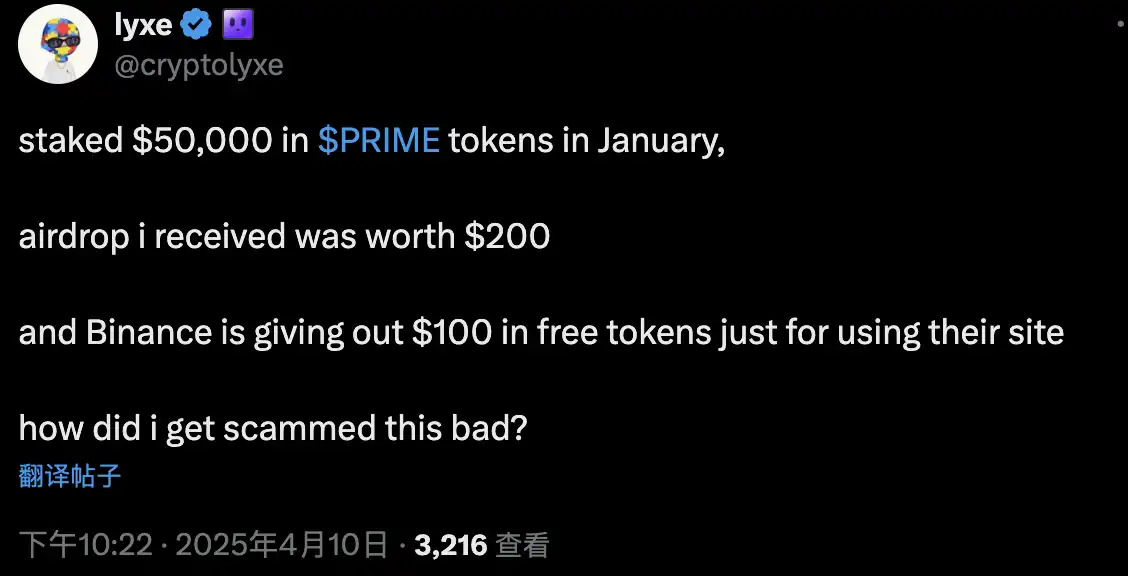
In fact, this situation has occurred countless times in many blockchain projects. What truly disheartens the community is the journey from staking $50,000 worth of $PRIME in January to now only being able to receive $200, especially when a single website activity on Binance could yield $100 for free. The disregard for contributors and the generosity towards non-contributors have left them deeply resentful.
Furthermore, the rewards given by Kaito's event were much greater. Several emerging Yappers reaped significant rewards in this airdrop, ranging from thousands to nearly tens of thousands of dollars, even though they barely paid attention to the project. Team member Kalos made a statement, mentioning that Cachers could collectively receive 400 million $PROMPT tokens, while the total social tasks, including those from Kaito's plan, amount to 20 million $PROMPT. Cachers now receive only 28% of all rewards, but this fails to mend the community's heart.
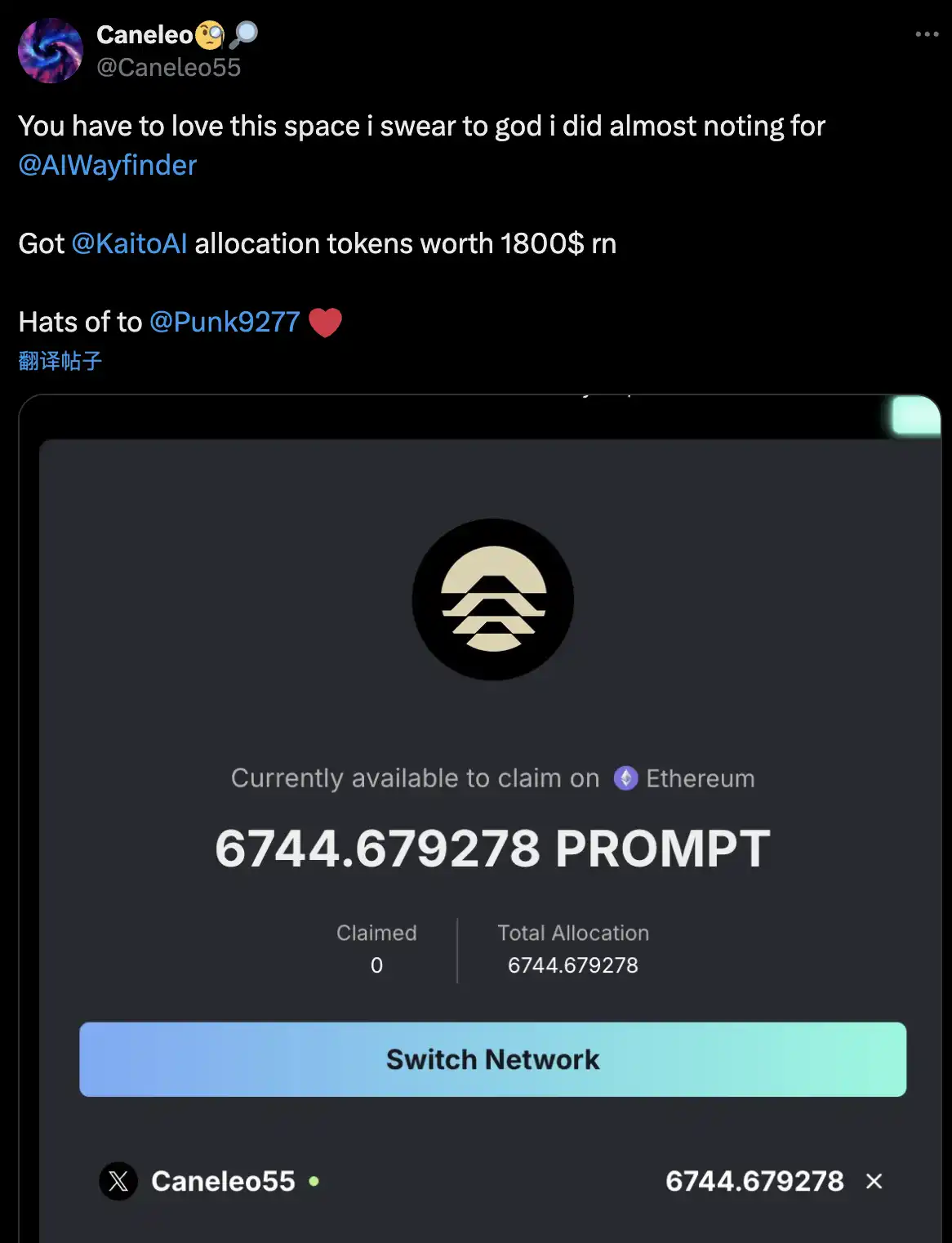
Even many recipients of the airdrop could not stand aside and voiced their concerns. Simon, the founder of Moonrock Capital, mentioned in a post that he received nearly $10,000 worth of $PROMPT from Kaito and AIWayfinder's airdrop page, expressing confusion as to why AIWayfinder rewarded him, even though he hardly ever mentioned the project.
Unable to contain his thoughts on this phenomenon, he expressed his confusion, "I don't need to make any contribution, yet I can easily claim tokens, sell them, and extract the intermediate value. Meanwhile, those who bear 100% of the costs receive no reward. As I mentioned before and will say again now, airdrops are obsolete and meaningless."
Kaito founder Yu Hu gently reminded Simon in the comments that Simon had written a post about AIWayfinder last month. Simon replied, "Thank you for sharing; I even forgot about it myself. I thought it was necessary to continually discuss Wayfinder and share mindshare for them."
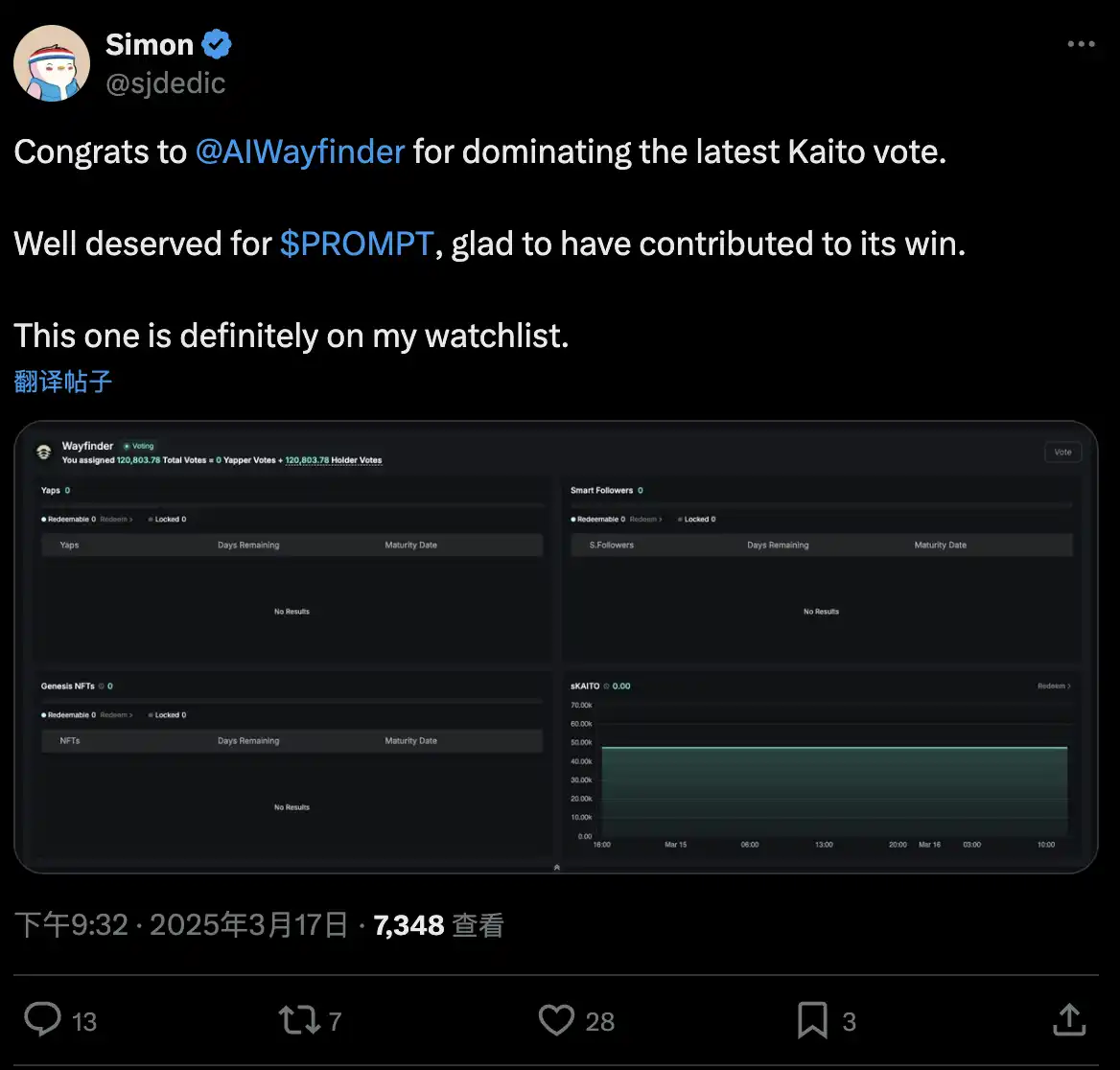
Those who staked their tokens accepted the risk of a token price drop and incurred the time cost of waiting for a year. Meanwhile, the "influential" individual posted a tweet a month ago with 28 likes. The former received rewards of less than 1/10 of the latter's. This may be why the community is angry.
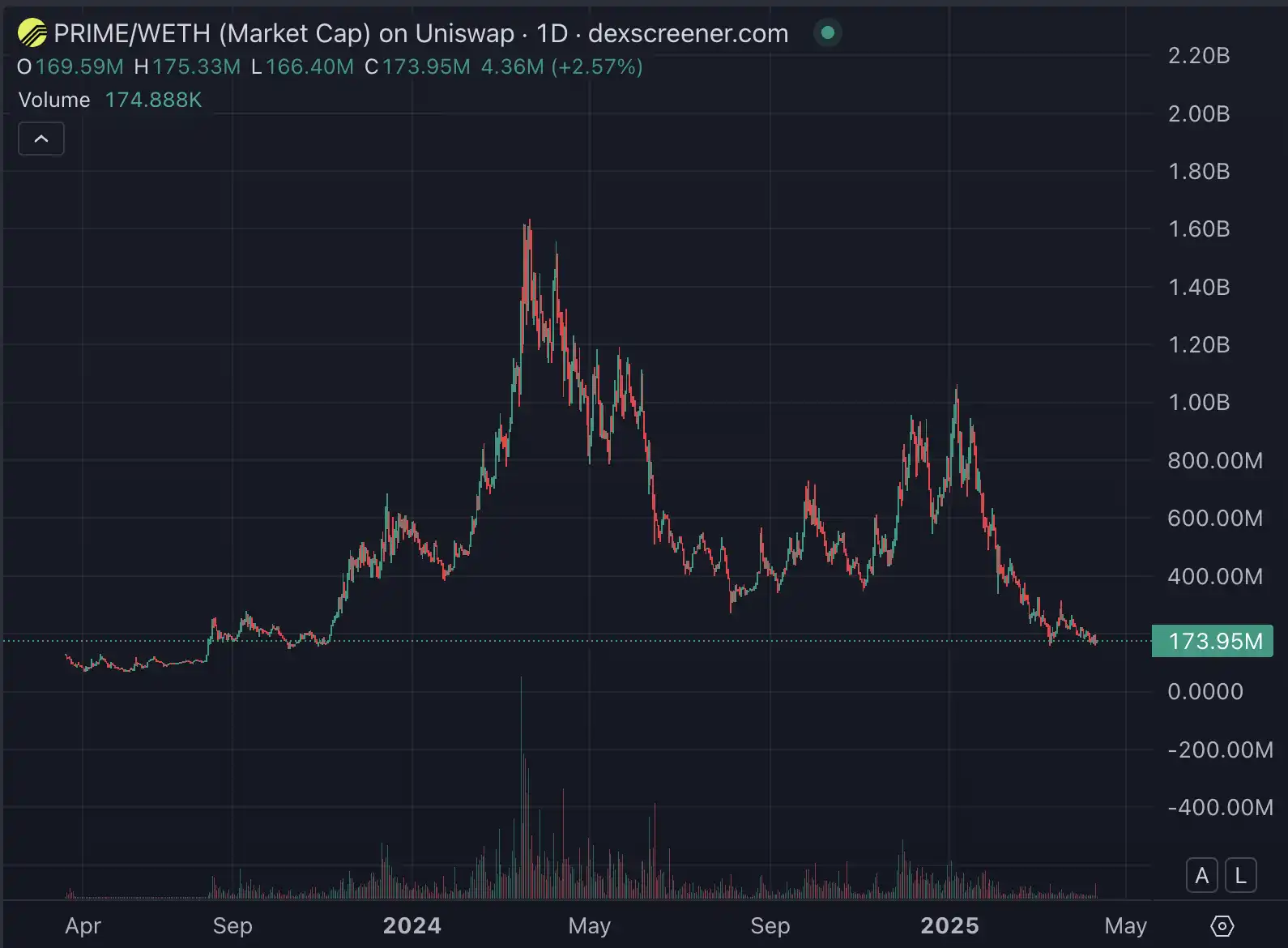
PRIME has plummeted nearly 90% from its all-time high market cap and 75% since the events in June began
Creating a successful product in crypto is extremely challenging. Once tokens are involved, the even more challenging task is how to distribute the interests of all parties fairly. Whether airdrops are dead or not remains unknown, but it is a consensus in crypto that most projects will struggle to move forward when they lose support from the community. In the current landscape where fast-moving meme culture prevails in the industry, every practitioner must face the questions of how to retain project teams that want to make a real impact and how to protect community members who still "believe."
You may also like

STRC unanchored by 11%, can the perpetual motion machine of Strategy still operate?

Bitcoin ETF Outflows Hit a Record $4.4 Billion: What Are Traders Doing With Their Cash?

WEEX App Just Got Smarter – New Tabs for Faster Trades & Easy Asset Management

Blockchain Capital Partner: The Core Secret of Arbitrage

WEEX All-New Search Features: Find, Trade & Earn Faster Than Ever

Will MicroStrategy fall into a death spiral? What will the macro trend be in the second half of the year?

Morning Report | Illinois signs the strictest digital asset tax law in the U.S.; RWA tokenization market size surpasses $43 billion, institutions accelerate the migration of on-chain assets

Full version of the debut Q&A! Federal Reserve Chairman Waller: Sticking to the 2% inflation target, establishing five special working groups, individual did not submit the dot plot

From Disruptor to Shadow Market: The Crypto Market is Becoming a Colony of Traditional Finance
Dalio's important long article: How to position in the current market environment?

OKX Star analyzes Binance's competitive advantages: when regulation levels the playing field, competition has just begun

New gameplay for participating in initial offerings on cryptocurrency exchanges
Why Is Bitcoin Down Today? What the Hawkish FOMC Means for SpaceX, Gold and Nasdaq

DeepSeek Financing Story

Morning Report | DeepSeek completes over $7 billion in financing, with a valuation exceeding $50 billion; Musk's personal wealth has surpassed the total market value of Bitcoin
Cursor, why did you get on Musk's spaceship?
In the name of charity, for the benefit of the family: How the Trump family turned charity into profit?

Will Gold Break $4,500 After Tonight's Fed Decision? What XAUT and PAXG Traders Need to Know
STRC unanchored by 11%, can the perpetual motion machine of Strategy still operate?
Bitcoin ETF Outflows Hit a Record $4.4 Billion: What Are Traders Doing With Their Cash?
WEEX App Just Got Smarter – New Tabs for Faster Trades & Easy Asset Management
Blockchain Capital Partner: The Core Secret of Arbitrage
WEEX All-New Search Features: Find, Trade & Earn Faster Than Ever
Will MicroStrategy fall into a death spiral? What will the macro trend be in the second half of the year?


