
 Buy Crypto
- Markets
 Futures
- Spot
- Copy Trade
- Earn
- More
The US Military is Obsessed with Stock and Crypto Trading, with Stock Tips Flying on the Aircraft Carrier Deck





Original Title: Top Gun Traders: Stock Bets and Crypto Culture Take Over the Military
Original Author: Konrad Putzier, The Wall Street Journal
Translation: Azuma, Odaily Planet Daily
On the Wednesday evening of the mission, U.S. Space Force Captain Gordon McCulloh sat in a military propeller plane, suspended in the calm and dim New Mexico night sky, when the group chat of his squadron suddenly exploded.
Squad members—some on the ground, some in the air—were collecting electromagnetic warfare-related data while also mulling over their investments. Google's stock had just surged in after-hours trading.
After landing, McCulloh saw the messages: a ground officer had sent a news screenshot, while another replied "To the moon." That day was turning out to be unusually lucrative for McCulloh and his comrades.
The U.S. military may be the world's most potent "investment club," and they are raking in the gains in this current bull market.
Active-duty servicemembers are amassing wealth from tech stocks and Bitcoin, exchanging investment advice on obscure cryptocurrencies on the aircraft carrier deck. As the market continues to hit new highs, the base parking lots are seeing more and more new Porsches and Hummers. Social media influencers in military uniforms are telling their followers that they too can become rich.
As a flight test engineer, McCulloh has heavily invested in companies related to nuclear energy. He is betting that the prosperity of AI data centers will further drive up electricity demand. So far, everything has been smooth sailing. Some of his stocks have more than doubled since the spring, although the 27-year-old officer is also pondering how long this rally can last.
"I have to admit, I don't understand why the market continues to rise unabated," he said. While there have been some recent fluctuations, stock prices have been soaring overall since April, boosting soldiers' net worth.

Luke Air Force Base, located in Phoenix, was one of the areas with the highest cryptocurrency declaration rate in the 2021 U.S. tax return.
Service members have been behind the cryptocurrency boom that began in the fall of 2020 and peaked in 2021. According to The Wall Street Journal's analysis of Internal Revenue Service (IRS) data, in 2020, among the 25 ZIP codes with the highest percentage of reported U.S. crypto income or transactions, 8 were near military bases. Bitcoin's price approximately quadrupled that year. By 2021, this proportion had risen to 11 out of the top 25.
IRS data shows that near Holloman Air Force Base in New Mexico, 16.3% of individual income tax returns in 2021 reported records of receiving, selling, exchanging, or disposing of cryptocurrency; near Luke Air Force Base in Arizona (19.4%) and Vandenberg Space Force Base in California (18.1%), the percentage was even higher. In comparison, only 4.1% of tax returns nationwide checked the same box.
In 2022, military bases lost this dominance—it's the latest annual data provided by the IRS. That year, as cryptocurrency prices plummeted, both inside and outside the bases, there was a sharp drop in reported crypto transactions.
But that year's cryptocurrency craze—and the concurrent meme stock frenzy—left an entire generation of service members addicted to investing.
While many service members are primarily long-term index fund investors, some engage in short-term speculation or concentrate a significant portion of their assets in a small number of stocks or cryptocurrencies. They are often young, having only experienced a rising market, and have limited means to hedge risks.
"If the market sees a significant pullback, they will definitely feel the pain," said financial advisor and Air Force veteran Brian O'Neill.
Some have already experienced such pain, suffering significant losses in a bad bet, but service members are more likely to talk about their wins than their losses. O'Neill said, "There is a culture of boasting here."

Saunders recently bought a Hummer with extra income, both as a treat for himself and to support his side hustle as a KOL.

This Coast Guard member records investment and financial advice videos at his home studio in St. Petersburg, Florida, and surrounding locations.
Saunders profited from Tesla stock, but he said he lost over $10,000 in a single day last winter while trading a leveraged financial product tied to MicroStrategy (the company that bought Bitcoin, now known as Strategy) stock. He has now mostly shifted to stock market index funds. He also earns a five-figure monthly income as a social media influencer on TikTok and Instagram.
His expertise is in providing financial advice to military personnel through videos.
Action Hotspot
Military bases are fertile ground for investment frenzy. They are packed with young people—many naturally inclined to take risks—with ample time, disposable income, and almost no taboos when it comes to discussing personal finance, as military salaries are openly transparent and rank-based. Although the military offers a pension after 20 years and unparalleled job security, they do not provide generous salaries or six-figure year-end bonuses.
The military community has long been active in the investment arena. Some utilize zero-down VA loans from the Veterans Affairs Department to purchase rental properties. In the early 1980s, during a period of high inflation, soldiers confined in nuclear missile submarines for months passed the time discussing gold bars and raw diamonds. By the late 1990s, tech stocks became the nation's obsession.
However, over the past two decades, two intertwined waves have greatly fueled a culture of wealth-building in the barracks: the rise of websites lowering the barrier to trading and later apps like Robinhood, and the ongoing war on terror.
Starting in the early 21st century, hundreds of thousands of troops were deployed to remote bases in Iraq and Afghanistan. They received hazardous duty pay, family separation allowances, and income tax exclusions. Suddenly, they had thousands of dollars in extra income and began looking for investment channels.
F-16 fighter pilot Shawn Walsh opened his first brokerage account in 2008 when stationed in Iraq. His primary mission was to bomb insurgents, but between executing strike missions, he would often be in full flight gear, spending hours in a small shed just a short taxi from his aircraft. There, with nothing to do, he and other pilots would discuss various investment strategies.
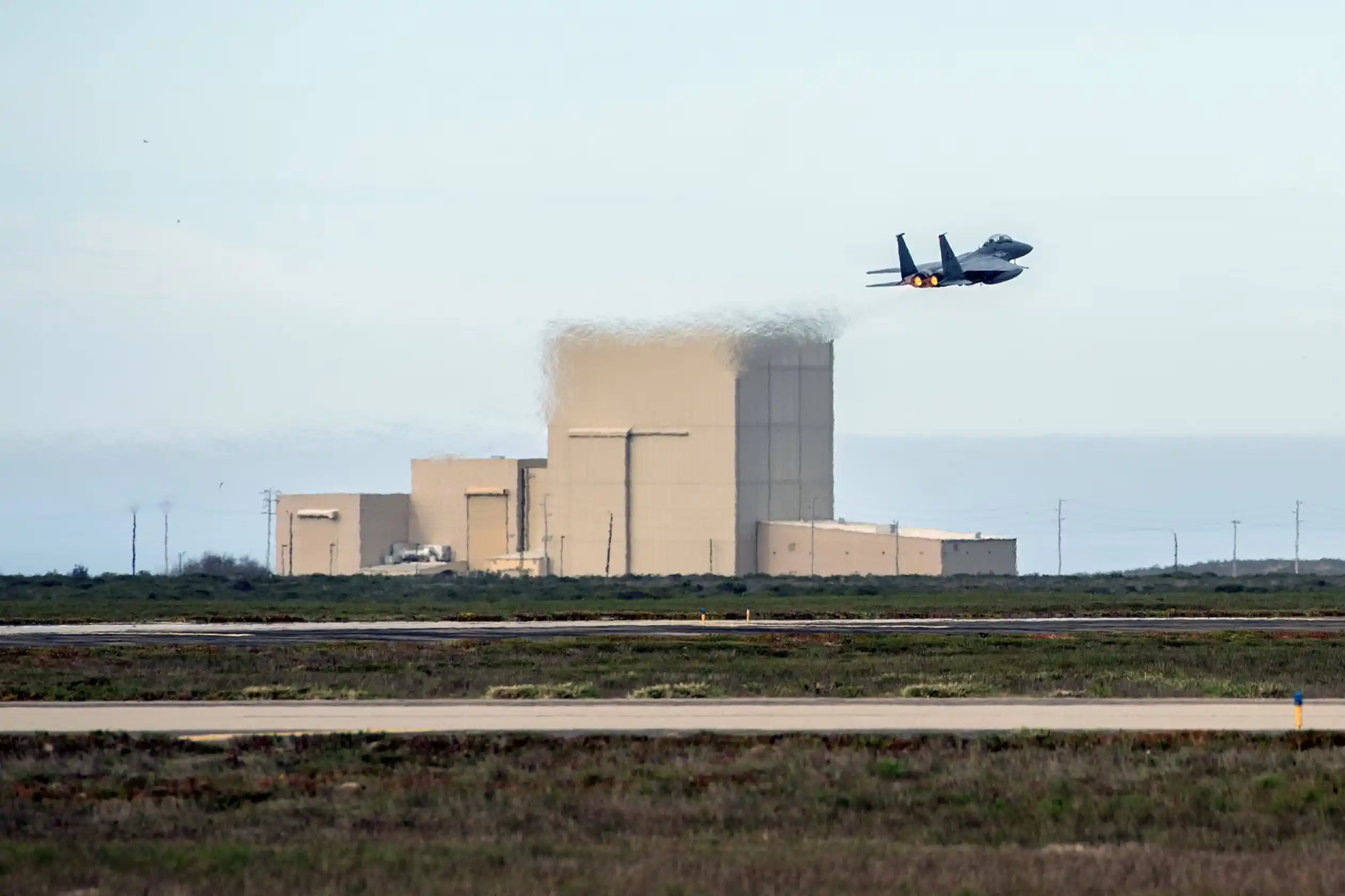
Multiple military bases, including Vandenberg Space Force Base on the central California coast, fueled the cryptocurrency frenzy from 2020 to 2021.
In 2013, Air Force transport pilot Spencer Reese flew back and forth between Kyrgyzstan and Afghanistan, transporting soldiers. "Each mission was a crash course in a different investment strategy," he said.
Someone told him about investing in gas stations and 7-Eleven convenience stores; another person recommended covered call options; and some were into Bitcoin. During the longer flights, Reese would read some investment books.
The military does have basic training courses on savings, budgeting, and investing, but word of mouth is often a more popular source of advice. While servicemembers are very competitive, they also have a strong sense of camaraderie—even in the investment field. If someone makes money, they will tell others because they want their comrades to make money too. Officers often pull out their phones to show others their investment account balances.
Cryptocurrency spread like wildfire in the military in the early 2020s. Navy Commander Zach Rodriguez deeply invested over $100,000—equivalent to half of his family's savings—into tokens like Chainlink, Polkadot, and Quant. A friend got him interested in cryptocurrency while he was aboard an aircraft carrier cruising the Pacific.

In 2020, Lieutenant Commander Zach Rodriguez's photo next to a helicopter, the Pacific cruise marked the beginning of his cryptocurrency learning journey.
As the value of the coins soared, he initially made significant gains but later faced a sharp downturn. According to him, he was also scammed out of $250,000 worth of cryptocurrency. Now, this helicopter pilot has become a "Bitcoin HODLer"—focusing on investing in Bitcoin and Bitcoin-related companies, and he says his holdings have grown to about $1 million.
The frenzy for meme stocks has similarly swept through the military with a similar force. Air Force Senior Airman Durelle Bailey, in 2021, was pursuing a master's degree at George Mason University in a classroom with over twenty active-duty servicemembers when one person mentioned a stock of an educational technology company called Chegg. The stock price had fallen, and according to that person, it was a great buy-the-dip opportunity.
"He said at that moment, 'Hurry, buy now, or it's going back up.'" Bailey recalled. Immediately, eight or nine people pulled out their phones and bought the stock.

Master Sergeant Durelle Bailey, photographed in 2019 in Arizona. Over the past decade, his savings have grown from zero to a six-figure net worth.
At the time, Bailey had invested a few hundred dollars but ended up losing money. Chegg briefly surpassed $113 per share in early 2021, only to fall to under $25 by year-end, with the recent stock price closer to $1.
Wherever Bailey goes, stocks and cryptocurrencies are a common topic of conversation. "We talk about it in the barracks, in the gym, in the cafeteria," he says.
When Bailey joined the Air Force in 2015, he had no savings. Today, his and his wife's net worth has firmly reached six figures, largely thanks to stock index funds. At 31, he says, "Our future is secure."
New Wealth, New Worries
Around military bases, signs of rising wealth are everywhere.
Near a military base in Colorado, Army Second Lieutenant and helicopter pilot Eric Rawlings, currently deployed to the Middle East, says he recently bought a $10,000 Rolex to celebrate a milestone: the money he earned from stock investments exceeded his military pay for the first time.
He is not alone. "The cars driving around the base are all pretty extravagant," says the 29-year-old.

Second Lieutenant Eric Rawlings wearing the Rolex he bought to celebrate his investment success.
Some financial advisors and veterans worry that the good times may not last forever. With the price-to-earnings ratio near historic highs, stock indexes are increasingly dominated by a few tech giants.
"I'm concerned that we may be heading for a bubble burst," says retired Army officer David Ashcraft.
During the late 1990s tech boom, as a young lieutenant, Ashcraft bought stocks in Cisco and Sun Microsystems. After the market crash, his IRA account value plummeted from $10,000 to about $3,000. Since then, he has only invested in index funds.
He said, "If someone tells me they put all their money into cryptocurrency or just a few stocks, I would still be concerned."
Bonds have fallen out of favor among military personnel because their performance in recent years has been far behind that of stocks. Few people hold a large amount of cash.
Many military personnel believe they can take on more risk because they have job security and can still receive a guaranteed pension after 20 years of service. Even conservative investors are exposed to higher risks due to market structure. Space Force officer McCulloh, stationed in New Mexico, says that several technology and energy stocks now account for most of his net worth simply because they have risen so much.
However, high-risk bets can still go awry in a strong market. In 2023, Moises Gonzalez, a Marine Corps truck driver stationed in Albany, Georgia, lost $20,000 in a day trading gold and stocks despite his $38,000 annual salary.
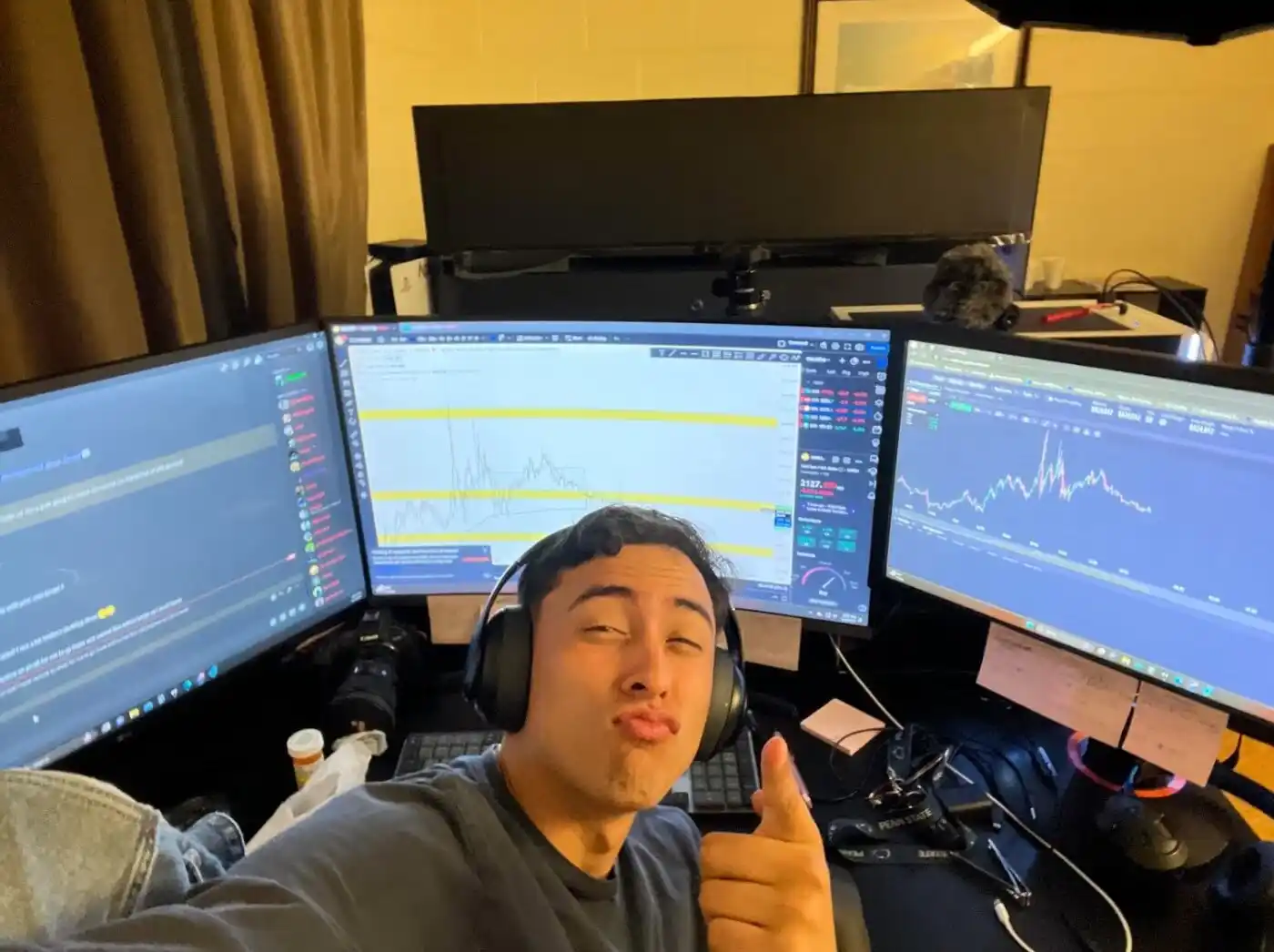
Moises Gonzalez experienced the highs and lows of day trading on the equipment in his base dorm.
"Some days I really couldn't take it because I just kept losing, kept losing, kept losing, kept losing," he said.
His largest single-day loss was $15,000, while his biggest gain was $6,000.
He set up three monitors in his base room—a sight that once raised an eyebrow during an inspection by a colonel—and he brought his laptop to the work vehicle dispatch yard to trade during the early morning downtime.
Over time, Gonzalez's skills improved. In 2024, he made $30,000 from day trading. A few months ago, he left the Marine Corps and moved to Hawaii to start trading full-time. The 25-year-old hopes to earn $10,000 a month in the market, but he hasn't reached that goal yet.
He said, "I can make $7,000 in three or four days and then lose it all on the fifth day."
You may also like

Morning News | The Hong Kong Securities and Futures Commission announced the regulatory framework for secondary market trading of tokenized investment products; Strategy increased its holdings by 34,164 bitcoins last week; KAIO completed a strategic fi...

What Is an XRP Wallet? The Best Wallets to Store XRP (2026 Updated)
An XRP wallet lets you safely store, send, and receive XRP on the XRP Ledger. Learn what wallets support XRP and discover the best XRP wallets for beginners and long-term holders in 2026.

What are the Top AI Crypto Coins? Render vs. Akash: 5 Gems Solving the 2026 GPU Crisis
What are the best AI crypto coins for the 2026 cycle? Beyond the hype, we analyze top tokens like RNDR, AKT, and FET that provide real-world solutions to the global GPU shortage and the rise of autonomous agents.

What Is a Token in AI? What Is an AI Token + 3 Gems You Can't Miss in 2026
The era of AI hype has transitioned into an era of utility. As we move through Q2 2026, the market is no longer rewarding "narrative-only" projects. At WEEX Research, we are seeing a massive capital rotation into Decentralized Compute (DePIN) and Autonomous Agent coordination layers. This guide analyzes which AI tokens are capturing institutional liquidity and how to spot high-conviction setups in a maturing market.

Consumer-grade Crypto Global Survey: Users, Revenue, and Track Distribution

Prediction Markets Under Bias

Stolen: $290 million, Three Parties Refusing to Acknowledge, Who Should Foot the Bill for the KelpDAO Incident Resolution?

ASTEROID Pumped 10,000x in Three Days, Is Meme Season Back on Ethereum?

ChainCatcher Hong Kong Themed Forum Highlights: Decoding the Growth Engine Under the Integration of Crypto Assets and Smart Economy

Why can this institution still grow by 150% when the scale of leading crypto VCs has shrunk significantly?

Anthropic's $1 trillion, compared to DeepSeek's $100 billion

Geopolitical Risk Persists, Is Bitcoin Becoming a Key Barometer?

Annualized 11.5%, Wall Street Buzzing: Is MicroStrategy's STRC Bitcoin's Savior or Destroyer?
An Obscure Open Source AI Tool Alerted on Kelp DAO's $292 million Bug 12 Days Ago

Mixin has launched USTD-margined perpetual contracts, bringing derivative trading into the chat scene.
The privacy-focused crypto wallet Mixin announced today the launch of its U-based perpetual contract (a derivative priced in USDT). Unlike traditional exchanges, Mixin has taken a new approach by "liberating" derivative trading from isolated matching engines and embedding it into the instant messaging environment.
Users can directly open positions within the app with leverage of up to 200x, while sharing positions, discussing strategies, and copy trading within private communities. Trading, social interaction, and asset management are integrated into the same interface.
Based on its non-custodial architecture, Mixin has eliminated friction from the traditional onboarding process, allowing users to participate in perpetual contract trading without identity verification.
The trading process has been streamlined into five steps:
· Choose the trading asset
· Select long or short
· Input position size and leverage
· Confirm order details
· Confirm and open the position
The interface provides real-time visualization of price, position, and profit and loss (PnL), allowing users to complete trades without switching between multiple modules.
Mixin has directly integrated social features into the derivative trading environment. Users can create private trading communities and interact around real-time positions:
· End-to-end encrypted private groups supporting up to 1024 members
· End-to-end encrypted voice communication
· One-click position sharing
· One-click trade copying
On the execution side, Mixin aggregates liquidity from multiple sources and accesses decentralized protocol and external market liquidity through a unified trading interface.
By combining social interaction with trade execution, Mixin enables users to collaborate, share, and execute trading strategies instantly within the same environment.
Mixin has also introduced a referral incentive system based on trading behavior:
· Users can join with an invite code
· Up to 60% of trading fees as referral rewards
· Incentive mechanism designed for long-term, sustainable earnings
This model aims to drive user-driven network expansion and organic growth.
Mixin's derivative transactions are built on top of its existing self-custody wallet infrastructure, with core features including:
· Separation of transaction account and asset storage
· User full control over assets
· Platform does not custody user funds
· Built-in privacy mechanisms to reduce data exposure
The system aims to strike a balance between transaction efficiency, asset security, and privacy protection.
Against the background of perpetual contracts becoming a mainstream trading tool, Mixin is exploring a different development direction by lowering barriers, enhancing social and privacy attributes.
The platform does not only view transactions as execution actions but positions them as a networked activity: transactions have social attributes, strategies can be shared, and relationships between individuals also become part of the financial system.
Mixin's design is based on a user-initiated, user-controlled model. The platform neither custodies assets nor executes transactions on behalf of users.
This model aligns with a statement issued by the U.S. Securities and Exchange Commission (SEC) on April 13, 2026, titled "Staff Statement on Whether Partial User Interface Used in Preparing Cryptocurrency Securities Transactions May Require Broker-Dealer Registration."
The statement indicates that, under the premise where transactions are entirely initiated and controlled by users, non-custodial service providers that offer neutral interfaces may not need to register as broker-dealers or exchanges.
Mixin is a decentralized, self-custodial privacy wallet designed to provide secure and efficient digital asset management services.
Its core capabilities include:
· Aggregation: integrating multi-chain assets and routing between different transaction paths to simplify user operations
· High liquidity access: connecting to various liquidity sources, including decentralized protocols and external markets
· Decentralization: achieving full user control over assets without relying on custodial intermediaries
· Privacy protection: safeguarding assets and data through MPC, CryptoNote, and end-to-end encrypted communication
Mixin has been in operation for over 8 years, supporting over 40 blockchains and more than 10,000 assets, with a global user base exceeding 10 million and an on-chain self-custodied asset scale of over $1 billion.

$600 million stolen in 20 days, ushering in the era of AI hackers in the crypto world
Vitalik's 2026 Hong Kong Web3 Summit Speech: Ethereum's Ultimate Vision as the "World Computer" and Future Roadmap
On the same day Aave introduced rsETH, why did Spark decide to exit?
Morning News | The Hong Kong Securities and Futures Commission announced the regulatory framework for secondary market trading of tokenized investment products; Strategy increased its holdings by 34,164 bitcoins last week; KAIO completed a strategic fi...
What Is an XRP Wallet? The Best Wallets to Store XRP (2026 Updated)
An XRP wallet lets you safely store, send, and receive XRP on the XRP Ledger. Learn what wallets support XRP and discover the best XRP wallets for beginners and long-term holders in 2026.
What are the Top AI Crypto Coins? Render vs. Akash: 5 Gems Solving the 2026 GPU Crisis
What are the best AI crypto coins for the 2026 cycle? Beyond the hype, we analyze top tokens like RNDR, AKT, and FET that provide real-world solutions to the global GPU shortage and the rise of autonomous agents.
What Is a Token in AI? What Is an AI Token + 3 Gems You Can't Miss in 2026
The era of AI hype has transitioned into an era of utility. As we move through Q2 2026, the market is no longer rewarding "narrative-only" projects. At WEEX Research, we are seeing a massive capital rotation into Decentralized Compute (DePIN) and Autonomous Agent coordination layers. This guide analyzes which AI tokens are capturing institutional liquidity and how to spot high-conviction setups in a maturing market.



 App
App