
Unveiling the History of Tether: The Undercurrents and Manipulation in the Crypto Market


Original Author: Rukawa Kaede
Original Translation: Lyric, ChainCatcher
Author Zeke Faux, due to his strong interest in cryptocurrency, conducted in-depth research and investigation into Tether (USDT), eventually writing this book ("Number Go Up"), which extensively reveals the manipulation behind Tether and its impact on the crypto market. The key points of this article mainly revolve around Giancarlo Devasini's rise in the global crypto market through the manipulation of the Tether stablecoin USDT. Despite Tether's initial promise of being backed 1:1 by the US dollar reserve, it has faced regulatory scrutiny due to opaque fund flows, frequent issuance of new coins, and incidents of hacking and mysterious fund operations. Particularly in Southeast Asia, it has become a tool for illicit fund transfers. However, Devasini continues to drive projects such as the Bitcoin Bond scheme to expand the business footprint.
In January 2021, as COVID-19 swept the globe and the crypto market frenzy escalated, this article will uncover the intricate financial operations and regulatory challenges behind the stablecoin Tether (USDT), including Tether's senior management and fund flows, especially the background and tactics of one of its actual controllers, Giancarlo Devasini, presenting a little-known financial experiment.
Origin and Development of Tether
Initially conceived by Brock Pierce and named "Realcoin," the project later partnered with the offshore exchange Bitfinex to launch Tether in 2013, featuring a stablecoin model backed 1:1 by the US dollar. However, since its inception, Tether has been heavily questioned for its operational model: with global regulations still incomplete, its fund flows and asset reserves have always been secretive and complex. Tether not only provided crucial liquidity support to exchanges but also played the role of the "last straw" in times of extreme market volatility, but its underlying banking relationships and fund management have been full of doubts.
Giancarlo Devasini: From Plastic Surgeon to Crypto Tycoon

The key figure behind Tether, Giancarlo Devasini, has had a rollercoaster personal journey. Born in Turin, Italy in 1964, Devasini initially worked as a plastic surgeon before transitioning to the importation of electronic products and reselling software, even getting involved in the trade of pirated software. It is reported that with a spirit of adventure and unconventional business methods, he quickly rose in the business world, amassing a net worth of around $9.2 billion at one point, surpassing the senior executives of well-known luxury car companies.
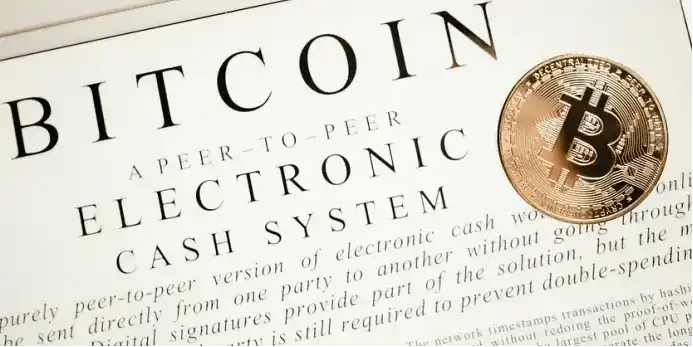
Bitcoin: A Peer-to-Peer Electronic Cash System www.bitcoin.org
After reading the Bitcoin whitepaper, Devasini saw the tremendous potential of the crypto world. He then invested in Bitfinex and gradually got involved in the Tether business. Through acquisitions and strategic moves, he eventually gained control of about 40% of Tether's equity. His background and approach laid the foundation for Tether's business model and risk control.
Operating in the Storm: Hacks, Banking Crises, and Fund Mysteries
In 2016, Bitfinex experienced the largest hack in history, with about 119,800 bitcoins stolen, resulting in massive asset losses. Faced with the crisis, Bitfinex took a 36% haircut across accounts and issued the BFX token to compensate for user losses. Investigations indicated that the complex fund flows between Tether and Bitfinex raised even greater concerns about USDT's true reserve capacity.
At the same time, Tether also faced severe challenges in fund management. In 2017, the company had funds in multiple banks in Taiwan and other regions, but due to intermediary banks' concerns about crypto businesses, many banks terminated cooperation, leading to funds being stranded. Even with bank accounts frozen and fund transfers blocked, Tether continued to mint a significant amount of USDT on the Bitcoin Omni Layer, further casting doubt on the authenticity of its 1:1 reserve.
Court records and regulatory investigations have shown that Tether itself has admitted its inability to use traditional banking systems normally. The hidden fund operation behind Tether appears more like a "financial game," using arbitrarily minted USDT to conduct large-scale asset relocations in the market, thereby to some extent manipulating the price of Bitcoin.
Regulatory Investigations and Reserve Fund Controversies
In 2019, the New York Attorney General's office found substantial fund intermingling between Bitfinex and Tether during an investigation into their finances. Bitfinex temporarily diverted Tether's reserve funds to cover a customer withdrawal shortfall, leading Tether to promptly remove the commitment to "100% USD backing" from its website.
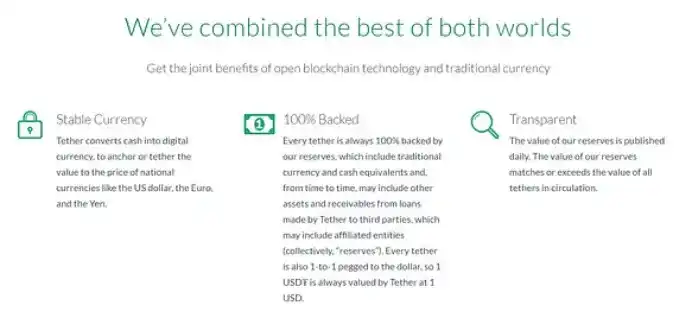
The changes to Tether's website at the time sparked new concerns about the company's reserve policy
Subsequently, Tether reached settlements and fines with the state of New York and the U.S. Commodity Futures Trading Commission, paying $18.5 million and $42.5 million, respectively, highlighting that its operational model has always been on the regulatory edge.
Furthermore, reports indicate that Tether had approximately a quarter of its funds (about $15 billion) deposited in Deltec Bank & Trust, and allegedly held up to $113 billion in U.S. Treasury bonds. This series of operations not only provided Tether with flexibility in fund management but also positioned it uniquely in the global financial system.
Southeast Asian Market and Global Fund Flows
Globally, USDT has become the settlement base for many trading platforms and DeFi protocols. Investigations have revealed that in the Southeast Asian region, USDT is widely used for money laundering, fraud, drug trafficking, and even illegal activities such as human trafficking. Its convenient cross-border transfer feature has provided criminals with a low-threshold tool to evade regulation. In the Taiwan market, USDT is dominant in trading pairs with the New Taiwan Dollar (TWD), underscoring the irreplaceable role of stablecoins in global cryptocurrency trading.
Meanwhile, despite multiple bankruptcy events in the crypto sphere such as FTX, Celsius, BlockFi, USDT has maintained strong market liquidity and demand, solidifying its core position in the entire crypto ecosystem.
Capital Operations and Future Layout
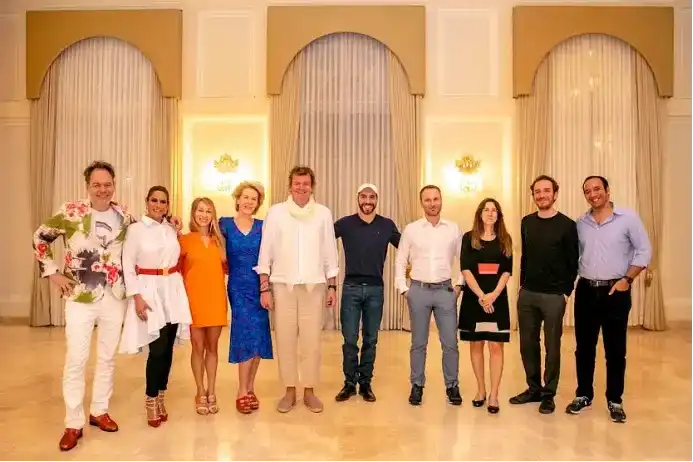
Amidst the intense fluctuations in the crypto market, Giancarlo Devasini seems undeterred by the storm. In November 2022, he appeared in El Salvador, took a photo with President Nayib Bukele, and it was rumored that he was planning a billion-dollar "Bitcoin Bond" (Volcano Bonds) initiative, aiming to further integrate global capital with Bitcoin assets. This move demonstrates both his confidence in the market's future and Tether's business ambition to generate excess revenue through diversified operations.
Simultaneously, Tether's special position in the global financial system and its delicate relationship with the U.S. government are gradually emerging. On the one hand, Tether provides financial support to the U.S. government to maintain the circulation of the U.S. dollar in developing countries; on the other hand, its massive holdings of U.S. Treasury bonds are also seen as essential assets supporting the U.S. dollar system. It is this dual identity that has enabled Tether to expand its market share continuously while becoming a subject of controversy and regulatory focus from all parties.
The Global Impact and Concerns of Tether
Tether and its mastermind Giancarlo Devasini play a crucial yet controversial role in the global cryptocurrency market. From the initial 1:1 reserve promise to the current complex and ever-changing fund operation model, Tether has not only challenged the boundaries of traditional financial regulation but has also somewhat become an "invisible enabler" of the global US dollar system. In this market filled with high risks and high rewards, Devasini's presence forces us to question: is he truly saving the entire industry, or is he merely manipulating a vast and dangerous capital game to satisfy personal greed?
In the future, how the cryptocurrency market can strike a balance between regulation and innovation, and how Tether and USDT will navigate out of this gray area, remain burning questions that the industry and regulatory bodies urgently need to address.
You may also like

SharpLink CEO: How to understand that Ethereum developers have just surpassed 1 million?

Morning Report | MiCA grace period expires on July 1; Kalshi's trading volume in the first week of the World Cup breaks $5.1 billion, setting a record

The foundation of SpaceX's trillion-dollar valuation: Who is dividing Musk's annual capital expenditure of tens of billions?

How to exit after asset tokenization?

The stablecoin positioning battle escalates: When compliance is just a ticket to entry, will USD1 become the biggest winner?

A16Z: The sun bears witness, SpaceX is worth 7.5 trillion

Mergers and acquisitions in the cryptocurrency market are exceptionally active

Concerns Behind the Binance Customer Service Controversy

SpaceX Stock Prediction After the IPO: Can SPCX Reach $200 Before QQQ Inclusion?

Congratulations to Carl Moon on His Historic Ferrari Challenge Le Mans Podium Triumph
Crypto influencer and racing enthusiast Carl Moon finished third in the Ferrari Challenge Le Mans Coppa Shell class, marking his best result of the year. As his racing partner and sponsor, WEEX celebrates this remarkable achievement and continues to lead crypto’s journey beyond boundaries, uniting the innovation of digital assets with the passion of motorsport.
Can the CLARITY Act Become Law by July 4? Everything You Need to Know About the Final Battle

France vs Senegal World Cup 2026: Mbappe’s New Era Begins Against a Historic Rival
What is the connection between Huang Zheng of Pinduoduo and blockchain?

Morning Report | Prediction market platforms like Kalshi and Polymarket jointly sue Kentucky over 14.25% trading tax; Bridgewater founder discusses decision-making in the AI era: principled thinking should run parallel to AI, human insight remains irre...

If the AI bubble has already burst, who will truly remain?

Paul Graham: How to Make a Billion Dollars

After 18 years, blockchain has finally started to head towards the main channel
Claude enforces "facial recognition for household registration," starting in July, no ID card means no access?
SharpLink CEO: How to understand that Ethereum developers have just surpassed 1 million?
Morning Report | MiCA grace period expires on July 1; Kalshi's trading volume in the first week of the World Cup breaks $5.1 billion, setting a record
The foundation of SpaceX's trillion-dollar valuation: Who is dividing Musk's annual capital expenditure of tens of billions?
How to exit after asset tokenization?
The stablecoin positioning battle escalates: When compliance is just a ticket to entry, will USD1 become the biggest winner?
A16Z: The sun bears witness, SpaceX is worth 7.5 trillion


