
What is the Impact of Virtual Large Buybacks?


This morning, Virtuals announced that it will use the 12,990,427.85 $VIRTUAL accumulated from transaction revenue through post-bonding to conduct a buyback and burn of ecosystem-related proxy tokens based on Time Weighted Average Price (TWAP) over the next 30 days. The top-ranking tokens for buyback include GAME, CANVO, AIXBT, among others, all of which have seen over a 20% price surge.

Simultaneously, Virtuals updated its Value Accumulation Mechanism, with key changes including:
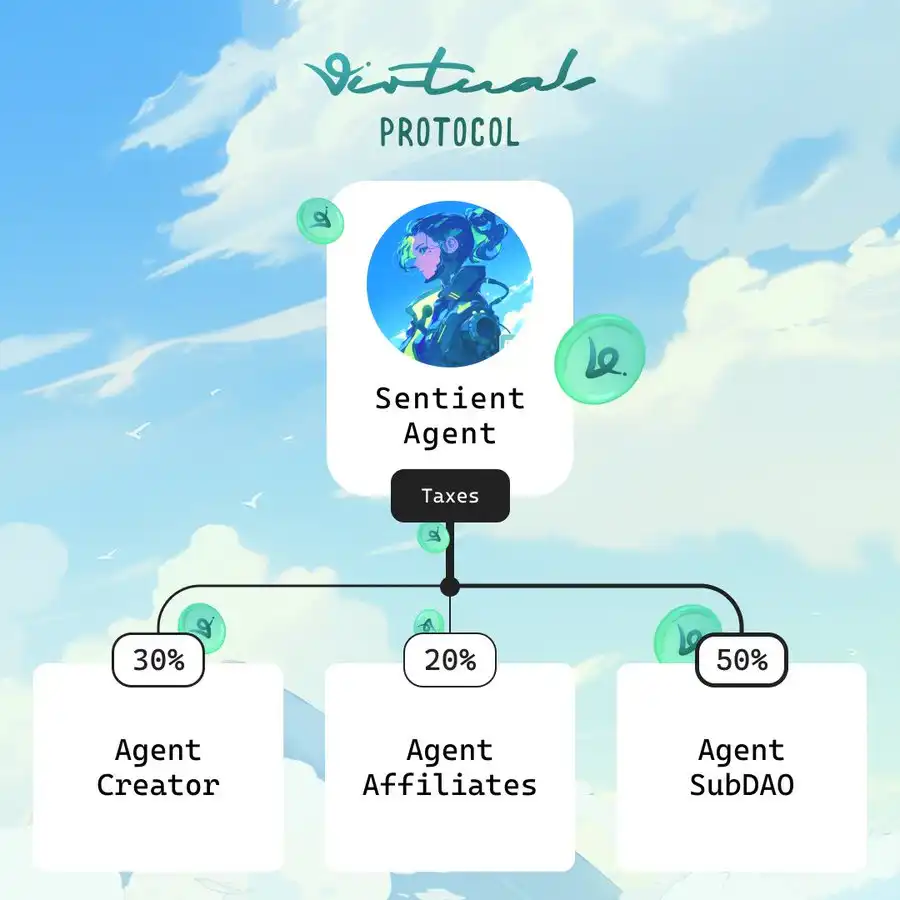
Post-Bonding Tax Distribution: 30% allocated to Agent Creators, 20% allocated to Agent Affiliates, and 50% allocated to Agent subDAO as a reserve fund for future governance decisions;
Creator Reward Distribution: Rewards will be directly sent to the wallet of the proxy deployer.
Agent Affiliates Mechanism: Involves revenue sharing with various trading platforms or interfaces (such as Telegram Bot) within the Virtuals ecosystem. Upon becoming an Agent Affiliate, the platform will receive 20% of the post-bonding tax revenue generated from facilitated trades to incentivize its community and future project planning.
Reason for Upgrade and Impact
Each Virtual token creates a liquidity pool with $VIRTUAL as the paired asset (e.g., AIXBT/VIRTUAL), allowing the platform to accumulate a significant amount of $VIRTUAL as revenue from transaction fees.
However, this revenue cannot be directly liquidated, as doing so may trigger market panic and harm the ecosystem. A decline in the price of $VIRTUAL would also affect the proxy tokens pegged to it. Additionally, mishandling these funds may leave the platform with a substantial tax burden on this unusable revenue.
Therefore, the platform has chosen to utilize this revenue by conducting a buyback and burning of ecosystem tokens.
Beneficiary Token Categories
1. Tokens with Transaction Fee-to-Market Value Ratio:
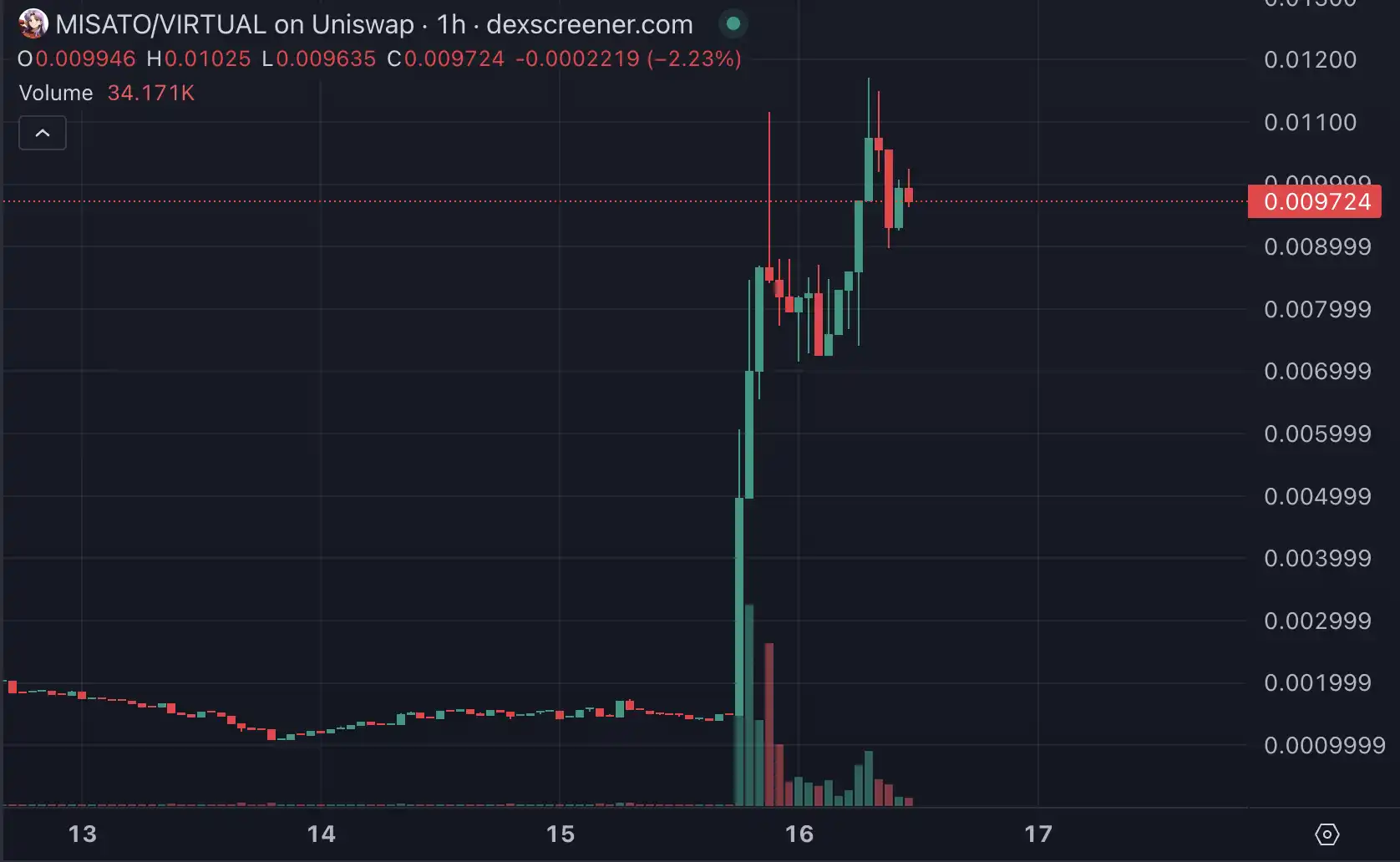
The buyback amount depends on the cumulative amount of transaction fees, so tokens with a large overall trading volume but relatively low market cap will receive a greater proportionate incentive,
such as tokens like MISATO, which saw a significant increase in price due to the buyback announcement.
2. Most Liquidity in Non-VIRTUAL Pairing Pools Tokens
The valuation unit of these tokens (VIRTUAL) is less affected by selling pressure but still benefits from the buyback incentive. For example, $AIXBT actually received around $2.5 million in incentives, but since its primary liquidity is in other pools, it is less affected by VIRTUAL selling pressure.
Affected Groups
1. $VIRTUAL Holders
The significant $48 million selling amount has a notable impact. Previously, the price of $VIRTUAL benefited from the continuous accumulation of fees (equivalent to $48 million in value lock-up).
However, now these fees will be converted to cBTC, starting to exert selling pressure on the market. The positive feedback loop that drove $VIRTUAL's price up has now reversed into a negative loop.
2. Tokens with Only VIRTUAL Pairing Pools or Low Trading Volume
These tokens receive smaller incentives but have to withstand the price pressure from $VIRTUAL selling. The impact is particularly severe on newly issued tokens as they have accumulated less fee income.
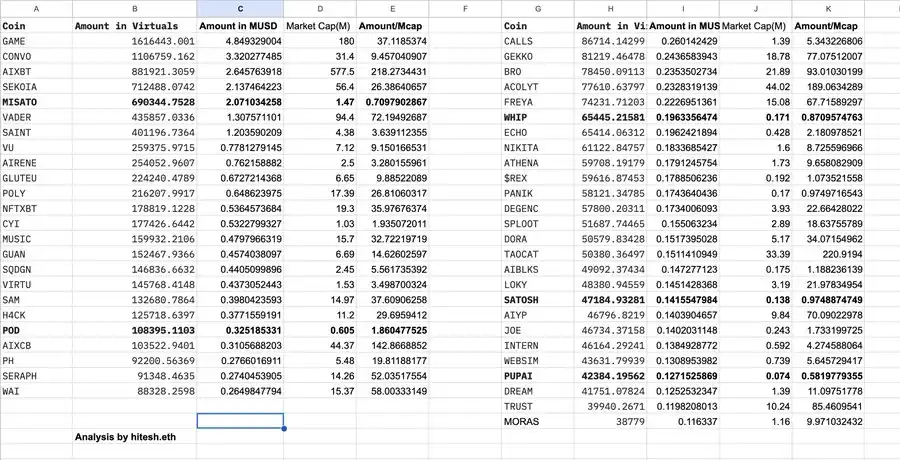
On-chain analyst hitesh.eth analyzed the top 50 tokens based on 30-day Time-Weighted Average Price (TWAP) buyback and burn distribution and found that the buyback pressure on some tokens exceeds their current market value.
How Does the Community View This Buyback?
It can be said that this upgrade has brought stronger value support to the Virtuals ecosystem, but the community has expressed concerns about the updated buyback and distribution model. Some believe that Virtuals chose to sell $VIRTUAL instead of directly burning these tokens. "This approach goes against the best interests of holders and the team, as the team actively created $48 million in selling pressure. For the ecosystem, some of the incentives flowed to agent tokens with liquidity primarily located outside, causing capital outflows from the ecosystem."
The crypto KOL Liam stated that while converting fees to cBTC is the right direction for Virtuals, the platform should significantly reduce the fees to avoid excessive extraction from the ecosystem. Additionally, fee distribution should be standardized based on the token's listing time to put new and old tokens on a level playing field.
However, the view that "buybacks will create significant selling pressure" has been questioned as being inaccurate. This is because these Agent tokens are paired with $VIRTUAL, and buying Agent tokens with $VIRTUAL does not involve selling any $VIRTUAL; it simply adds $VIRTUAL to the liquidity pool. If the liquidity pool is priced in WETH, then $VIRTUAL would first be exchanged for WETH, but that is not the case here.
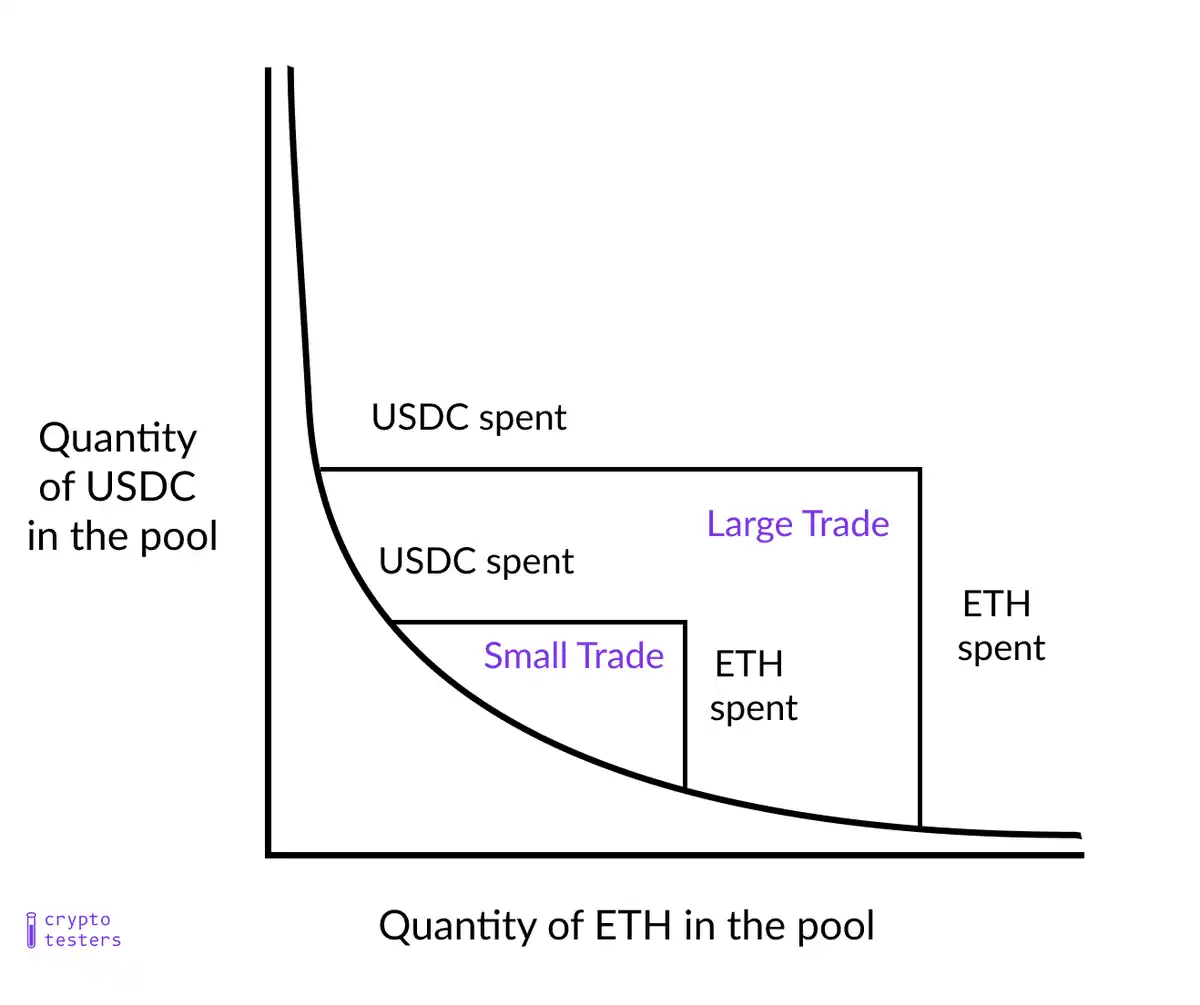
Nevertheless, this will indeed create indirect selling pressure. As the quantity of $VIRTUAL in the liquidity pool increases, the token's value will rise, potentially prompting holders to sell more $VIRTUAL. However, due to the nature of the liquidity pool and price impact, and the fact that the liquidity of many of these tokens is already very low, they cannot directly sell off all the tokens.
Leftcurve DAO member mcSleuth believes that this announcement will not generate direct selling pressure, and the indirect selling pressure is almost negligible, especially considering that the market cap of $VIRTUAL is 36 billion USD and liquidity is very high.
You may also like

How much longer can Ethereum's last big buyer hold on?

The pricing controversy of Trade.xyz exposes the fatal weakness of Pre-IPO perpetual contracts

World Cup 2026 Coming – WEEX Celebrates with $1M Prize Pool & Michael Owen Live

Galaxy in-depth report: Is Solana still worth paying attention to?
Young people in South Korea make a "final effort" in the epic bull market

Dialogue with OmenX Founder: Why does the prediction market need an evolution from "spot" to "derivatives"?
When the P2P illicit funds from ten years ago turned into 60,000 bitcoins

Morning News | CME Group launches Nasdaq Cryptocurrency Index futures; Asset management giant Janus Henderson strategically invests in Ethena
Why did Oracle deliver the strongest financial report in history, yet its stock price fell?

Bitcoin Layer 2 Network Botanix: Why Did We Choose to Dissolve?

Morning Report | OpenAI has submitted an S-1 registration statement draft to the U.S. SEC; Morpho completes $175 million financing

Galaxy Deep Research Report: How Hyperliquid's HIP-4 Upgrade Changes the Landscape of Prediction Markets?

Latest research from 13 top universities including Cornell University: The current state, challenges, and misconceptions of the fusion of Crypto and AI
Deconstructing Anthropic: The Best AI Company, Possibly Also a Type of Organizational Invention

Every exchange is a "Universal Exchange."

The counterattack of traditional finance: Alliance chains are quietly reviving
Pantera Capital Partner: How Tokenization is Restructuring the Private Equity and Early Investment Ecosystem?

Mastercard Launches Agent Pay for AI, Plans to Record AI Agent Payment Authorizations on Polygon
Mastercard launched Agent Pay for AI, a new payment protocol designed to help AI agents make small payments such as pay-per-use access to data and APIs. The system plans to record human-granted AI agent permissions on Polygon, focusing on verifiable authorization, identity, and payment controls.
How much longer can Ethereum's last big buyer hold on?
The pricing controversy of Trade.xyz exposes the fatal weakness of Pre-IPO perpetual contracts
World Cup 2026 Coming – WEEX Celebrates with $1M Prize Pool & Michael Owen Live
Galaxy in-depth report: Is Solana still worth paying attention to?
Young people in South Korea make a "final effort" in the epic bull market
Dialogue with OmenX Founder: Why does the prediction market need an evolution from "spot" to "derivatives"?


