
Who is Bo Hines, the main figure behind this week's White House crypto summit?

Original Title: The Little-Known College Football Player Quarterbacking Trump's Crypto Agenda
Original Author: Amrith Ramkumar, Wall Street Journal Reporter
Original Translation: Luffy, Foresight News

When Donald Trump tapped Bo Hines to take a senior role in his administration's cryptocurrency department, industry executives were caught off guard.
After the appointment was announced last December, several executives recalled scrambling to investigate Hines, finding that he was a former college football player who had also lost a bid for Congress in North Carolina, with little else in his background related to Bitcoin.
Today, Hines, the executive director of the President's Digital Assets Advisory Committee appointed by Trump, has become a liaison between the government, corporations, and Capitol Hill. The 29-year-old has emerged as the day-to-day operator of the government's plan to promote the cryptocurrency industry, working closely with prominent venture capitalist and AI and cryptocurrency affairs lead David Sacks.
Industry executives say Sacks has taken more of a role in setting high-level agendas. They also noted that Hines' understanding of key policy issues in the industry has impressed them. This Friday, Hines and the White House will host a cryptocurrency summit, inviting industry firms to participate.
In an interview, Hines said, "I'm like a quarterback, making sure everyone on the field is in the right place."
Hines is assisting the White House in shepherding legislation through Congress over the next five months that outlines how cryptocurrencies will be regulated. He is evaluating the feasibility of establishing a national cryptocurrency reserve and playing a role in overturning regulatory actions against leading cryptocurrency firms by the Biden administration.
Kara Calvert, the head of US policy at the cryptocurrency exchange Coinbase, has met with Hines and described Hines as taking seriously the deadlines laid out in Trump's January executive order on cryptocurrency. She said, "It's a thorny issue to untangle, and he has done well in that regard." The US Securities and Exchange Commission (SEC) recently rejected a lawsuit against Coinbase.
After pouring significant funding into Trump's presidential campaign and inauguration, and donating around $170 million last year to elect friendly lawmakers, the cryptocurrency industry has become a key player in Washington. Trump has shown support for the industry, even launching his own Memecoin.
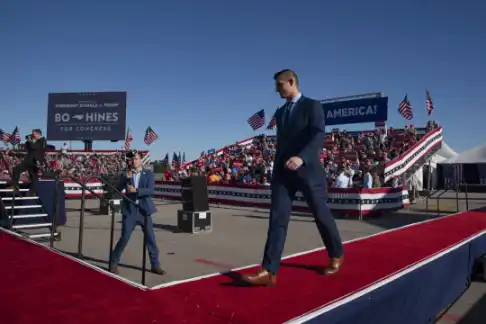
Formerly endorsed by Trump, Hines is running for a 2022 House vacancy in his home state of North Carolina
Prior to joining the government, Hines led an "anti-woke" media company. The company collaborated with a cryptocurrency project that issued a Trump-themed Memecoin, which saw significant value fluctuations last year.
What many in the industry didn't know when he was appointed is that Hines learned about the cryptocurrency industry while attending a bowl game sponsored by a Bitcoin company and has been investing in cryptocurrency for nearly a decade since. To avoid potential conflicts of interest while in government, he sold off his cryptocurrency holdings. He also studied cryptocurrency regulation in law school.
Dan Spuller, the Director of Industry Affairs at the Blockchain Association, said, "He is one of the very few who can straddle both the cryptocurrency space and Trump's 'Make America Great Again' ethos."
Critics argue that the desire to mainstream cryptocurrency may have drawbacks.
Minnesota Democratic Senator Tina Smith said, "If you're going to integrate cryptocurrency into the financial system, there needs to be a very firm understanding of the safeguards to limit potential harm." She has not met with Hines yet.
Hines will be at the heart of the debate over stablecoin regulatory legislation. Stablecoins are widely used cryptocurrencies usually pegged to government-issued currencies like the dollar.
It is expected that bills delineating the regulatory boundaries between the SEC and CFTC will spark a heated debate.
There are also diverging opinions among companies regarding a national digital asset reserve. If a national digital asset reserve leads to new government purchases, it is seen as a potential boon for the industry. Hines stated that the government would first need to account for the current cryptocurrency holdings.
According to sources familiar with the matter, in recent weeks, Hines has been contemplating replacing the Presidential Digital Asset Council, composed of industry executives, with a series of summits. Trump is expected to speak at a summit at the White House this Friday.
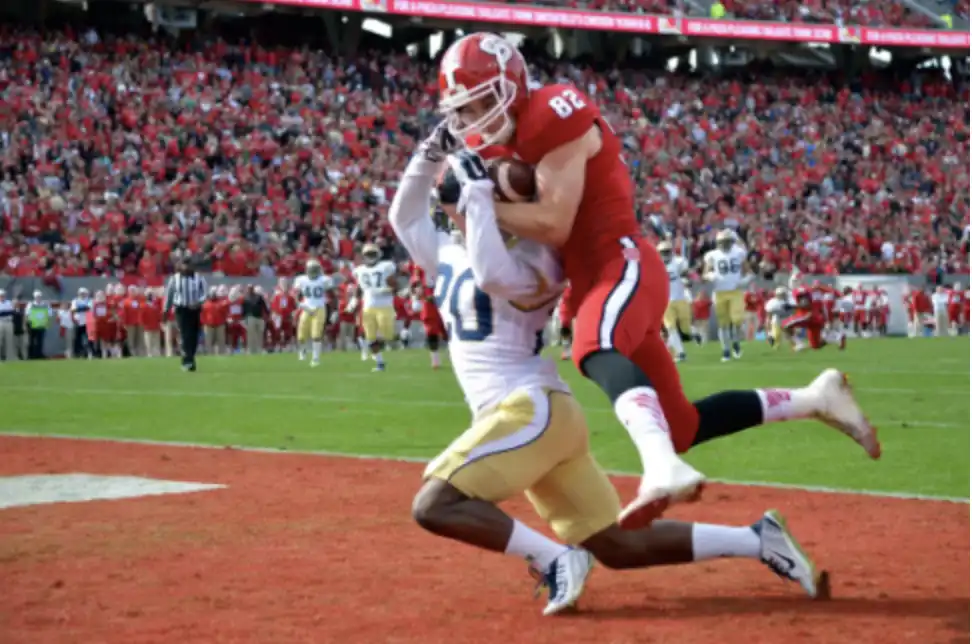
In 2014, wearing jersey number 82, Hines was a wide receiver at North Carolina State University
Prior to recently moving to Washington, much of Hines's life was spent in North Carolina. Football was a sport passed down in his family: his father briefly played for the Detroit Lions.
In 2014, a young Hines, as a freshman at North Carolina State University, emerged as a standout wide receiver, catching passes from Jacoby Brissett, who would later go on to play in the National Football League (NFL) in the United States. He later transferred to Yale University, where a shoulder injury ended his athletic career, leading him to enroll in Wake Forest University School of Law, studying issues such as how the CFTC regulates cryptocurrency.
According to Hines's former professor Raina Haque, Hines showed interest in the field but was not an avid Bitcoin supporter. She said: "He wasn’t the kind of zealot who saw cryptocurrency as a panacea for all the world’s problems."
In 2022, Hines ran for a vacant seat in the North Carolina House of Representatives in his hometown, echoing Trump's claims of the 2020 presidential election being stolen. Trump endorsed Hines, but he lost in a closely contested race. His campaign funding came from a trust fund and a political action committee established by a former FTX executive.
Hines faced criticism from Democrats for giving out Chinese-made hats to voters while advocating for an "America First" economic agenda.
Hines ran again for a House seat last year but was defeated in the primary.
During Hines's playing days, he participated in the 2014 Bitcoin St. Petersburg Bowl sponsored by the Bitcoin payment processor BitPay. The logo of the game featured an orange circle with a white "B" inside, a symbol commonly used to represent cryptocurrency.
Shortly after playing in that game, Hines made his first purchase of Bitcoin and then began investing in other crypto assets. He said, "Their marketing worked."
You may also like

Mergers and acquisitions in the cryptocurrency market are exceptionally active

SpaceX Stock Prediction After the IPO: Can SPCX Reach $200 Before QQQ Inclusion?

Congratulations to Carl Moon on His Historic Ferrari Challenge Le Mans Podium Triumph
Crypto influencer and racing enthusiast Carl Moon finished third in the Ferrari Challenge Le Mans Coppa Shell class, marking his best result of the year. As his racing partner and sponsor, WEEX celebrates this remarkable achievement and continues to lead crypto’s journey beyond boundaries, uniting the innovation of digital assets with the passion of motorsport.

A16Z: The sun bears witness, SpaceX is worth 7.5 trillion

The stablecoin positioning battle escalates: When compliance is just a ticket to entry, will USD1 become the biggest winner?

Can the CLARITY Act Become Law by July 4? Everything You Need to Know About the Final Battle

How to exit after asset tokenization?

The foundation of SpaceX's trillion-dollar valuation: Who is dividing Musk's annual capital expenditure of tens of billions?

France vs Senegal World Cup 2026: Mbappe’s New Era Begins Against a Historic Rival

SharpLink CEO: How to understand that Ethereum developers have just surpassed 1 million?

Morning Report | MiCA grace period expires on July 1; Kalshi's trading volume in the first week of the World Cup breaks $5.1 billion, setting a record

What is the connection between Huang Zheng of Pinduoduo and blockchain?

Morning Report | Prediction market platforms like Kalshi and Polymarket jointly sue Kentucky over 14.25% trading tax; Bridgewater founder discusses decision-making in the AI era: principled thinking should run parallel to AI, human insight remains irre...

If the AI bubble has already burst, who will truly remain?
Paul Graham: How to Make a Billion Dollars

After 18 years, blockchain has finally started to head towards the main channel
Claude enforces "facial recognition for household registration," starting in July, no ID card means no access?

On the day of SpaceX's IPO, the first real test of the three perpetual mechanisms
Mergers and acquisitions in the cryptocurrency market are exceptionally active
SpaceX Stock Prediction After the IPO: Can SPCX Reach $200 Before QQQ Inclusion?
Congratulations to Carl Moon on His Historic Ferrari Challenge Le Mans Podium Triumph
Crypto influencer and racing enthusiast Carl Moon finished third in the Ferrari Challenge Le Mans Coppa Shell class, marking his best result of the year. As his racing partner and sponsor, WEEX celebrates this remarkable achievement and continues to lead crypto’s journey beyond boundaries, uniting the innovation of digital assets with the passion of motorsport.
A16Z: The sun bears witness, SpaceX is worth 7.5 trillion
The stablecoin positioning battle escalates: When compliance is just a ticket to entry, will USD1 become the biggest winner?
Can the CLARITY Act Become Law by July 4? Everything You Need to Know About the Final Battle

Popular coins
Latest Crypto News


