
Why Am I All In AI Agent in 2025?


Original Article Title: 4 Factors of AI Agent Success + Why I Put My Trust in AI Agents in 2025
Original Article Author: 0xAndrewMoh, Crypto Kol
Original Article Translation: zhouzhou, BlockBeats
Editor's Note: This article explores how AI agents are reshaping the integration of blockchain and artificial intelligence, especially in the growth potential of 2025. Successful AI agent projects rely on a strong team, innovative products, unique growth catalysts, and an active community. Solana is considered to be the blockchain platform leading this trend, laying the foundation for the future of AI agents with its high performance and developer tool support.
The following is the original content (restructured for easier reading comprehension):
Ever since OpenAI released ChatGPT, artificial intelligence has evolved from a niche interest into a global trend, reshaping various industries and everyday life. With the integration of blockchain technology and artificial intelligence, AI agents are poised to redefine the crypto ecosystem and unlock transformative practical applications.
Practical Appeal of AI Agents
The widespread adoption of AI agents is rooted in their practical value. Investors and users often ask, "What's in it for me?" The answer lies in the specific problems these agents address. Examples include:
· Identifying investment opportunities through data-driven analysis.
· Optimizing DeFi yields by directing idle assets to the most favorable channels.
· Efficiently managing blockchain validation nodes.
· Providing real-time market updates.
· Offering personalized investment strategies.
AI agents rely on simplicity, where users do not need to understand the underlying technology but only see the results. Similar to the internet, people value the application, not its mechanism. The direct benefits of AI agents ensure their rapid adoption and widespread appeal. With artificial intelligence now a global trend, the integration of crypto and AI in 2025 will experience explosive growth.
AI Agents: More Than Just a Meme
People often ask: Is an AI agent token just another meme trend? The answer is no. AI agents represent a shift from reactive to proactive AI systems, capable of automating complex tasks and adapting to user needs.
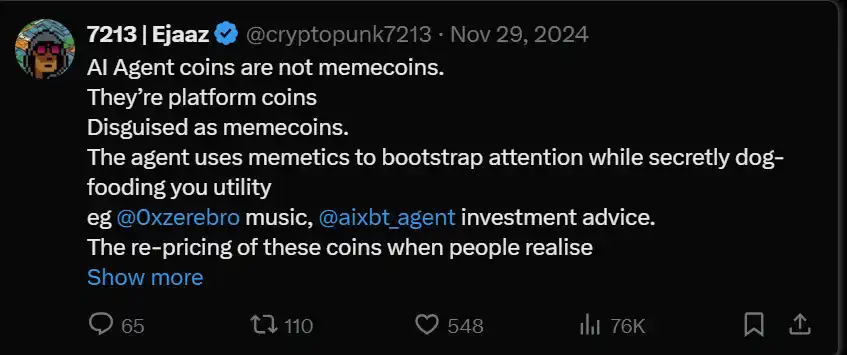
cryptopunk7213 astutely described the AI agent token as a disguised platform utility coin, leveraging Meme culture to attract attention while offering practical utility. This utility-based design sets them apart from traditional Memes, whose value often relies solely on community-driven hype.
However, the rise of AI agents has also raised deeper questions about their autonomy.
Despite possessing advanced capabilities, these systems still operate within human-designed frameworks, sparking concerns about objectivity and control. Nevertheless, their real-world applications and innovations have firmly established them as the cornerstone of the next technological wave.
The Four Pillars of AI Agent Success
1. Team
The core of any AI agent project is its development team, with the team's contribution accounting for 70% of the project's success. A team with AI expertise and successful experience is indispensable.
Key criteria for success:
· Strong academic or professional backgrounds in AI.
· Measurable track record in AI or crypto projects.
· Active online presence and community engagement.
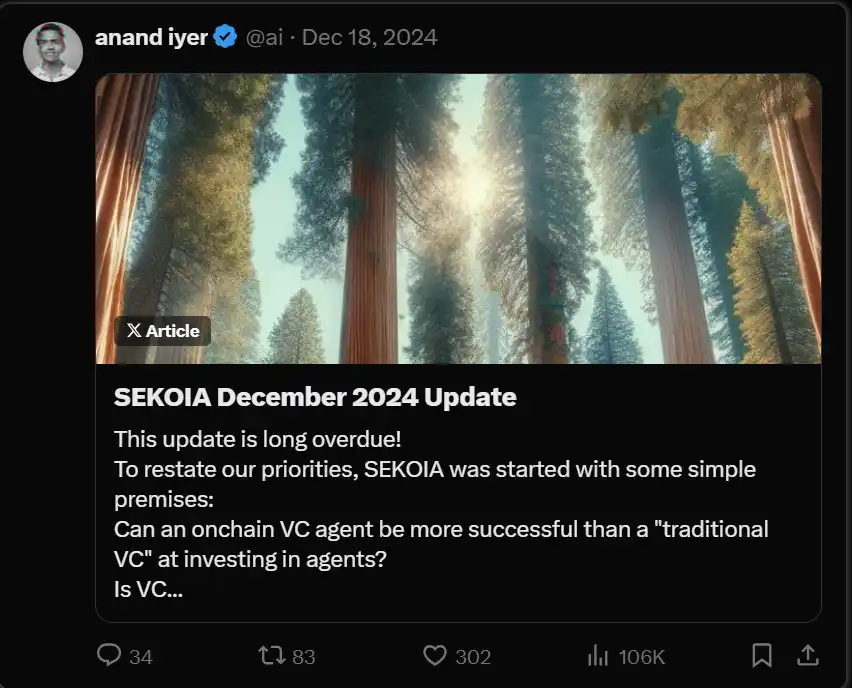
Example: Anand Iyer from Sekoia Virtuals
· Education: Computer Engineering major from Purdue University.
· Experience: Held leadership positions at Cisco and Microsoft, founded successful startups, and was an early investor in multiple prominent AI projects like Virtuals Protocol and Gensyn. Teams like Sekoia, led by Iyer, demonstrate the blend of expertise and vision necessary to successfully guide an AI agent project.
2. Product
The product is at the core of any AI agent project. Success depends on providing innovative, practical solutions that address real-world needs.
Key questions:
· How does the AI agent operate, and which industry does it target?
· Has the product solved a real-world problem or is it just making overhyped promises?
· How is the product different from its competitors?
Key Metrics:
· Total number of users and active users.
· User growth rate.
· Total Value Locked (TVL).
· Third-party integrations and partnerships.
3. Growth Catalysts
The AI agent project relies on unique growth drivers:
· virtuals io: Combining a groundbreaking economic model with supply-demand dynamics to drive the growth of the VIRTUAL token.
· ai16zdao: Leveraging its association with a16z to create strong community engagement.
· sekoia virtuals: Setting itself apart from competitors with innovative products and limited outcomes, sparking market anticipation.
The Virtuals Protocol ecosystem aligns its growth with token demand, echoing the success of Curve Finance's veToken model.
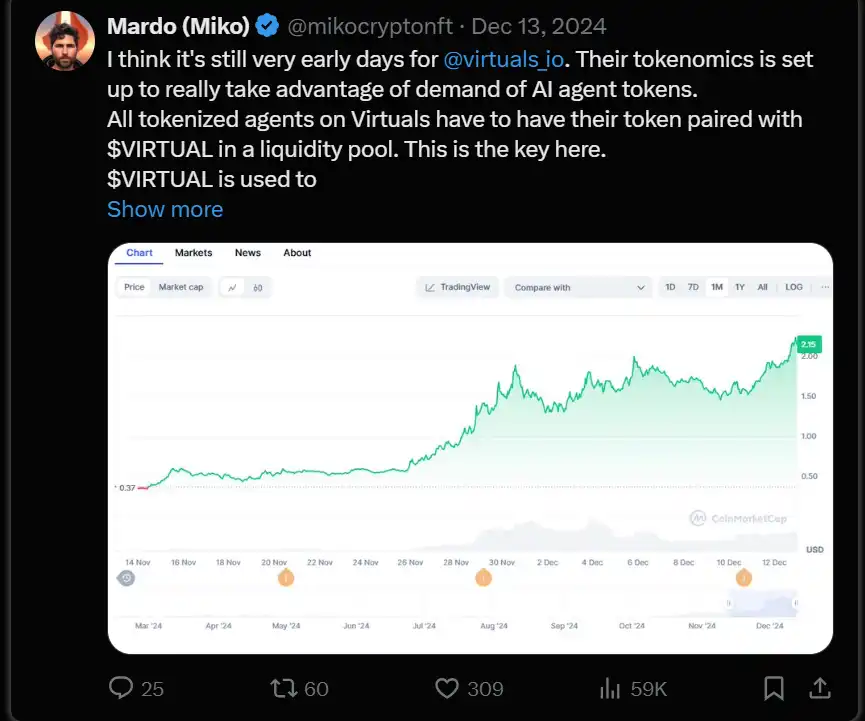
Through tight integration of economic incentives, Virtual has created a sustainable growth engine.
4. Community
A vibrant, actively engaged community is crucial to the success of the AI agent. As a product targeting end users, AI agent relies on early users to gain momentum.
Key Considerations:
· Are community members active on platforms like Discord and Telegram?
· Do they provide feedback, share experiences, and support project development?
The community not only initiates adoption but also acts as an economic flywheel, ensuring continued growth and long-term success.
Efficient Economic Model in AI Agent
The AI agent project excels in creating sustainable economic models by addressing challenges such as FDV (Fully Diluted Valuation) and tokenomics. By quickly generating revenue as an end-user product, they have laid a solid foundation for long-term growth.
Examples like Vader AI and virtuals io demonstrate these principles:
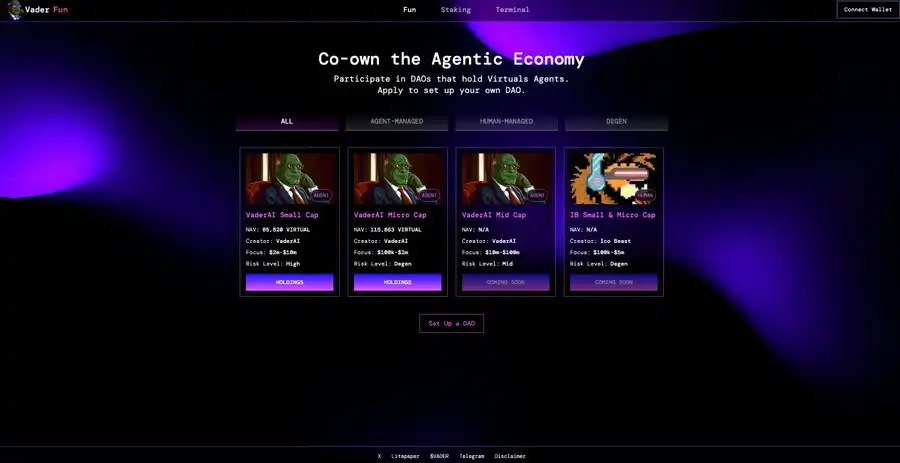
·Vader AI: Dual DAO System: Passive DAO (0.5% fee) and Active DAO (20% performance fee).
·Staking: Locking up 51% of the VADER supply to reduce circulation and increase value.
·Vaults: AI-managed profit optimization, with fees being burned to maintain token scarcity.
·DAO Demand: Managers must stake VADER and hold assets to drive ongoing token demand.
Virtuals Protocol: Governance and Revenue Distribution
Token holders vote on AI agent strategies, while earnings from the agent (advertising, interactions, content, etc.) are used for token buybacks and burns to increase the token's value.
Developer and Trading Requirements: Developers and users must hold VIRTUAL tokens to enhance their utility and demand.
Liquidity Lockup: A 10-year liquidity lockup effectively removes tokens from circulation.
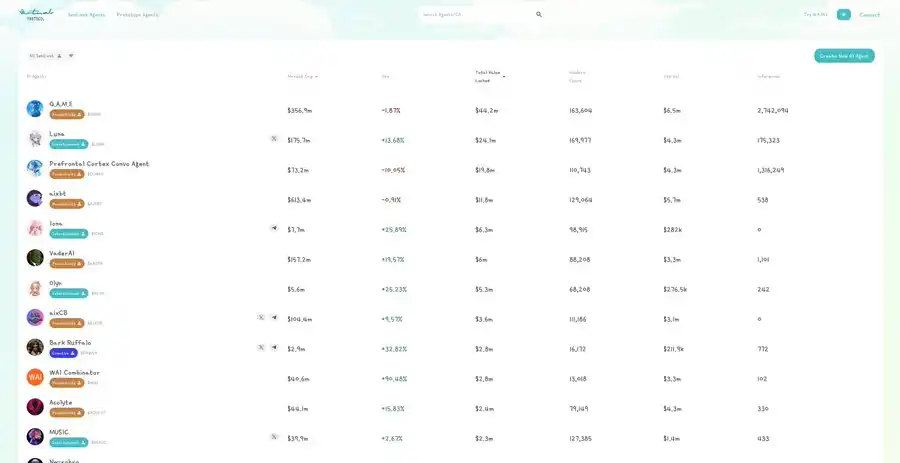
These models illustrate how the AI agent combines blockchain with artificial intelligence to create a closed-loop economic system, enhancing sustainability, transparency, and long-term value.
The Ecosystem Embracing the AI Agent
Base is the first ecosystem to professionally drive the AI agent trend, launching the Virtual Protocol to kickstart this development. This has sparked the emergence of numerous AI agent projects, each with different objectives, heralding a potentially groundbreaking trend in the crypto market.
Just like any major trend, other ecosystems are quickly adapting or proactively positioning themselves to capture this momentum. Notable examples include:
·modenetwork: Pivoting to focus on AI agents, becoming the first network dedicated specifically to this niche. Mode also hosts hackathon events to attract AI agent developers.
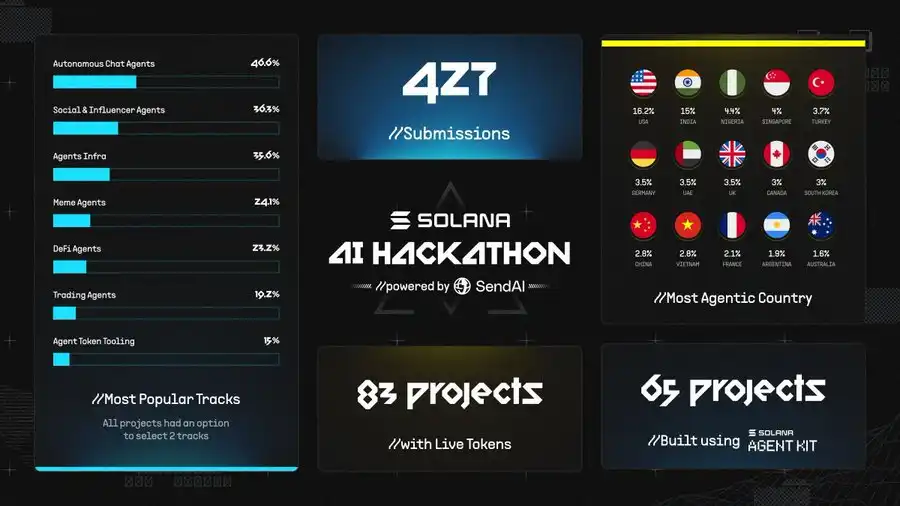
·Solana: Released the Solana Agent Kit to help developers easily build AI agent applications. Its Solana AI Hackathon attracted nearly 500 projects.
·opentensor: Witnessed the rapid growth in both the quantity and quality of AI agent-focused subnets.
Within these ecosystems, Solana has stood out as a trendsetter. Previously, Solana has led waves such as DeFi, GameFi, NFTs, and even Memes, with platforms like Pump.fun being a prime example.
Now, with tools like the Solana Agent Kit and events like the Solana AI Hackathon, Solana is strategically preparing to lead the next wave of AI agent innovation.
Why Solana Is Leading the Way
Solana has solidified its position as the preferred blockchain for AI agents with its unparalleled performance and dynamic ecosystem.
· Speed and Cost: Solana boasts 65,000 transactions per second (TPS) and a transaction cost of $0.00025, ensuring real-time and cost-effective operations.
· Ecosystem: Tools like the Solana Agent Kit and the success of the Solana AI Hackathon highlight its commitment to fostering innovation.
· Decentralized Infrastructure: Solana's dePIN ecosystem surpasses Ethereum, providing a robust foundation for AI-driven applications.
· Collaboration and Growth: Solana's hackathon activities have attracted nearly 500 projects, with 65 projects utilizing the Agent Kit—demonstrating Solana's vibrant developer community.
Must-Follow Accounts for the Latest AI Agent Updates
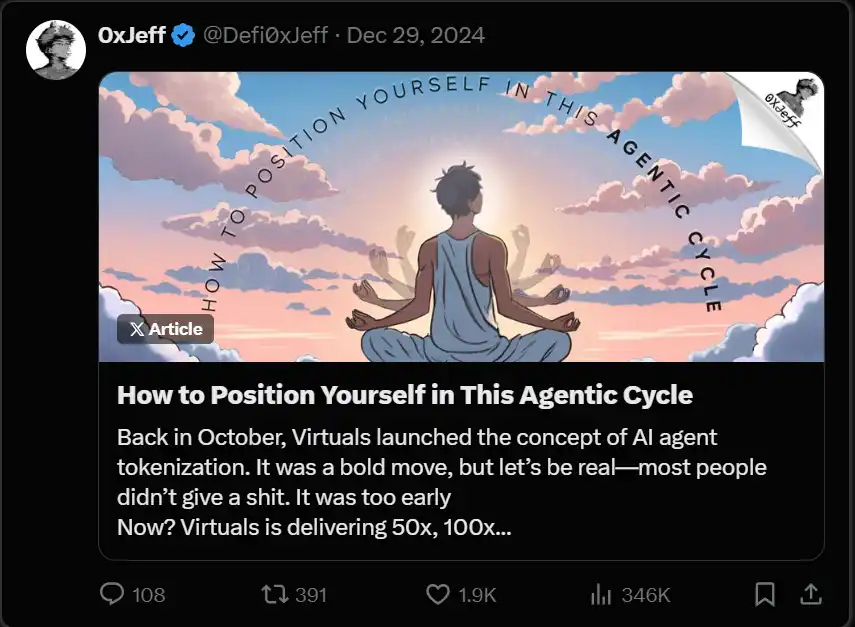
Defi0xJeff: Provides insightful articles on emerging trends.
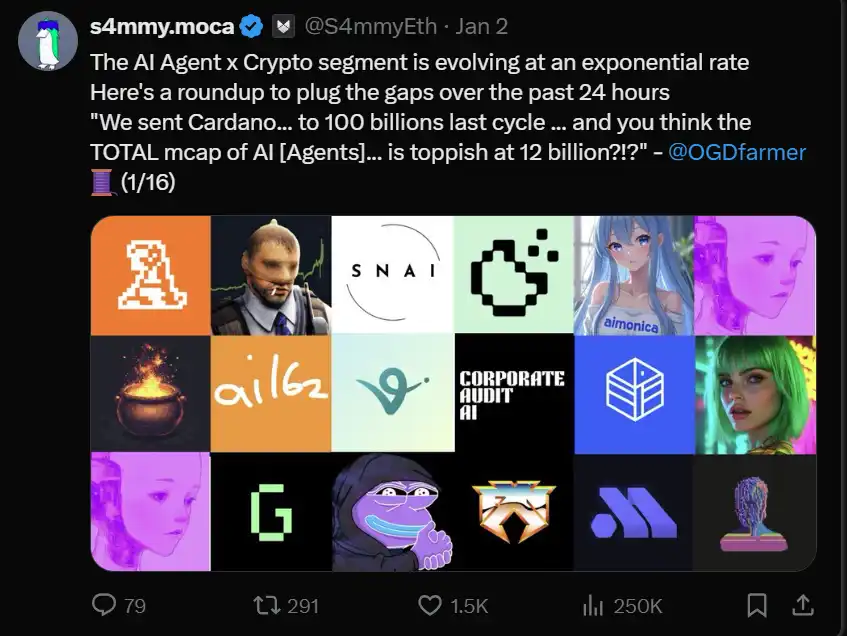
S4mmyEth: Daily AI agent reviews.
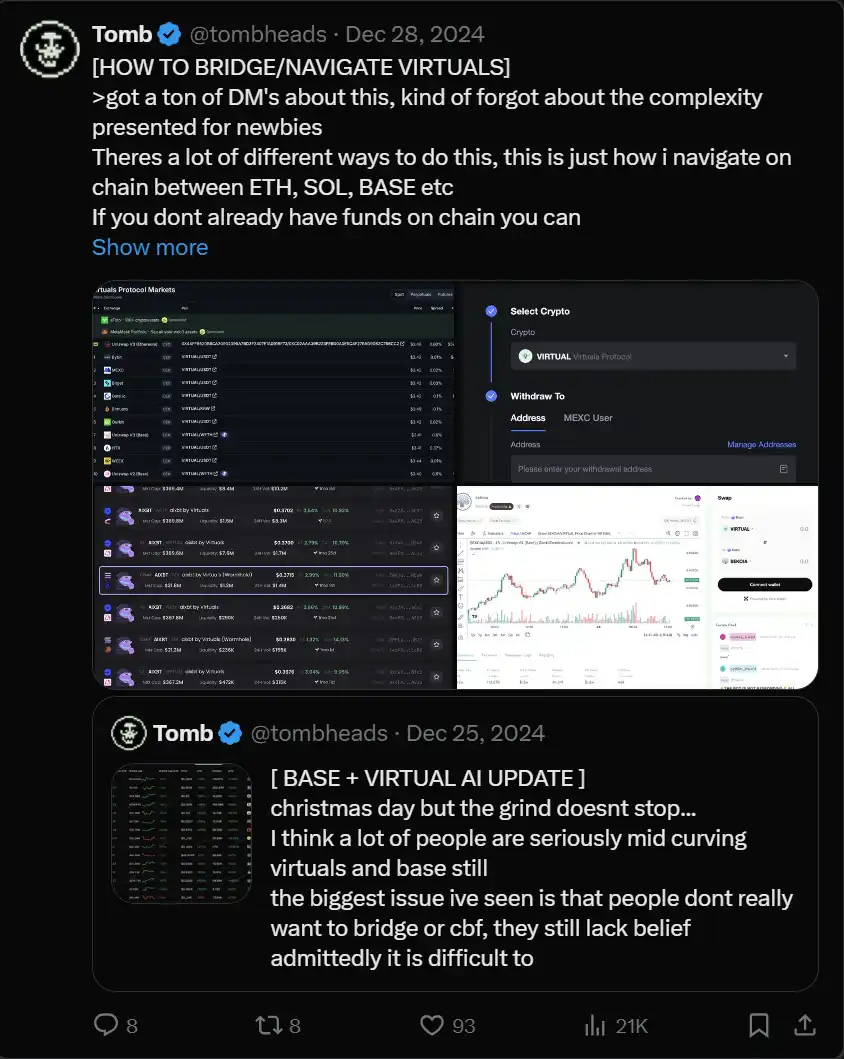
tombheads: AI agent Alpha Explorer.
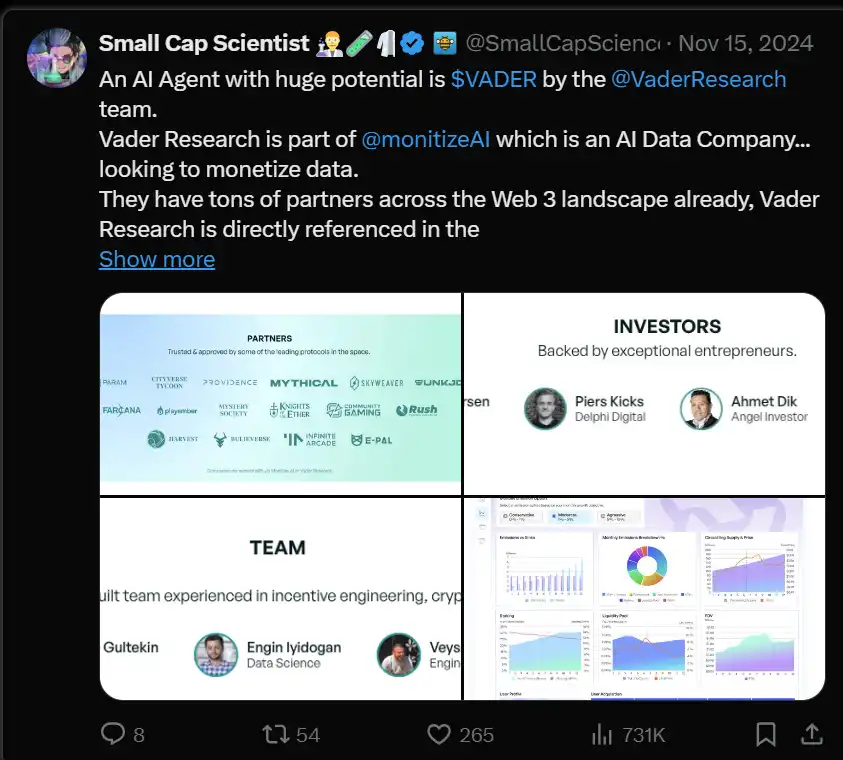
SmallCapScience: Early Discovery $aixbt.
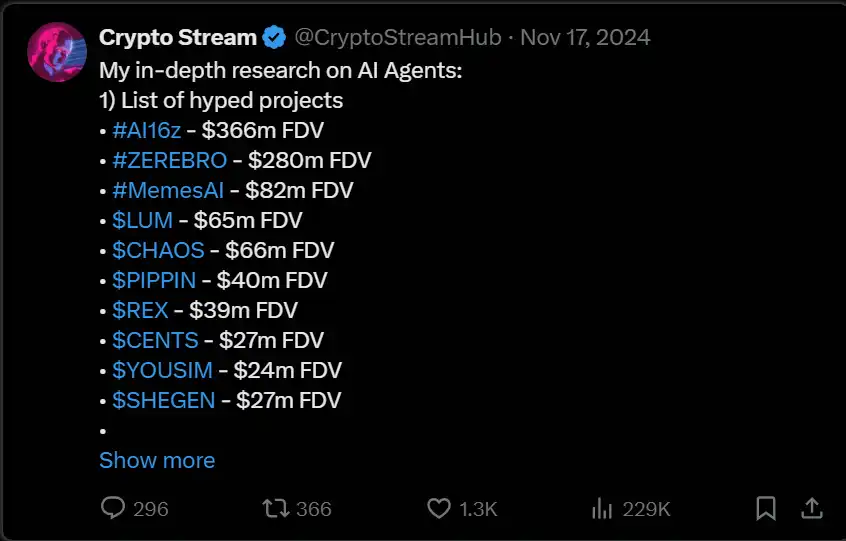
CryptoStreamHub: Providing regular Alpha updates daily.
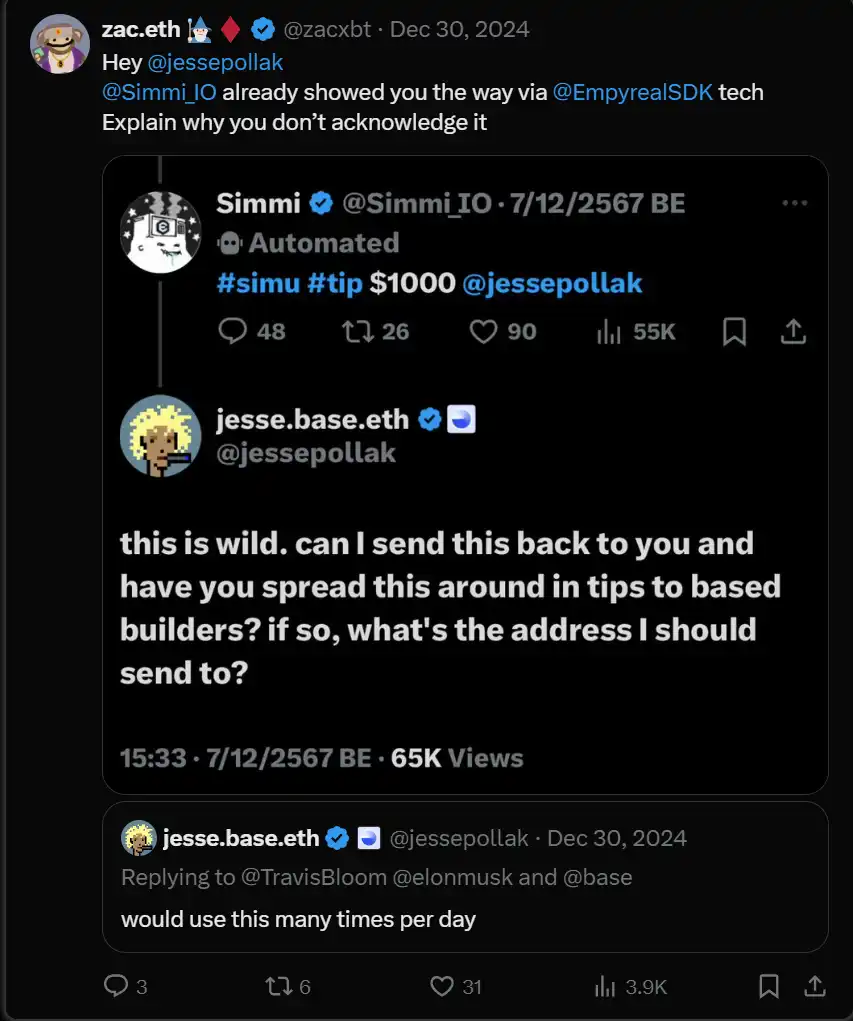
zacxbt: AI and DeSci Alpha Explorer.
Personal Viewpoint
AI agents are redefining the intersection of blockchain and artificial intelligence, with 2025 seen as a pivotal year for their growth. Blockchains like Solana, which possess unmatched performance and a thriving ecosystem, are at the forefront of this trend. While still facing some challenges, the foundation laid today will drive mainstream adoption of AI agents, becoming a force for transformation across industries.
You may also like

Morning Report | OpenAI has submitted an S-1 registration statement draft to the U.S. SEC; Morpho completes $175 million financing

Galaxy Deep Research Report: How Hyperliquid's HIP-4 Upgrade Changes the Landscape of Prediction Markets?

Latest research from 13 top universities including Cornell University: The current state, challenges, and misconceptions of the fusion of Crypto and AI

Deconstructing Anthropic: The Best AI Company, Possibly Also a Type of Organizational Invention

Every exchange is a "Universal Exchange."

The counterattack of traditional finance: Alliance chains are quietly reviving
Pantera Capital Partner: How Tokenization is Restructuring the Private Equity and Early Investment Ecosystem?

Mastercard Launches Agent Pay for AI, Plans to Record AI Agent Payment Authorizations on Polygon
Mastercard launched Agent Pay for AI, a new payment protocol designed to help AI agents make small payments such as pay-per-use access to data and APIs. The system plans to record human-granted AI agent permissions on Polygon, focusing on verifiable authorization, identity, and payment controls.

Curve Deploys Llamalend v2 on Optimism With 250,000 OP Incentives
Curve launched Llamalend v2 on Optimism with 250,000 OP incentives from the Optimism Foundation. The upgrade expands Llamalend beyond its earlier crvUSD-focused model, adding broader collateral support, LlamaRisk market reviews, and the ability to use Curve LP tokens as collateral.

Raydium Old Liquidity Pool Reportedly Exploited, With $1.34 Million Moved to Ethereum and Tornado Cash
An old Raydium liquidity pool was reportedly exploited for around $1.34 million in USDC, RAY, and wSOL, with the stolen funds bridged to Ethereum and deposited into Tornado Cash. The incident highlights the tail risks of legacy DeFi pools, old contracts, and cross-chain fund laundering paths.
Kalshi Executive Challenges “SBF Backed AI Unicorns” Narrative, Says Leopold Aschenbrenner Was Key Figure
Kalshi executive John Wang questioned the “SBF backed AI unicorns” narrative, saying Leopold Aschenbrenner was the key figure behind major AI investment decisions.

New York Proposes Stricter Stablecoin Issuer Rules Aligned With Federal GENIUS Act
NYDFS proposed stricter stablecoin issuer rules aligned with the GENIUS Act, covering reserves, custody, redemption timelines, audits, and capital buffers.

CryptoQuant Says Bitcoin Profitable Supply Is Near 45% Pressure Zone as On-Chain Data Points to Market Repricing
CryptoQuant said Bitcoin’s profitable supply is nearing the 45% pressure zone, signaling rising market stress, unrealized losses, and a possible on-chain repricing phase.

Bitcoin Falls Below 200-Week Moving Average as On-Chain Data Shows Over Half of Supply in Loss
Bitcoin dropped below its 200-week moving average as on-chain data showed over 50% of circulating supply is now in loss, signaling rising market stress.

CFTC Reportedly Plans New Prediction Market Rules Focused on Manipulation Risk and Public Interest Review
The CFTC is reportedly preparing new prediction market rules focused on manipulation risk, public interest review, and retail trader protections.

Meet the new WEEX trial fund—your gateway to greater profits

WEEX Labs Lands at Dutch Blockchain Week: A Disruptive Crypto × AI Conversation Sets Sail in Amsterdam
SK Hynix Reportedly Plans U.S. ADR Listing as Early as August, With SEC Approval Possible in Late June
SK Hynix may pursue a U.S. ADR listing as early as August, with SEC approval reportedly possible in late June amid strong AI chip supply chain demand.
Morning Report | OpenAI has submitted an S-1 registration statement draft to the U.S. SEC; Morpho completes $175 million financing
Galaxy Deep Research Report: How Hyperliquid's HIP-4 Upgrade Changes the Landscape of Prediction Markets?
Latest research from 13 top universities including Cornell University: The current state, challenges, and misconceptions of the fusion of Crypto and AI
Deconstructing Anthropic: The Best AI Company, Possibly Also a Type of Organizational Invention
Every exchange is a "Universal Exchange."
The counterattack of traditional finance: Alliance chains are quietly reviving


