
Public Asset Control: What PAC Token Really Is


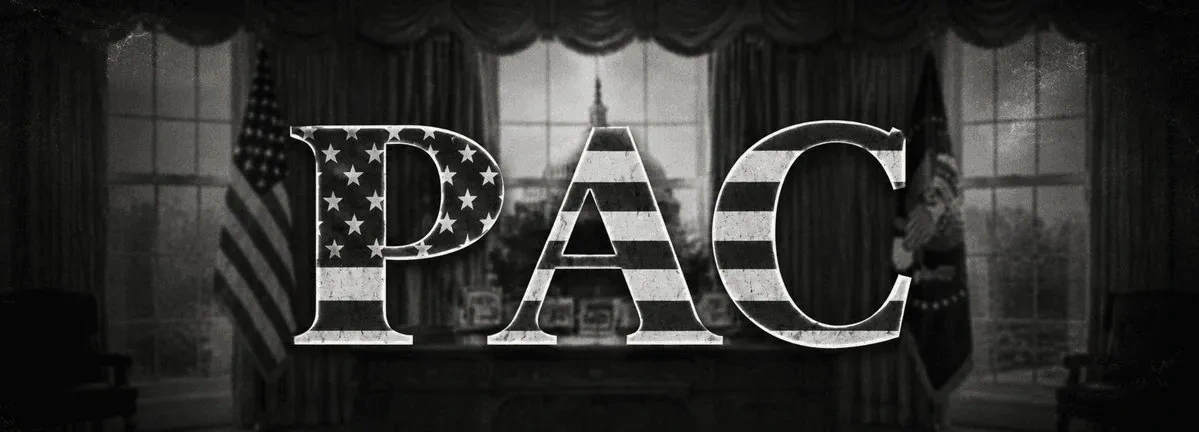
Public Asset Control (PAC) token is a Solana-based crypto token built around a dramatic asset-control narrative. Its website uses a classified government-brief style, references strategic reserves, and presents language around oil, gold, institutions, and sovereign authority. That branding is attention-grabbing, but it should not be confused with verified real-world asset backing.
The important detail is in the project’s own disclaimer. PAC is framed as entertainment and speculation, with no official affiliation or endorsement from the public figures, companies, or government entities mentioned in the site’s theme. In plain terms, Public Asset Control is best treated as a narrative-driven Solana token, not a confirmed institutional asset token.
For readers using WEEX to research new coins, the useful question is not just “what is PAC?” It is whether the contract, liquidity, market structure, and project claims support the level of risk a trader is about to take.
Public Asset Control PAC at a Glance
| Item | Current Reading |
|---|---|
| Token name | Public Asset Control |
| Ticker | PAC |
| Network | Solana |
| Official contract shown | B5xwCQUKfx8BJZsgvuBvW6XgrxtkqLTrDEAYjpLJpump |
| Main trading route shown | PumpSwap / Jupiter-style Solana swap flow |
| Project framing | Asset-control and strategic-reserve narrative |
| Key caution | Official disclaimer says it is speculative and not officially affiliated with named entities |
| Market status | Micro-cap, thin-liquidity, high-volatility token |
What Public Asset Control Claims Versus What It Proves
Public Asset Control’s public branding is designed to look serious. The site references institutional capital, intelligence networks, strategic reserves, petroleum assets, gold reserves, and other national-resource themes. Those references are part of the token’s story.
What is verified is much narrower. PAC has a public Solana contract address, a live DEX market page, and visible on-chain trading activity. What is not verified is the more important financial claim: there is no clear public proof that PAC represents audited oil, gold, government assets, BlackRock backing, Palantir backing, or sovereign support.
That distinction matters. Real-world asset tokens need documentation, custody details, redemption mechanics, legal structure, audits, and clear issuer accountability. PAC’s current public footprint looks much closer to a meme-style or narrative token than a regulated asset-backed product.
How PAC Trades on Solana
PAC behaves like a typical Solana token from a trading perspective. A user needs a Solana-compatible wallet, SOL for transaction costs, and access to a swap route or liquidity pool. Public pages point to Solana DEX infrastructure rather than a traditional centralized order book.
This means the displayed token price is only part of the trade. Liquidity decides whether a buyer can enter or exit without heavy slippage. In a thin pool, even a modest order can move the average execution price away from the number shown on a chart.
That is where inexperienced traders often lose money. They see a tiny unit price and assume the token is “cheap,” but unit price says little without market cap, supply, liquidity, holder distribution, and volume quality.
PAC Market Snapshot and Liquidity Risk
As checked on May 15, 2026, DEX Screener showed PAC around the micro-cap range, with roughly hundreds of thousands of dollars in market capitalization and tens of thousands of dollars in liquidity. Phantom also labels the token as unverified, which is a useful caution signal for anyone interacting through wallet interfaces.
Those numbers can change quickly, so they should not be treated as stable reference points. The better takeaway is structural: PAC trades like a small, volatile Solana token whose market can move sharply when attention rises or fades.
| Risk Area | What To Watch |
|---|---|
| Contract risk | Confirm the exact contract before swapping |
| Liquidity risk | Check whether the pool can absorb your trade size |
| Slippage risk | Review the final quote, not just the chart price |
| Narrative risk | The asset-control story may fade faster than price expectations |
| Verification risk | Do not treat branding as proof of backing |
| Exit risk | Thin markets can make selling harder than buying |
Is Public Asset Control Legit or a Scam?
The cleanest answer is that PAC appears to be a real tradable token on Solana, but that does not make its branding claims financially verified. A token can be real on-chain and still be extremely speculative.
Calling PAC a confirmed scam would require more evidence than public branding alone. Calling it a verified real-world asset token would also require evidence that is not visible in the current public materials. The more accurate reading is that Public Asset Control is a high-risk narrative token with theatrical branding, live market activity, and limited proof of underlying utility.
That is enough to interest short-term traders, but not enough to support a low-risk investment thesis.
How To Evaluate PAC Before Buying
Start with the contract address. For PAC, the official site shows B5xwCQUKfx8BJZsgvuBvW6XgrxtkqLTrDEAYjpLJpump. Match that address across the official page, DEX tracker, wallet, and swap interface before taking any action.
Then check liquidity and recent volume. A chart can look active while the pool is still too shallow for clean execution. If the trade size is large relative to liquidity, the real cost may be worse than expected.
If you want to understand the full process before using a wallet or swap route, read this guide on how to buy Public Asset Control. New users can also review WEEX’s broader guide on how to buy crypto before interacting with small-cap tokens.
Finally, separate story from structure. The Public Asset Control narrative may attract attention, but attention is not the same as collateral, revenue, legal rights, or redemption value. If PAC fits your strategy, treat it as a speculative trade that needs strict sizing and an exit plan.
Final Take
Public Asset Control is best understood as a Solana PAC token with strong asset-control branding, not as a proven government-backed or commodity-backed asset. The project’s own disclaimer is the central fact: the dramatic presentation should be read as narrative, not proof.
For anyone watching PAC, the practical checklist is simple: verify the contract, check live liquidity, understand slippage, avoid assuming real asset backing, and learn the basics of WEEX spot trading before making any trading decision.
FAQ
What is Public Asset Control PAC?
Public Asset Control PAC is a Solana-based crypto token using the ticker PAC. It is marketed with an asset-control and strategic-reserve theme, but its public materials frame it as speculative.
Is PAC backed by BlackRock, Palantir, or government assets?
No verified public evidence confirms that PAC is backed by those entities or by real government reserves. The official disclaimer says the references are not real affiliations or endorsements.
What is the PAC contract address?
The official site shows B5xwCQUKfx8BJZsgvuBvW6XgrxtkqLTrDEAYjpLJpump. Always verify the address before swapping because lookalike tokens can appear.
Where can PAC be traded?
Public market pages show PAC trading through Solana DEX infrastructure, including a PumpSwap market and Jupiter-style swap route.
Is Public Asset Control a good investment?
PAC is a high-risk speculative token. It may appeal to traders who understand micro-cap Solana volatility, but it is not suitable for users expecting verified backing, stable fundamentals, or low-risk exposure.
Risk Warning
Cryptocurrency prices are highly volatile and may result in partial or total loss. Public Asset Control (PAC) carries additional risks linked to thin liquidity, slippage, unverified token status, smart-contract exposure, and narrative-driven price swings. This article is for informational purposes only and does not constitute financial advice.
You may also like
COAR vs WCOR: How Two Oil Narrative Tokens on Solana Stack Up
COAR vs WCOR comparison: two oil-themed crypto tokens. Learn their differences, tokenomics, price predictions, risks, and which fits your risk profile.
ROAF vs COAR: Two Oil Narrative Tokens Compared on Solana
ROAF vs COAR comparison: two Solana-based oil narrative meme tokens. Learn differences in structure, risks, tokenomics, and market positioning.
How High Can COAR Crypto Go in May 2026?

OSOR Coin Price 2026: Prediction and Price Analysis
OSOR crypto price prediction 2026: Bullish, base, and bearish scenarios. No oil backing. Just on-chain data. Read before trading the Saudi narrative token.
What Is Modern American Gas Asset Crypto? MAGA Oil Narrative Explained
Modern American Gas Asset (MAGA) is a Solana meme coin using Trump-era branding and oil narrative. Learn how it works, risks, and the difference from real energy assets.

What Is Fidelity Oil United Reserve (FOUR) Crypto?
Fidelity Oil United Reserve (FOUR) is a Solana meme coin, not a verified oil-backed asset. Learn how FOUR crypto works, key risks, and how to research it.
World Collective Oil Reserve: WCOR Coin Explained
Learn what World Collective Oil Reserve is, how the WCOR Solana token works, whether it is oil-backed, and what risks to check.
What Is Chinese Oil Asset Reserve (COAR)? Solana Oil Narrative Token Explained
Chinese Oil Asset Reserve (COAR) is an oil-themed Solana token, not a verified claim to real physical oil ownership
The contract address is CoARSp4P9Yr7MEnKMZE7chyAkK3mNbPFyArdQeMm9a1G
Total supply is 1 billion tokens with distribution including liquidity pool, community, team lock, reserves, and marketing
Stated utilities include staking (12% APY), governance (1 COAR = 1 vote), revenue share (30%), and 2% burn per transaction
Roadmap includes three phases from launch to institutional partnerships and real-world oil reserve verification
Gold & Silver 0% Fees? WEEX Just Dropped Trading Costs to Zero
WEEX 0% fees on gold, silver, crude oil & stock futures. PAXG, XAUT, NVDA, TSLA, MSTR & more. Offer ends May 31, 2026. Trade now.
What is Gensyn (AIGENSYN)?
What is Gensyn? AI infrastructure for machine learning compute, not a meme token. Learn $AI tokenomics, buy-and-burn mechanism, and unlock risks.

How to Buy Mom Trust Fund Reserve (MTFR): Legit Opportunity or High-Risk Trap?
Is MTFR Coin a legit opportunity or a high-risk trap? Read our Mom Trust Fund Reserve buying guide to analyze real on-chain data, liquidity, and key risks.
TradFi Spot Challenge: Share $100,000 on WEEX Exchange
Join the WEEX TradFi Spot Challenge from May 15 to May 25, 2026. Trade INTCON, MUON, SNDKON, WDCON, STXON, CRCLON, GOOGLON, and COINON to share a $100,000 rewards pool. Learn how to maximize your new user bonus and claim free crypto airdrop incentives on WEEX.
How to Buy PAXG/USDT on WEEX: 0% Fee Trading Event & Complete Guide
Learn how to trade PAXG/USDT on WEEX with 0% fees. This complete guide covers step-by-step buying, key promotion rules, and gold-backed crypto tips for beginners.
What Is Global Digital Oil Reserve (GDOR) Coin? Can It Really Explode Like GDER?
What is GDOR crypto? This guide explains its token data, missing fundamentals, and why it is unlikely to replicate explosive tokens like GDER.

How to Buy COAR Crypto and When to Sell for Maximum Gains
Learn how to buy COAR Crypto safely on Solana. Read our expert guide on the speculative Chinese Oil Asset Reserve coin and discover strategic buy and sell points.
What is MBAPEPE Crypto? Is MBAPEPE Really Connected to Kylian Mbappé?
What is MBAPEPE Coin? Solana meme token blending Mbappé hype with Pepe culture. No official link. Learn tokenomics, risks, and how to buy MBAPEPE crypto.

What Is COAR Crypto? Chinese Oil Themed Meme Coin Explained
What is COAR crypto? Solana meme coin with 2% burn, no presale, and revoked mint authority. Learn how to buy COAR crypto and the risks before trading.

What is COAR Crypto? How to Buy Chinese Oil Asset Reserve (COAR) Coin 2026?
How to buy COAR crypto? Step-by-step guide, tokenomics breakdown, and safety checklist. Learn what is COAR before trading this Solana meme token.
COAR vs WCOR: How Two Oil Narrative Tokens on Solana Stack Up
COAR vs WCOR comparison: two oil-themed crypto tokens. Learn their differences, tokenomics, price predictions, risks, and which fits your risk profile.
ROAF vs COAR: Two Oil Narrative Tokens Compared on Solana
ROAF vs COAR comparison: two Solana-based oil narrative meme tokens. Learn differences in structure, risks, tokenomics, and market positioning.
How High Can COAR Crypto Go in May 2026?
OSOR Coin Price 2026: Prediction and Price Analysis
OSOR crypto price prediction 2026: Bullish, base, and bearish scenarios. No oil backing. Just on-chain data. Read before trading the Saudi narrative token.
What Is Modern American Gas Asset Crypto? MAGA Oil Narrative Explained
Modern American Gas Asset (MAGA) is a Solana meme coin using Trump-era branding and oil narrative. Learn how it works, risks, and the difference from real energy assets.
What Is Fidelity Oil United Reserve (FOUR) Crypto?
Fidelity Oil United Reserve (FOUR) is a Solana meme coin, not a verified oil-backed asset. Learn how FOUR crypto works, key risks, and how to research it.


